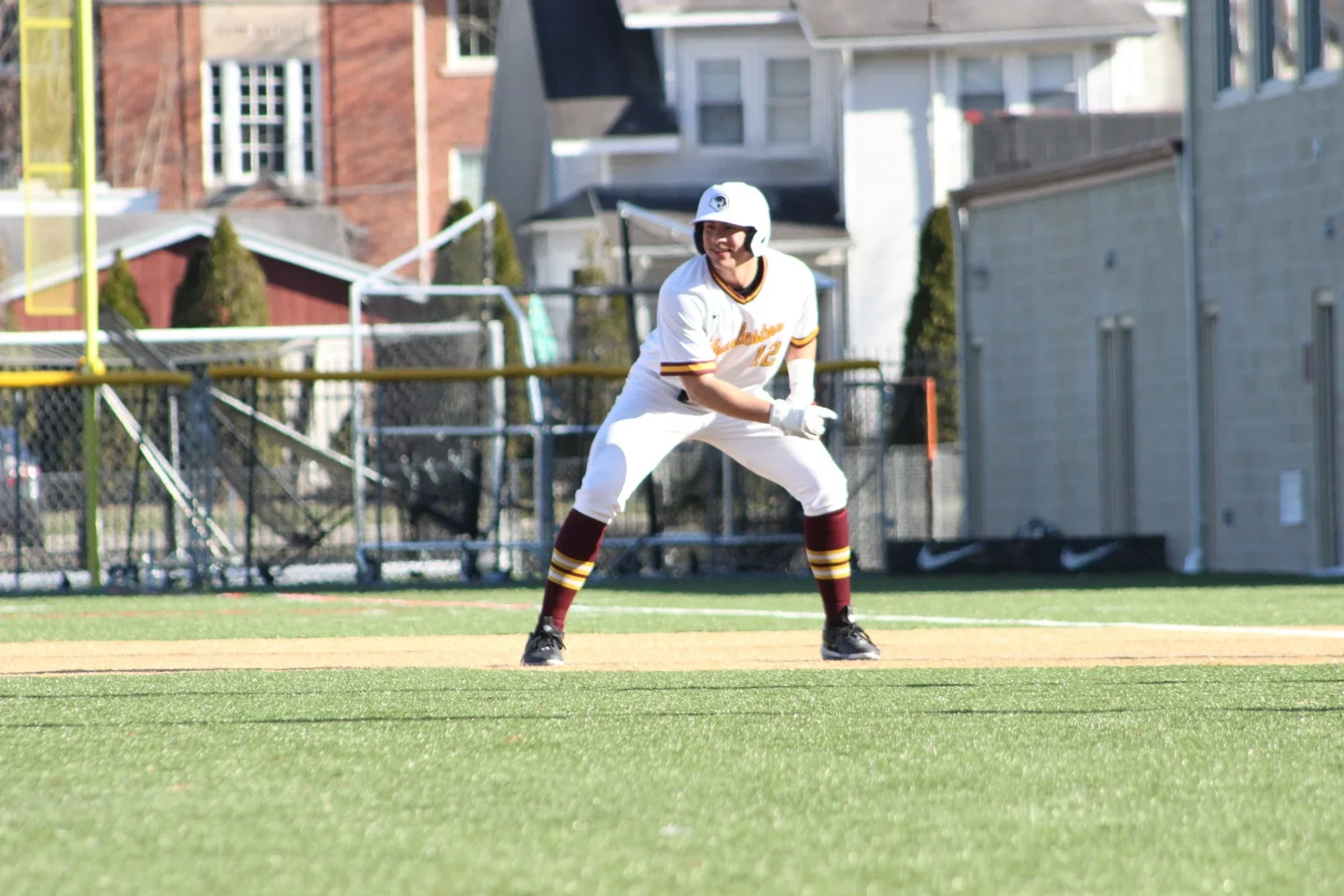
University of Charleston baseball means the Golden Eagles of Charleston, West Virginia: an NCAA Division II program competing in the Mountain East Conference. Follow the team's official schedule, roster and statistics to keep the school, season and competition straight. It is a different program from the College of Charleston Cougars in South Carolina.
This guide was checked November 13, 2026. It explains where to find the Golden Eagles' information, how to read it and what to verify before attending a game or following their postseason.
Which Charleston baseball program is this?
The NCAA identifies the University of Charleston in West Virginia as the Golden Eagles. The university's main campus is on the Kanawha River across from the state capitol, and its school colors are maroon and gold. Those identifiers are more dependable than a search result that simply says "Charleston baseball."
Use the Golden Eagles baseball website as the team's starting point. Its baseball menu links the schedule, roster, coaches and statistics. That keeps you within the same program as you move from a fixture to a player's profile or a game result. A familiar city name alone does not establish that a roster, ticket page or coaching biography belongs to this school.
Division II and the Mountain East Conference
The NCAA's 2026-27 sport-specific directory places Charleston baseball in Division II and the Mountain East Conference. That answers the common question about whether University of Charleston baseball is Division I: it is not. The conference provides the relevant league context for understanding the team's baseball schedule and standings.
Check the sport rather than inferring baseball's classification from every other university team. The NCAA directory separately lists Charleston men's volleyball in Division I and the EIVA. A search result about that sport can therefore give a correct division while answering the wrong baseball question. The baseball row supplies the necessary distinction.
Division identifies the competition structure; it does not tell you who will win a particular game or how entertaining a visit will be. To evaluate the Golden Eagles, use their actual opponents, game results and player performances. For planning, the useful first step is simpler: make sure every schedule, roster and venue reference says Golden Eagles or UCWV and belongs to the West Virginia institution before comparing dates or buying admission.
Finding the right season on the Golden Eagles schedule
The official 2027 baseball schedule already contains future games, rather than just an empty season heading. As checked in November 2026, it lists a January 29 opening game at Francis Marion in Florence, South Carolina, followed by a January 30 doubleheader. Those entries are upcoming plans, not completed results.
For past games, use the 2026 schedule archive. Keeping that distinction clear prevents a common mistake: reading an old final score as though it describes the next meeting between the same schools. Check the season heading each time you move between a search result, roster and game report.
Home games, road games and doubleheaders
Read the city and ballpark next to the opponent. Charleston's 2027 schedule lists the February 20 Shepherd doubleheader at Welch Athletic Complex in Charleston, West Virginia, while the Francis Marion trip is in Florence. Both are Golden Eagles games, but only one outing brings you to Charleston's home facility.
The abbreviation DH marks a doubleheader. Look for the separate game entries and their listed times instead of treating the day's opponent as a single contest. If you want the second game, leave room for the first to affect the day's progress and check any updated instructions. The schedule alone does not settle whether admission covers both games or how a venue handles entry between them.
What a future schedule can and cannot tell you
A fixture gives you an opponent, date and planned location. It does not identify the starting pitcher, guarantee the final first-pitch time or establish that a particular player will be available. Use it to choose a possible outing, then check the team's more recent information as the game approaches. For a road date, read the host's venue and admission instructions as well.
Watch and live-stat links answer separate questions. A live-stat destination helps follow the action; it does not by itself grant a video stream. Open the link attached to the actual game and check the service's current access requirements. If an entry has no active viewing link, do not assume another game's link covers it.
Keep a simple note of the selected season, opponent, date and venue when organizing a visit with others. That makes it much easier to notice a change than relying on a screenshot that omits the year. Recheck the school schedule before departure, especially when a trip involves two games in one day or travel to a different city.
Reading the roster without mistaking it for a lineup
The school's current baseball roster is labeled 2027 and lists player positions, class years and background information. It is the right place to identify who belongs to the program. It is not a declaration of who will start the next game or where everyone will play that afternoon.
Examples show how to read the labels. The checked roster lists Damian Witty as a senior outfielder, Ryan Comella as a junior catcher and Ethan Bechtold as a sophomore right-handed pitcher. An OF label identifies an outfielder; C identifies a catcher; RHP and LHP distinguish right- and left-handed pitchers. A listing such as OF/LHP describes more than one possible role rather than a guaranteed assignment in both.
Use a jersey number to connect the player you see to a name, then consult the relevant biography or statistics for context. Height, hometown and previous school can help distinguish players with similar names, but none of those fields establishes the batting order. For the game itself, the announced lineup and box score provide stronger evidence of how a player was used.
Returning players and new-season roles
Compare the current roster with the previous season's player statistics before describing someone as a returning starter. A senior label indicates class, not how many games the player started for Charleston last year. Similarly, a previous-school entry is background information, not enough on its own to establish the timing of a transfer or a promised new role.
For position players, games played and games started help separate regular usage from a handful of appearances. For pitchers, starts, relief appearances and innings show different kinds of responsibility. Those measures give you a better basis for understanding continuity than copying the roster into a predicted lineup.
Watch how roles develop once games begin. A player can be on the roster while serving a situational role, and a multi-position player can give the staff several options without starting everywhere. Keep the description proportional to the evidence: identify the listed role, explain the recorded usage and leave the next game's selection to the actual team announcement.
Who coaches University of Charleston baseball?
Dean Peterson is listed as head coach on Charleston's 2027 coaching staff page, consistent with the NCAA's baseball directory. Use that current staff listing when checking leadership rather than relying on an old season's program or a search result for another Charleston school.
The published staff also identifies Kyle Watson as associate head coach with infield and mental-performance responsibilities, Joe Simonetta with strength and conditioning, Dave McPhail as director of baseball operations, and Roy "Cort" Kegley with outfield, hitting and analytics. Those labels help explain the range of work behind a college team. They do not by themselves tell you who makes every decision during a particular inning.
Peterson's official biography describes his earlier work as an assistant coach and pitching coordinator at Frostburg State and credits Charleston's 2026 Mountain East championship to his tenure. That supplies meaningful program context without turning an old biography's season-count wording into a current calendar claim.
For a fan, coaching responsibilities offer a useful way to watch development over a series. Infield positioning, defensive execution, hitter adjustments and pitcher usage all provide questions to follow. A staff list is a starting point for understanding that work; actual game evidence is needed before attributing an improvement or a tactical choice to one individual.
Keep historical credentials separate from present assignments. Someone's previous pitching-coordinator role is part of their background, not proof that the current staff uses exactly the same division of labor. Likewise, a conference title describes an accomplished season, not a guarantee of the next season's result. For current staff contacts and changes, return to the university's directory and announcements rather than treating an archived profile as permanent.
Making sense of records and baseball statistics
Start with the season and the selected scope on Charleston's 2026 cumulative statistics page. It separates overall and conference views and provides batting, pitching and fielding information. A number copied without those labels can be accurate while still answering the wrong question.
Team results and conference performance
Use overall results to follow the full season and the conference view to examine league play. Nonconference games test the team against another set of opponents, while postseason games belong to a separate stage of the campaign. Do not combine selected conference statistics with an overall record and present them as if the scopes match.
A conference tournament championship also answers a different question from the best regular-season conference record. A team can succeed in the tournament without every earlier result being equally strong. To understand a season's shape, look at the sequence of games and opponents, not just the trophy or one final percentage.
When evaluating a series, read all of its completed results rather than highlighting only the largest win or loss. Then connect those scores to the box scores: were runs concentrated in one inning, did a bullpen carry a heavy workload, and did the lineup change? Those questions provide a better basis for discussion than assuming a future opponent's result from one past score.
Hitting and pitching numbers need context
Batting average and on-base percentage describe different parts of an offensive contribution. The checked 2026 overall table lists Damian Witty with a .232 average and a .439 on-base percentage, alongside 16 walks and 15 times hit by a pitch. Looking only at the average would miss an important part of how he reached base. These are recorded 2026 numbers, not a prediction of his 2027 performance.
Read playing time beside a rate. Games started and at-bats distinguish an everyday role from a small sample; walks, extra-base hits and strikeouts add context to what happened during those opportunities. A high average over a few at-bats cannot support the same conclusion as production sustained over a season.
For pitchers, begin with workload and role before comparing ERA. The table lists Breven Deckrosh at 64.2 innings, meaning 64 innings and two outs, rather than a decimal fraction of an inning. Comparing that workload directly with a scoreless one-inning appearance would be misleading. Starts, relief appearances, walks and strikeouts help explain how a pitcher accumulated the results.
Use the numbers to frame a question, then let the game report and box score refine the answer. A low ERA is valuable information, but it does not alone establish a pitcher's availability tomorrow, and a prior season's line does not settle the next year's role.
Where the Golden Eagles play and how to plan a visit
The current school schedule identifies Welch Athletic Complex for Charleston home baseball dates. The university's athletic facilities guide places the complex two blocks west of the main campus and describes its baseball, soccer and lacrosse uses. It lists artificial turf, lighting, bleachers and concessions among the facilities.
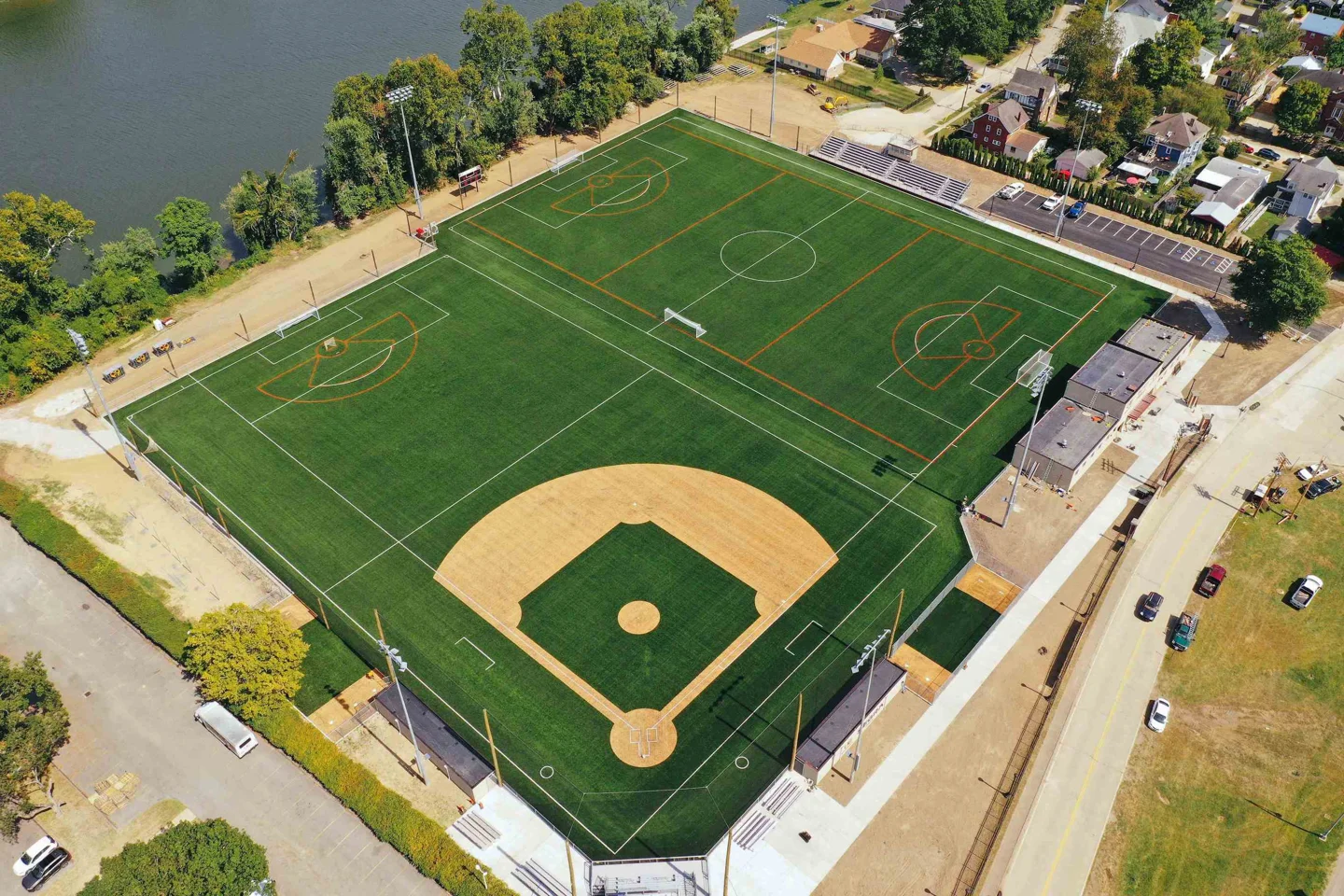
Use the venue attached to your actual game before navigating. The athletics website still contains an Appalachian Power Park guide, and searches can return other Charleston ballparks used for tournaments or special events. Those references do not override a home fixture that names Welch. Likewise, the university's football stadium and arena are different destinations; the general campus address is not enough to identify the baseball entrance.
For admission, consult the school's general ticket-information page and confirm the selected baseball event with athletics. The page gives general gate-ticket information, but it is not a season-specific 2027 baseball announcement. Do not turn a past conference-tournament price or another sport's offer into a promised price for your home game.
Ask practical questions together: where spectators should arrive, whether there are event-specific admission instructions, what seating is available and how an accessibility need can be accommodated. A university facilities page can establish the ballpark's identity without answering every game-day question. In particular, a parking statement under the softball section should not be assumed to describe baseball access.
If organizing a doubleheader outing, check the planned start of both games and the admission arrangement before setting a meeting time. Leave room for the day to develop and make sure everyone knows which field to reach. For a visitor who cannot stay all afternoon, choosing one confirmed game is more useful than planning around an assumed break between contests.
The shared-field setting is part of understanding the venue, but it does not establish that another sport's schedule or entry rules apply to baseball. Start with the Golden Eagles baseball fixture, use the linked facility information and resolve the remaining attendance details with the university before traveling.
Following Charleston beyond the regular season
Charleston's 2026 season provides a concrete example of how the postseason can change the story of a campaign. The Mountain East's championship report records a 6-5 victory over Glenville State at GoMart Ballpark. The Golden Eagles recovered from an opening tournament loss and won four consecutive elimination games to take the title.
That run shows why the tournament deserves attention independently of a regular-season snapshot. Charleston scored all six of its championship-game runs in the second inning, then had to protect the lead. The conference report describes a late defensive play at the plate and work from several pitchers. Following only the final score would miss how much of the game involved preserving an early advantage.
The school's Atlantic Regional announcement identifies Charleston as the MEC automatic qualifier and the region's No. 6 seed in 2026. Its opening assignment was against Seton Hill in Millersville, Pennsylvania. That announcement describes a berth and a scheduled matchup; it should not be read as evidence that Charleston won the regional.
The Division II route is separate from Omaha
The Golden Eagles compete for the Division II national championship. The NCAA's 2026 Division II bracket shows regional play, best-of-three super regionals and an eight-team championship finals field in Cary, North Carolina. That is a separate competition from the Division I road to Omaha.
Keep each achievement distinct. Winning the conference tournament earns a specific championship; entering a regional is another step; reaching the national finals requires further advancement. A regional seed is a position within that bracket, not a national ranking or a guarantee of the next result. Check the new season's bracket and host information when following a future postseason.
Our college baseball divisions guide explains the broader classifications, while the Division II schools guide provides additional program context. For Charleston's next game, return to the official team schedule and the competition organizer's current links. Confirm the host venue, admission and viewing arrangements afresh: a conference event at GoMart or a regional in Pennsylvania does not use the same trip plan as a home date at Welch.
Join the conversation
Share a question or a thought about college baseball. Comments are reviewed before they appear. Keep it friendly and on topic.
No comments yet. Start the conversation.
Sign in with Google to leave a comment. Your email address is not displayed.