College baseball and football conference maps differ because a university’s main affiliation, the sports it sponsors and the membership of each individual team are separate questions. A familiar logo does not guarantee a baseball program, and a familiar opponent does not automatically mean a conference series. Once you add the season year, the apparent contradictions usually become much easier to read.
A conference name does not tell you which sports a school plays
Start with the object you are trying to identify. A university belongs to an athletic structure; its baseball team plays a particular schedule; and a conference organizes competition in specified sports. Those statements often overlap, which is why a single conference badge works well as a shortcut in casual conversation. They are still different statements. When a baseball standings page looks different from the football standings you remember, check the shortcut before assuming either page is wrong.
Separate the university, the sport and the competition
The NCAA membership and sport sponsorship breakdown makes these distinctions visible. It separates institutional divisions, conference membership and the sports institutions sponsor. It also distinguishes primary conferences from single-sport conferences. That framework matters more than memorizing one national map: affiliation can describe an institution’s broad home while an individual sport has a different competition arrangement.
Ask three questions in order. Which institution is this? Does it sponsor the varsity sport you want to follow? In which conference, if any, does that team compete during the season you are reading? Skipping the middle question is a common source of confusion. A school appearing on a football graphic does not establish that a corresponding varsity baseball schedule should exist. A club baseball team is also a different object from the varsity team represented in NCAA conference standings.
A concrete baseball reference is the ACC’s January 2026 preseason coaches poll. It identifies a field of 16 baseball programs and names the participating schools. That is evidence about that sport and that season. It should not be expanded into a universal count for every ACC sport, nor should a football membership total be used to correct the baseball list. The document answers a narrower question, and that is precisely what makes it useful.
This distinction changes how you interpret a missing logo. If a baseball table omits a university familiar from football, first establish whether that university belongs in the baseball competition. Do not automatically conclude that the table is incomplete. Conversely, a school with a baseball affiliation may appear without the football identity you expect. Sport-specific membership can be a valid arrangement rather than a temporary website error.
The same care applies to opponents. Two universities can meet without the game being a conference game, and a recognizable rivalry does not identify the standings category by itself. The score contributes to the teams’ overall season records, but its treatment in a conference race requires the competition designation. That is a baseball reading habit worth developing before comparing the same schools’ football schedules.
For readers still sorting out NCAA divisions, NAIA and junior college baseball, our college baseball divisions guide handles that broader structure. Here the narrower task is to keep a school’s identity separate from the competition a particular team enters. Doing so lets you use conference information to understand a season instead of forcing every sport into one badge.
Notre Dame is a useful test of sport-specific membership
Notre Dame provides a particularly clear example because its own university guidance spells out the different arrangements. The Faculty Board on Athletics scheduling FAQ identifies football as independent, hockey as a Big Ten member and the other sports as ACC members. It specifically includes baseball among the sports with regular-season ACC schedules. These are descriptions of the same institution, so the difference cannot be resolved by selecting one supposedly correct school-wide badge.
Baseball affiliation and football independence answer different questions
For a baseball fan, the practical starting point is Notre Dame’s baseball competition. Read its conference series in their ACC context: which games affect that race, where the team stands and what remains on its league schedule. A football profile calling Notre Dame independent does not undo the baseball affiliation. It refers to a different team and a different competitive structure.
Then reverse the direction. A baseball page showing an ACC opponent does not prove the football team is playing an ACC conference schedule. Football can include games against schools that belong to conferences without making the independent team a member of those conferences. Shared opponents and shared institutional names are weaker evidence than an explicit membership statement for the relevant sport.
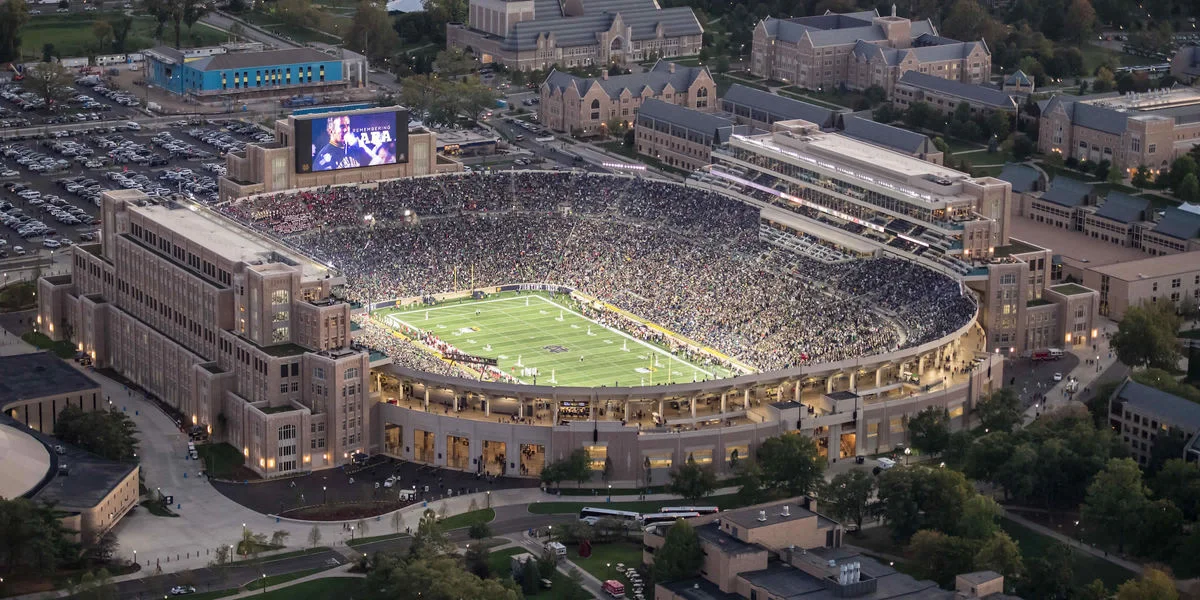
There is a scheduling distinction as well. The university explains that the conference office prepares the conference portion of a member team’s schedule, while coaches and sport administrators arrange nonconference competition. That gives the reader a useful reason to inspect game designations instead of guessing from the opponent list. A schedule combines different types of competition; the common school heading does not erase those distinctions.
Consider a hypothetical notebook entry that simply says “Notre Dame — ACC.” It may be adequate beside a baseball series, yet misleading beside a football matchup. Change it to “Notre Dame baseball — ACC — spring season” and the ambiguity disappears. A second entry for football can then use the appropriate membership description. This is a small editorial habit, but it prevents errors when a family follows several campus teams or when a general sports calendar combines them.
The school’s FAQ also places baseball primarily in the spring and football in the fall. Following both therefore does not mean they share a weekly rhythm or that a visit offers both sports’ regular-season games. A campus connection can last all year while each team follows its own calendar. Membership and timing should travel together in your notes.
None of this makes the baseball identity secondary. For a question about pitching matchups, conference standings or a league series, the baseball schedule is the relevant document. Football’s commercial visibility should not decide how that baseball contest is categorized. Use the sport that is actually on the field as the organizing principle, then bring the broader university connection back into the story.
A calendar year can contain two different membership seasons
Realignment adds a second source of confusion: the word “season” does not refer to the same part of the calendar in every sport. A fall football season and the baseball spring that follows can belong to one academic year while carrying different calendar years in their titles. A broad realignment headline therefore needs a date and a sport before it becomes reliable evidence for a baseball table.
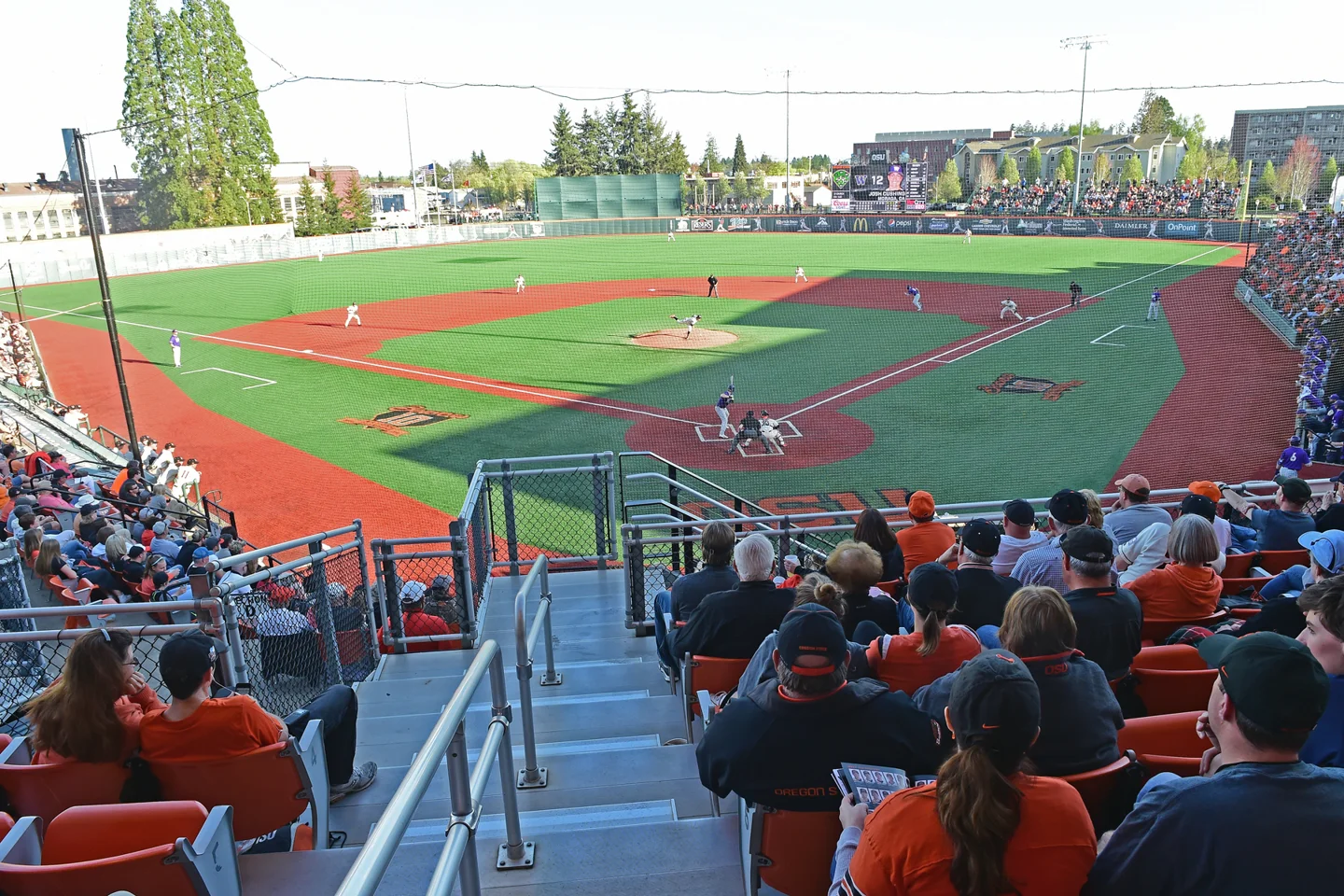
Oregon State offers a timely illustration. In its October 8, 2026 announcement, the university described baseball’s return to Pac-12 conference play during the 2027 season. It announced 18 league games, beginning with Washington State at Goss Stadium at Coleman Field on April 16–18. The announcement date is in 2026; the baseball competition it describes is in 2027. Those two years are not competing answers to the same question.
For a fan reading an archived spring schedule, this distinction is consequential. A future conference slate cannot be applied backward simply because it was announced during the same calendar year as the old results. Keep the historical competition in the structure under which it was played. Otherwise, an accurate old schedule can appear to contain a membership error that exists only in the way the reader has combined the dates.
It helps to separate three timestamps: when a move was announced, when an affiliation takes effect and when the team first plays the relevant conference games. A news story may emphasize the first; an institutional announcement may specify the second; a baseball schedule supplies the third. You do not need all three for every casual lookup, but you should know which one supports the statement you are making.
The Oregon State example also shows why a league-only announcement is not necessarily a complete season schedule. Its conference slate identifies the league portion of the spring. It does not by itself explain every opening-weekend event, midweek opponent or nonconference series. If you are choosing tickets or assessing the full schedule, continue to the university’s current baseball calendar rather than treating the conference announcement as the entire itinerary.
For travel, preserve the announced home and road designations as carefully as the dates. The 2027 opening conference series is identified as a home series at Goss Stadium. That is a useful, bounded planning fact. It does not mean every game involving those two schools is played in Corvallis, and it does not establish a football matchup at the same campus. Different sports require their own venue checks even when the universities match.
A dated map is therefore more useful than an apparently timeless one. Write “baseball, spring 2027” on your comparison rather than just “current conferences.” When you return to a saved article months later, that label tells you whether you are looking at historical context, an upcoming season or a live competition. It also leaves room for future announcements without silently rewriting the meaning of completed games.
Read a baseball series before comparing it with a football Saturday
The strongest test of conference understanding is a real schedule, not a logo quiz. Open the baseball team’s page and identify the dates, opponent, venue and competition designation of the series you want to watch. Then look at the conference standings separately. This order keeps a familiar matchup from deciding the category before you have read the relevant information.
There is a striking example in the ACC’s 2026 baseball standings: the league notes that the Clemson–Wake Forest game on April 1 was nonconference and did not count in ACC standings. Both names belong in an ACC baseball discussion, yet that fact alone does not classify their individual meeting. The official designation answers the question that a map cannot.
For viewing, also distinguish one baseball game from the whole series. The first game can change which relievers are available later, and a fan choosing only the finale may want to understand what happened earlier in the weekend. Those are baseball questions about workload and the sequence of games. A football schedule’s one-matchup-per-line presentation does not supply that context, even when it uses the same universities and conference brands.
Build a sport-specific note instead of a universal conference chart
A useful note has six fields: school, sport, season, competition, venue and time zone. Add whether the contest is conference or nonconference when the official schedule states it. For a baseball series, keep all announced dates together rather than saving only the opener. If a time changes or a doubleheader is announced, update the affected games instead of assuming the entire weekend remains unchanged.
Our baseball conference directory is a starting point for the leagues and team pages currently listed on this site. It is not an exhaustive national membership register, and the year attached to an individual listing still matters. Use official school or conference information to resolve a missing team or a transition rather than treating a search result as the final authority.
When the campus connection leads you to football, the related project College Football Schedule provides a separate starting point for football games. Its 2026 season schedule can help you find a dated matchup before checking the university’s official listing. Keep the football note separate from the baseball note. Check the displayed time zone and confirm the actual broadcast service for your location before making a viewing plan.
Finally, keep conference position separate from the national championship route. Baseball teams progress through regionals and super regionals toward the Men’s College World Series; a conference standings line describes another part of the season. Our baseball bracket guide explains that progression in detail. A conference label is valuable context, but it is not a substitute for reading which event is being played.
The payoff is a more accurate baseball conversation. You can explain why a series matters, distinguish a league result from another meeting and recognize a future affiliation without altering the past. The map remains useful; it simply becomes one layer of the evidence instead of the entire answer.
For example, a returning viewer might have time for only a Saturday baseball game. The useful preparation is to check Friday’s result, look for the announced Saturday starter and see whether the remaining games belong to a conference series. That viewer can then understand both the immediate pitching situation and the standings stakes. Saving only a school’s broad affiliation would answer neither question. If the same viewer later chooses a football Saturday, a fresh entry begins with that team’s own opponent and venue, rather than carrying over the baseball weekend’s assumptions.
Join the conversation
Share a question or a thought about college baseball. Comments are reviewed before they appear. Keep it friendly and on topic.
No comments yet. Start the conversation.
Sign in with Google to leave a comment. Your email address is not displayed.