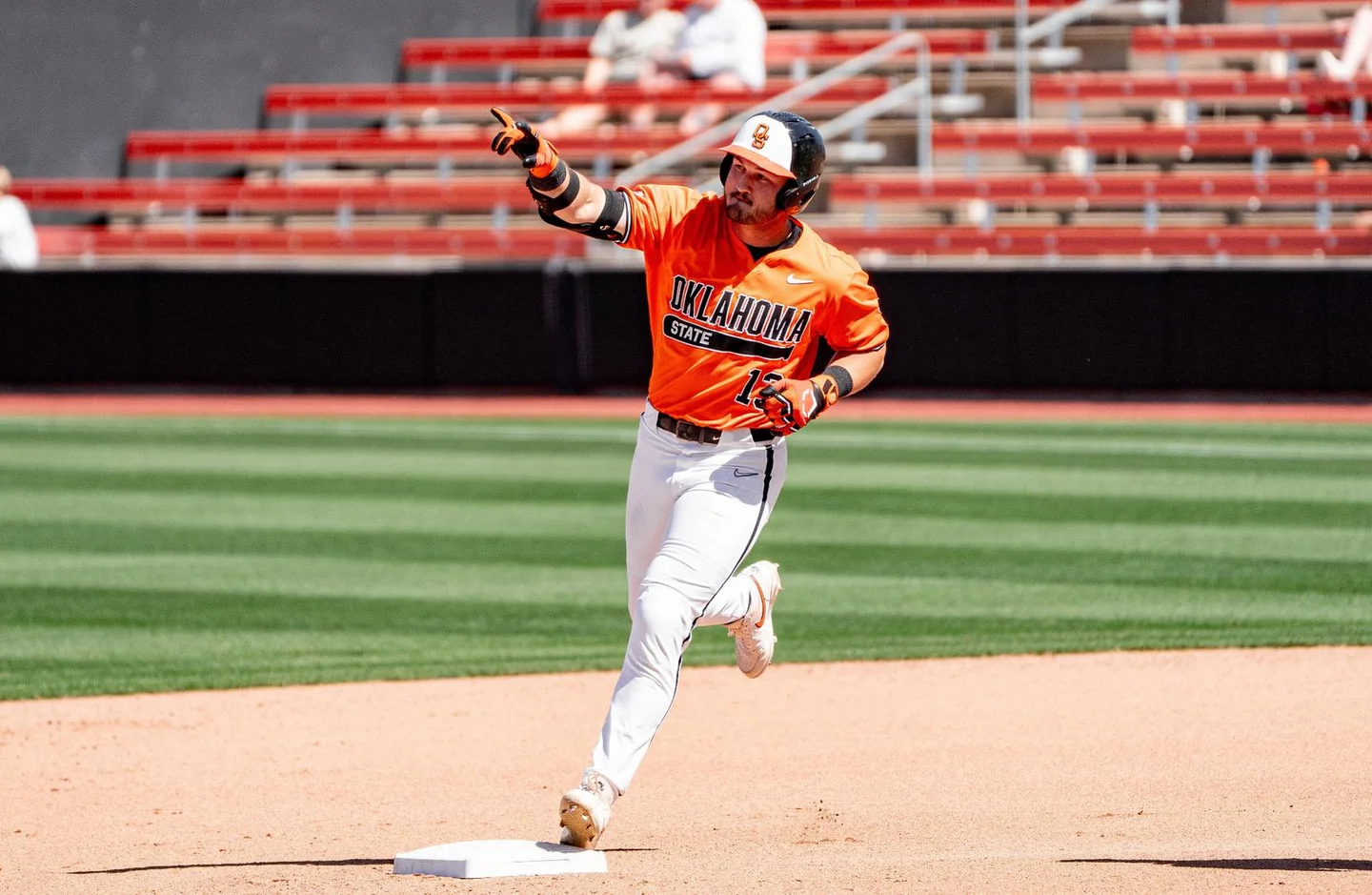
The best returning Division I baseball players for 2027 have already shown how they can change a college lineup or a weekend rotation. This preseason ranking puts the top returning hitters and pitchers on separate boards. It starts with players whose 2027 school could be verified on November 22, 2026 and weighs their completed 2026 college seasons.
How these preseason player rankings work
These are editorial rankings for college baseball fans choosing which players to watch in spring 2027. A player can make a strong case here by reaching base every weekend, defending an important position or working deep into a Friday start. MLB clubs can weigh an athlete’s long-term development, future position or projected pitch quality differently. For that question, see our guide to the 2027 college draft prospects.
Each player needed college production from the completed Division I season and an official school roster or announcement connecting him to a program for 2027. A confirmed transfer can qualify. His 2026 statistics still belong to the school he played for that year. That distinction matters if he faces a different conference schedule or has to earn a different role. A preseason roster also leaves room for lineup decisions, health changes and additions. The ranking reflects the evidence available on the check date.
For hitters, the case starts with how often they reached base, how much damage they did on contact and how many games they played. Batting average gives hits per at-bat. On-base percentage credits ways of reaching that average misses, and slugging percentage gives more weight to extra bases. A shortstop who supplies both power and on-base production changes his lineup in a different way from a first baseman with a larger home-run total. The order weighs those baseball roles without assigning a made-up numerical value to defense. NCAA baseball scoring rules
For pitchers, compare earned run average alongside innings, strikeouts and walks. A pitcher who takes the ball regularly and holds opponents down over a season can save innings for his bullpen and set up the other two games of a series. A reliever works in smaller bursts, sometimes entering with runners already on base. A lower earned run average over a shorter workload has to be read in that context. In college box scores, an innings line ending in .2 represents two outs beyond the last completed inning. Treating it as a decimal would understate the workload when calculating a rate.
All figures below are season totals or rates at the credited 2026 school unless a narrower sample is identified. They come from the available school records, so compare them with schedule and role in mind. The 2026 season standouts includes players from the full completed season, including those whose status moves them beyond this returning-player board.
Top returning hitters for the 2027 season
Arizona State’s Landon Hairston opens the hitter board because he combined elite damage on contact with a .400 average. Louisville’s Tague Davis has the strongest case if your first question is who can hit the most home runs. The next few positions show why lineup and defensive roles matter when the offensive lines are close.
The first three bats on the board
1. Landon Hairston, Arizona State, outfield. Hairston hit .400 with 28 home runs and slugged .860. Of his 94 hits, 50 went for extra bases, including 20 doubles and two triples. Arizona State also credited him with 81 RBI from the top of the lineup. His power makes the start of an inning as dangerous as the heart of the order, and his doubles give him a way to do damage when conditions or an opponent’s pitching keep the ball in the park. That combination of contact and extra bases gives him the top spot. Watch how opponents approach his first plate appearance, when they have the cleanest chance to pitch around his strengths without runners dictating the count. Arizona State’s 2027 roster · ASU’s 2026 award report · ASU’s final batting-average recap
2. Tague Davis, Louisville, first base. Davis started all 57 Louisville games and hit .355/.443/.848 with 34 home runs and 98 RBI. He hit 18 homers the previous year, which gives the 2026 jump a longer track record than one hot month. His 34 set the ACC single-season record, and Louisville reported that he led Division I in both homers and RBI. A four-pitch walk to Davis can look attractive when first base is open. It also gives the next hitter another runner to work with. His influence on how an opponent handles the rest of an inning is part of the argument for ranking him second. Louisville’s 2026 cumulative stats · Louisville’s record and award report · Louisville’s returning-player update
3. Gavin Kelly, West Virginia, catcher and second base. Kelly made 63 starts, split between catcher and second base, and hit .382/.477/.725 with 19 homers. The same line included 21 doubles and four triples, so his carry into 2027 starts with more than a single kind of extra-base hit. His defensive use also tells you something about lineup value. On days when West Virginia plays him at second, it can still get his bat into the order while assigning catching to someone else. Check his position in each starting lineup before comparing a weekend’s results. His presence in either spot gives the Mountaineers a productive hitter up the middle. West Virginia’s fall roster and player bio · West Virginia’s final 2026 stats
Three more hitters to follow
4. Brendan Lawson, Florida, shortstop. Florida named Lawson among its returning starters after he started 51 games at shortstop and five as the designated hitter. He put up a .511 on-base percentage with a .312 average, 19 home runs, 53 walks and 24 hit-by-pitches. The spread between average and on-base percentage helps explain his rank. He has several ways to extend an inning before the next hitter comes up, and his power creates a cost when a pitcher falls behind and has to work back across the plate. The key early question is whether he keeps getting on base at a high rate when opponents find ways to challenge him inside the zone. Florida’s 2026 Lawson statistics · Florida’s fall roster update
5. Kollin Ritchie, Oklahoma State, outfield. Ritchie started 60 games and hit .326/.462/.804 with 31 home runs. The Cowboys confirmed his return after the draft and named him among their 2027 returners again in September. There are multiple ways to weigh him against Lawson. Ritchie has the larger slugging figure and can change how a team pitches with men on base. Lawson’s on-base rate and shortstop workload decide the order here. Ritchie supplied two separate three-homer games in 2026, including a walk-off against TCU. That example helps explain why his at-bats can be worth following even when a starter seems to be in control of a game. Oklahoma State’s 2027 update · The Cowboys’ 2026 stats · Oklahoma State’s All-America report
6. Anthony Pack Jr., Texas, outfield. As a freshman, Pack hit .355/.480/.594 with 12 home runs, 47 walks and 21 steals in 61 games. Texas listed a separate .400 average in SEC play, useful evidence that his hitting held up in the league portion of the schedule. The value of his walks becomes obvious once he reaches first. In a close game, a steal can put him in scoring position before the hitter adds a ball in play. His return provides a different threat from the louder home-run totals above him. Watch how early Texas gives him those opportunities and how the opponent varies its delivery when he takes a lead. Texas’s 2027 roster and Pack bio · Texas’s 2026 season totals
Top returning pitchers for the 2027 season
Texas’s Dylan Volantis takes the top pitching spot after carrying a starter’s workload with a 2.08 earned run average. The rest of the board moves between dependable innings, rare strikeout rates and evidence from high-pressure starts. The fifth slot recognizes a pitcher who did most of his damage in relief.
The four starters at the top
1. Dylan Volantis, Texas, left-handed starter. Volantis made 16 starts and threw 95 innings in 2026, with 135 strikeouts, a 2.08 ERA and a .189 batting average against. As a freshman in 2025 he started once and saved 12 games. His move into the rotation demonstrated that the swings and misses could hold up over a longer assignment. When he struck out 12 over six scoreless innings against Mississippi State, he gave the Longhorns a big chunk of that game and left the staff with three innings to cover. The combination of that workload, that strikeout total and his season-long run prevention gives him the strongest starter case on the board. Texas’s 2027 roster and pitching recap
2. Aidan King, Florida, right-handed starter. The 2026 SEC Pitcher of the Year logged 97 innings in 16 starts with a 3.21 ERA and 19 walks. His 1.03 season WHIP means he allowed just over one walk or hit per inning, and his 0.89 WHIP in SEC games reflects how few of those runners he allowed against the league portion of the schedule. With King, watch the early counts and what happens after a leadoff hit. Limiting the free pass can keep one baserunner from turning into an inning where the opponent gets the top of its order back to the plate. The Florida fall release identifies him as a returning starter. Florida’s final 2026 King bio · Florida’s returning-player report
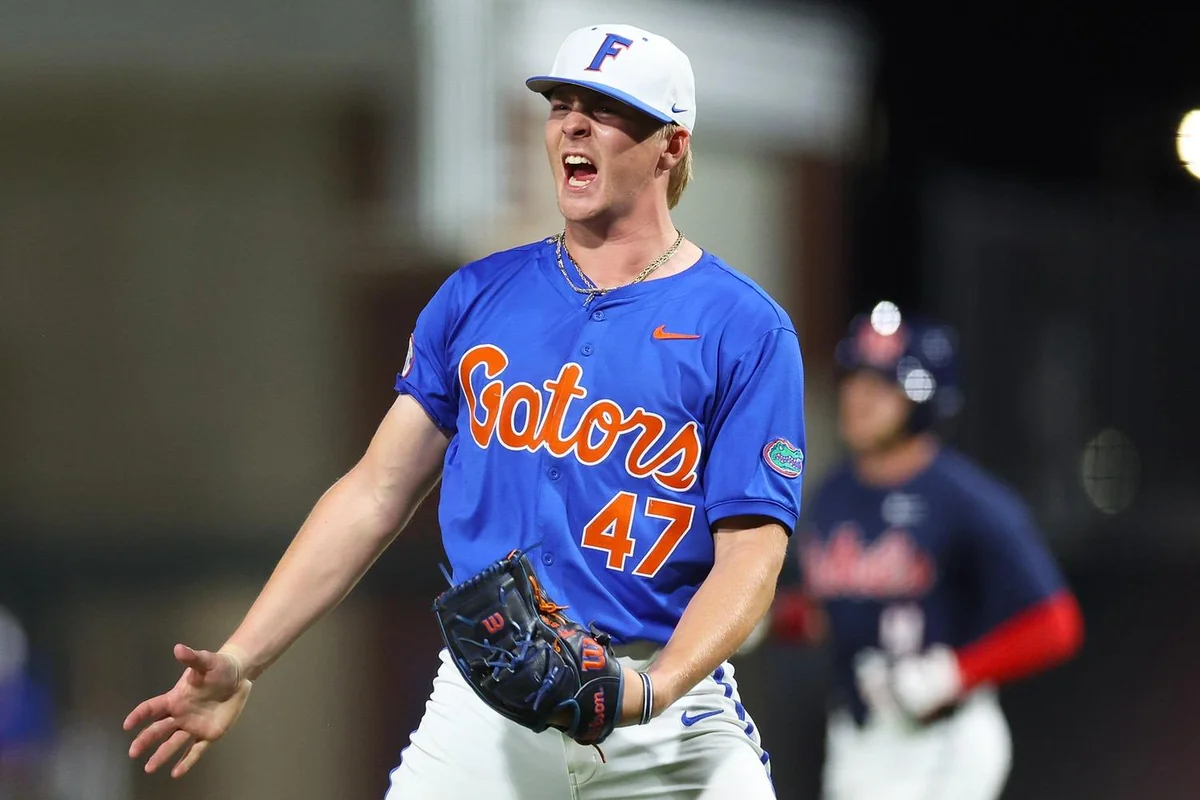
3. Ethan Lund, Oklahoma State, left-handed starter. Lund struck out 137 hitters in 84⅓ innings across 17 appearances, including 16 starts. His 14.62 strikeouts per nine tell you how routinely he ended a plate appearance without needing a play behind him. Against Sam Houston he fanned nine consecutive batters on the way to 14 strikeouts. He also finished with a 5.34 ERA, which is why King ranks ahead of him despite the difference in strikeout pace. The two carry different expectations into a start. King’s 2026 line shows more consistent run prevention across the season, while Lund has the ability to take an inning away from an opponent even when a ball in play would score a runner. Oklahoma State confirmed his return with its 2027 schedule. Oklahoma State’s 2026 innings and strikeouts · Lund’s Sam Houston outing · Oklahoma State’s 2027 returners
4. Cord Rager, Oklahoma, left-handed starter. Rager struck out 94 across 76 innings in 16 starts and had a 4.74 ERA. In four NCAA tournament starts he posted a 2.25 ERA with 27 strikeouts and three walks, including seven scoreless innings and eight strikeouts against Alabama in Omaha. Oklahoma’s recap noted how his curveball worked with his fastball command in that game. That run raises his stock, with a full season of steadier performance still to demonstrate. For an early read, watch whether the curve lets him get ahead and finish at-bats through a second trip through the order. That matters more for a season’s worth of starts than reproducing one shutout line. Oklahoma’s 2027 roster and season splits · Oklahoma’s College World Series recap
The late-inning arm to know
5. Sam Cozart, Texas, right-handed pitcher. The 2026 National Collegiate Baseball Writers Association Stopper of the Year logged nine saves, a 1.72 ERA, 77 strikeouts and 13 walks in 52⅓ innings. He started three of his 23 appearances, and his three-inning saves against Ole Miss and Alabama show that he could get more than the final three outs. A team with that option can bridge the gap after a starter leaves without running through a sequence of one-inning relievers. Cozart is on the 2027 roster. If Texas uses him for longer outings this spring, pay attention to his workload and how his results hold up against hitters who see him a second time. Those are new questions even for a pitcher who has already handled tight games. Texas’s roster and Cozart’s final line · Texas’s relief award announcement
What could change the rankings in February and March?
Look first at how coaches use the players. A third-place hitter in this ranking can move up without hitting five early home runs. If his school puts him in a spot that gets him an extra plate appearance again and again, or trusts him to handle a demanding defensive position throughout a series, that supplies evidence about the job he will have this year. For a player who changed teams, start with the receiving school’s roster and check the position and batting order in real games. His 2026 production gives you a benchmark while he settles in.
Check how the pitching workload develops. A coach can give a starter four innings in February and expand the assignment in March. Look at batters faced and pitches thrown before treating a short outing as a loss of trust. Two starts in a row with a longer leash show how the coach is building the role. A change from relief to starting also changes which hitters the pitcher must retire a second time. For an arm such as Cozart, track when he enters, how many outs he records and how quickly he appears again. A box score can tell you more about that assignment than whether the scorer credited a save.
Compare what happens against different opponents. Texas is scheduled to open against Clemson, TCU and Virginia on February 19–21 at Globe Life Field. Florida is scheduled to host Queens the same weekend, then Miami on March 5–7. The first weekend lets you see who is in uniform and how the batting orders and pitching staffs are used. The next few series give you better evidence about whether a rate or a change in approach can hold up. Both schools list their first SEC series on March 19–21, with Texas at LSU and Florida at Auburn. Texas’s 2027 schedule release · Florida’s 2027 schedule release
Texas is also scheduled to visit Florida on April 16–18. That weekend could bring Volantis, Cozart and Pack into the same series as King and Lawson. A team schedule tells you which series to mark on the calendar. Check the latest school preview for probable pitchers and the starting lineup for each game before you pick a session or try to see a particular matchup. Use the 2027 Division I schedule to find games and check first-pitch times as more listings are added. The preseason order can change as players establish their new roles and put meaningful innings or at-bats on the board.
Join the conversation
Share a question or a thought about college baseball. Comments are reviewed before they appear. Keep it friendly and on topic.
No comments yet. Start the conversation.
Sign in with Google to leave a comment. Your email address is not displayed.