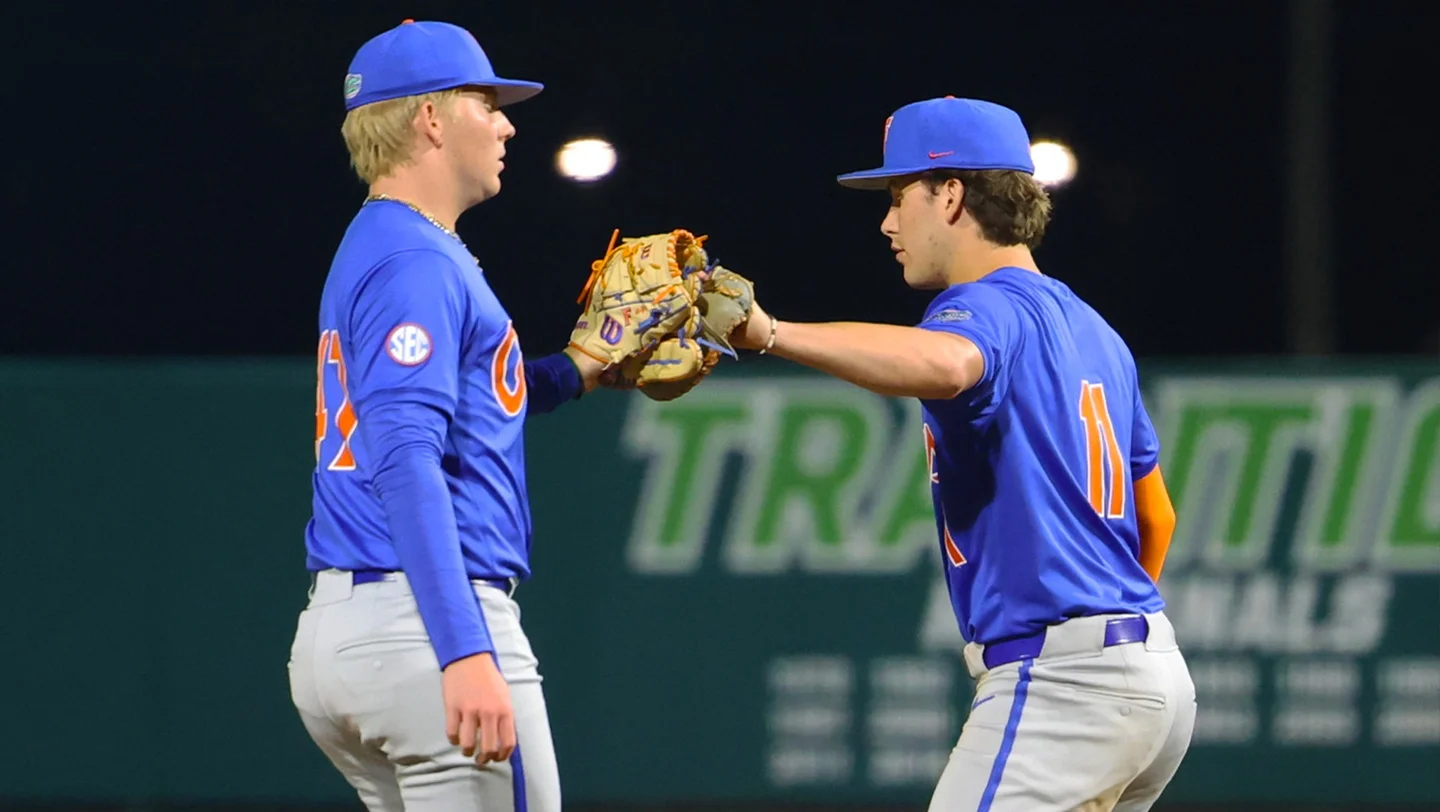
Start a 2027 MLB Draft college watch list with Brendan Lawson, Landon Hairston, Tague Davis, Gavin Kelly and a varied group of college pitchers. The useful question is what each player still needs to demonstrate this spring. This is a college-only editorial shortlist checked October 20, 2026, not an official final draft ranking or a prediction of the selection order.
Start with a college-only watch list for the 2027 draft
Separate college players from high-school prospects before comparing names. A player committed to a university is not automatically a current member of that university's baseball team. Likewise, a recruiting class labelled 2027 and a group eligible for the 2027 MLB Draft describe different populations. The players below provide a manageable starting set for following the college side of the draft conversation.
| Player | College program | Role to follow | Viewing question |
|---|---|---|---|
| Brendan Lawson | Florida | Infielder | How do the offensive approach and defensive role develop together? |
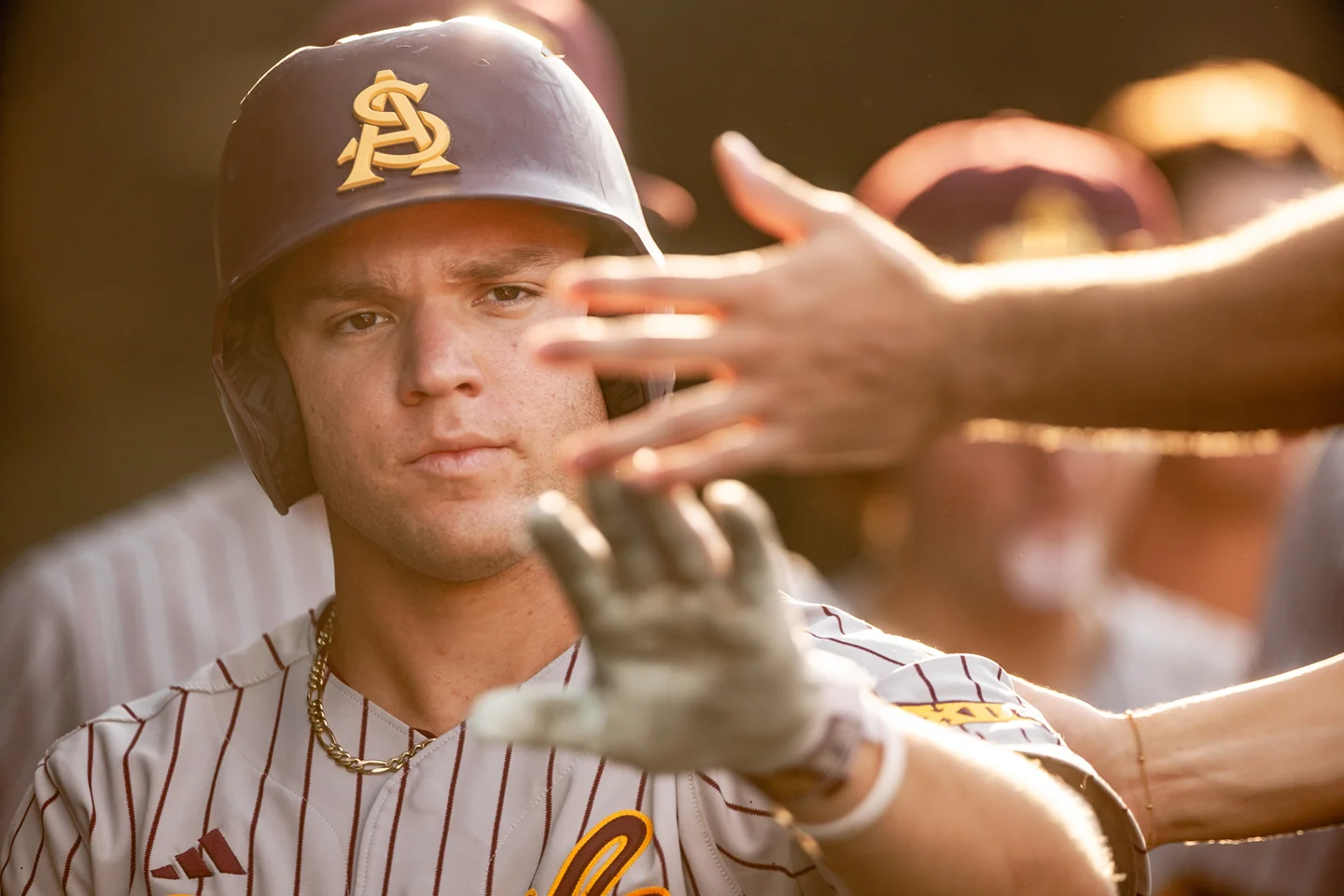
| Landon Hairston | Arizona State | Outfielder | Can he sustain an exceptional blend of contact and damage? |
| Tague Davis | Louisville | First baseman | How does the power play when pitchers change their approach? |
| Gavin Kelly | West Virginia | Catcher and utility player | Where does he play, and how does that affect the full profile? |
| Tomas Valincius | Mississippi State | Left-handed pitcher | Does the command hold through a starter's workload? |
| Chris Levonas | Wake Forest | Right-handed pitcher | How consistently does the arsenal work across repeated starts? |
| Aidan King | Florida | Right-handed pitcher | Can he extend an established starting record? |
| Dax Whitney | Oregon State | Right-handed pitcher | What does the verified availability picture allow us to evaluate? |
These names appear in the broader class identified by Perfect Game's college-only board. That board was published before the 2026 season, so its order should not be mistaken for an October 2026 verdict. The shortlist here is deliberately unnumbered: it brings together different player types rather than reproducing a publisher's proprietary Top 100.
More recent school reporting helps establish the current picture. Florida's August prospect update identifies Lawson and King alongside Jackson Barberi and Joshua Whritenour as prominent 2027 candidates. Arizona State's postseason honors release confirms Hairston's Golden Spikes finalist recognition. Those are dated pieces of evidence, not guarantees about a future draft pick.
Use the list to choose games, not to exclude everyone outside it. The most valuable spring viewing can involve an improving player who has not yet climbed a national board. Start with a few recognizable names, identify what would change your assessment, and leave room for new evidence. That produces a more informative season than checking whether a favorite player moved one place in a weekly article.
Judge the hitters through contact, damage and defensive value
A home-run total is a strong reason to watch a hitter, but it cannot answer every draft question. Contact frequency, strike-zone decisions and the defensive contribution change how that power fits a professional projection. Keep the completed college record beside those questions instead of substituting one for the other. A productive spring deserves recognition even when evaluators disagree about how the skills will translate.
Hairston, Lawson and Davis illustrate three useful starting points. Arizona State's final postseason release credits Hairston with 28 home runs, 20 doubles and an .860 slugging percentage. Florida's Lawson biography records 19 home runs and 53 walks with a .511 on-base percentage. Louisville's final 2026 table gives Davis 34 home runs, 70 strikeouts and 36 walks in 57 games. Those are different offensive shapes, not interchangeable versions of “a power bat.”
Ask whether the bat works against different pitching
For Hairston, start by watching how opponents try to interrupt his ability to make damaging contact. Does he continue to reach pitches he can drive when a pitcher changes speeds or location? A double into a gap, a competitive two-strike plate appearance and a walk can reveal more about a particular adjustment than a home run against a mistake. Do not reduce the observation to whether he matches the previous season's pace every weekend.
Lawson's combination of power and walks makes the quality of his decisions worth following closely. Watch the counts in which he chooses to attack and whether he gives away the outer edge of the strike zone when facing better command. The published walk total establishes a completed result; it does not let a viewer assign a professional plate-discipline grade from one television appearance. Separate what the box score proves from what the next game may help you understand.
Davis makes the contact-power tradeoff particularly visible. His 2026 production supplies evidence of substantial damage, while the strikeout and walk counts create a clear spring question: can he keep that impact while avoiding enough empty plate appearances? This is not a demand that a power hitter become a different player. It is a way to watch whether improved decisions or contact make the existing strength available more often.
For all three, record the opponent and the pitches actually faced. A weekend against multiple high-quality arms provides a different test from an isolated highlight. Resist conclusions based on a few swings, especially when the broadcast angle does not show location reliably. The best observation may be a question to revisit in the next series rather than an immediate rise or fall on your personal list.
Separate a player's current position from his projected role
Lawson started 51 games at shortstop in 2026, according to Florida. That establishes his college usage; it does not settle his eventual professional position. Watch the first step, the exchange and how he handles different throws rather than using an error count alone. Defensive reliability and defensive range are related questions, but a basic fielding percentage cannot measure both completely.
West Virginia's Kelly biography records 63 starts split between catcher and second base, alongside a .382 average and 19 home runs. That mix makes his assignments particularly useful to track. A catching appearance asks different things of him than a game in the middle infield. Note where he plays and how often instead of treating “utility” as a complete scouting description.
Roster labels can also lag or simplify actual usage. Hairston's honors were awarded as an outfielder while ASU's roster lists him as an infielder. Follow the lineup card and game action when deciding which role you are evaluating. The sensible conclusion is that defensive usage needs current evidence, not that one label guarantees a future position.
Give pitching prospects a different set of questions
Pitching evaluation begins with availability and role before it reaches the most exciting pitch. A prospect may have a strong completed season, a limited current workload or a role that changes what a velocity reading means. Keep those circumstances attached to the name. A ranking without workload context can make two very different developmental situations look identical.
Wake Forest's Levonas biography records 15 starts, 116 strikeouts in 73 1/3 innings and a 2.82 ERA for 2026. That gives a returning viewer a real starting record to examine. The next questions concern repeatability: whether he can locate when behind, how the arsenal works after hitters have seen it, and whether the delivery remains effective as the outing progresses.
Mississippi State's Valincius biography separates his current Bulldog career from his earlier Virginia season. Keep that distinction when comparing his development. Mixing a freshman stat line from one school with a sophomore scouting report from another can create a player profile that never existed. Follow the current program, then compare the same kinds of results across the correct seasons.
Distinguish a starter's workload from a short relief look
Florida's August report offers a useful internal comparison. King worked 97 innings in 2026 with 92 strikeouts and 19 walks, while Barberi's workload covered 37 1/3 innings. Both can belong in a prospect conversation, but those totals describe different amounts of exposure. A short appearance and a weekend start ask different questions about endurance, pitch selection and facing a lineup again.
For a starter, watch beyond the opening inning. Does the pitcher still find a competitive pitch after a walk, a long at-bat or a second trip through the order? Does he have a way to challenge opposite-handed hitters? For a reliever, ask whether the current role permits maximum effort and whether the report is discussing that role or projecting another one. Do not manufacture a future starting assignment from one impressive inning.
Whitney requires an additional distinction between achievement and availability. Oregon State's October season summary credits him with a 2.00 ERA and 104 strikeouts in 63 innings. MLB Pipeline reported Whitney underwent elbow surgery and questioned his 2027 availability. That makes a current official update more useful than assuming he will take a normal spring rotation turn.
Neither a season total nor a prospect ranking supplies a recovery timetable. Follow confirmed team information and distinguish a competitive appearance from a report about throwing or rehabilitation. There can still be draft interest in a pitcher without a full spring schedule, but the evidence available to viewers is different. Leave that uncertainty visible rather than converting it into a confident medical or selection forecast.
Read prospect rankings without confusing them with mock drafts
A talent board orders players by an evaluator's assessment. A mock draft assigns players to selections and therefore asks an additional question about teams and circumstances. A recruiting ranking evaluates another population, often before college competition begins. An award list recognizes performance within its own eligibility and voting process. None of those documents should be used as a substitute for the others.
MLB's July mock used randomized team order. That alone explains why an early assignment beside a club name is not a settled destination. Read a mock for the players and possible decision points it introduces, then return to actual reporting as the draft approaches. It should not become evidence that a particular organization owns a future pick or has committed to a prospect.
Eligibility also requires attention. MLB's glossary describes four-year college eligibility after junior completion or turning 21. A roster class by itself is therefore not enough to resolve every player's draft year. Redshirts, age and the relevant rules need checking before treating an unusual sophomore designation as an error or assuming every junior has the same situation.
When two lists disagree, compare their dates before comparing their judgments. A board published before the 2026 season cannot incorporate the same evidence as an August review after the season. A ranking may also include high-school players while another includes only college players. A move from one number to another is meaningful only when the population and publication method are comparable.
Team strength belongs in a different column. A college team can have a highly regarded draft prospect and still lack the pitching depth or consistent offense needed to win a weekend series. Conversely, a very successful team can distribute its value across several players without one sitting near the top of a draft board. Use team rankings and RPI for their stated questions; neither assigns a professional future to an individual.
A useful personal note names the publisher, publication date, population and specific claim. “Highly ranked” loses too much context. “Included on a college-only board before the season” or “identified in a school update after the season” tells you what is known and what still needs updating. That discipline makes the spring's new information easier to interpret without chasing every numerical fluctuation.
Turn the watch list into a useful spring viewing plan
Choose a few players you can follow repeatedly rather than trying to evaluate a hundred names in one weekend. Start with a hitter whose approach interests you, a pitcher with a defined starting role and a player whose defensive assignment creates a different question. Repeated looks at a small group make it easier to distinguish a skill from a single good result.
Use the college baseball schedule to find the teams, then confirm current game and broadcast details through the schools. A schedule gives you a chance to watch a program, not a promise that a particular prospect will appear. Check the actual lineup and announced starter before rearranging an evening around one player. For a pitcher with an uncertain availability picture, prioritize a confirmed team update over an assumed weekly rotation.
Keep three kinds of notes separate. The first is a verified fact from an official record, such as a season total or starting assignment. The second is something you observed in a particular game, with the date and opponent attached. The third is a projection or interpretation from an evaluator, with the publication named. Separating those columns prevents an impressive broadcast impression from becoming an invented measured statistic.
Update the evidence when fall gives way to conference play
Fall provides roster and role clues, but its schedule is not the spring schedule. Florida's October practice and exhibition notice, for example, distinguishes practices, scrimmages and an exhibition and warns that times can change. A few fall plate appearances should not be treated as a completed conference-season test. Note what happened without assigning it more weight than the setting supports.
As spring develops, compare similar opportunities. For hitters, record the quality and handedness of the pitching faced when you can verify it, the role in the lineup and whether the sample includes full series rather than highlights. For pitchers, record starts, innings and walks as well as strikeouts. A dominant first inning and a controlled six-inning start answer different questions even if each produces one memorable clip.
Revisit the original question for each player. With Lawson, track the relationship between offensive decisions and defensive usage. With Hairston and Davis, ask how their production arrives against changing approaches. With Kelly, follow the workload across positions. With King, Levonas and Valincius, look for repeated command and role evidence. With Whitney, begin with verified availability. These are useful observations even when no ranking changes that week.
At the end of a series, update what the evidence supports and leave the rest open. A draft season is a long comparison of players with different roles, workloads and opportunities. The best college watch list keeps those differences visible while giving you specific baseball to follow when the next first pitch arrives.
Join the conversation
Share a question or a thought about college baseball. Comments are reviewed before they appear. Keep it friendly and on topic.
No comments yet. Start the conversation.
Sign in with Google to leave a comment. Your email address is not displayed.