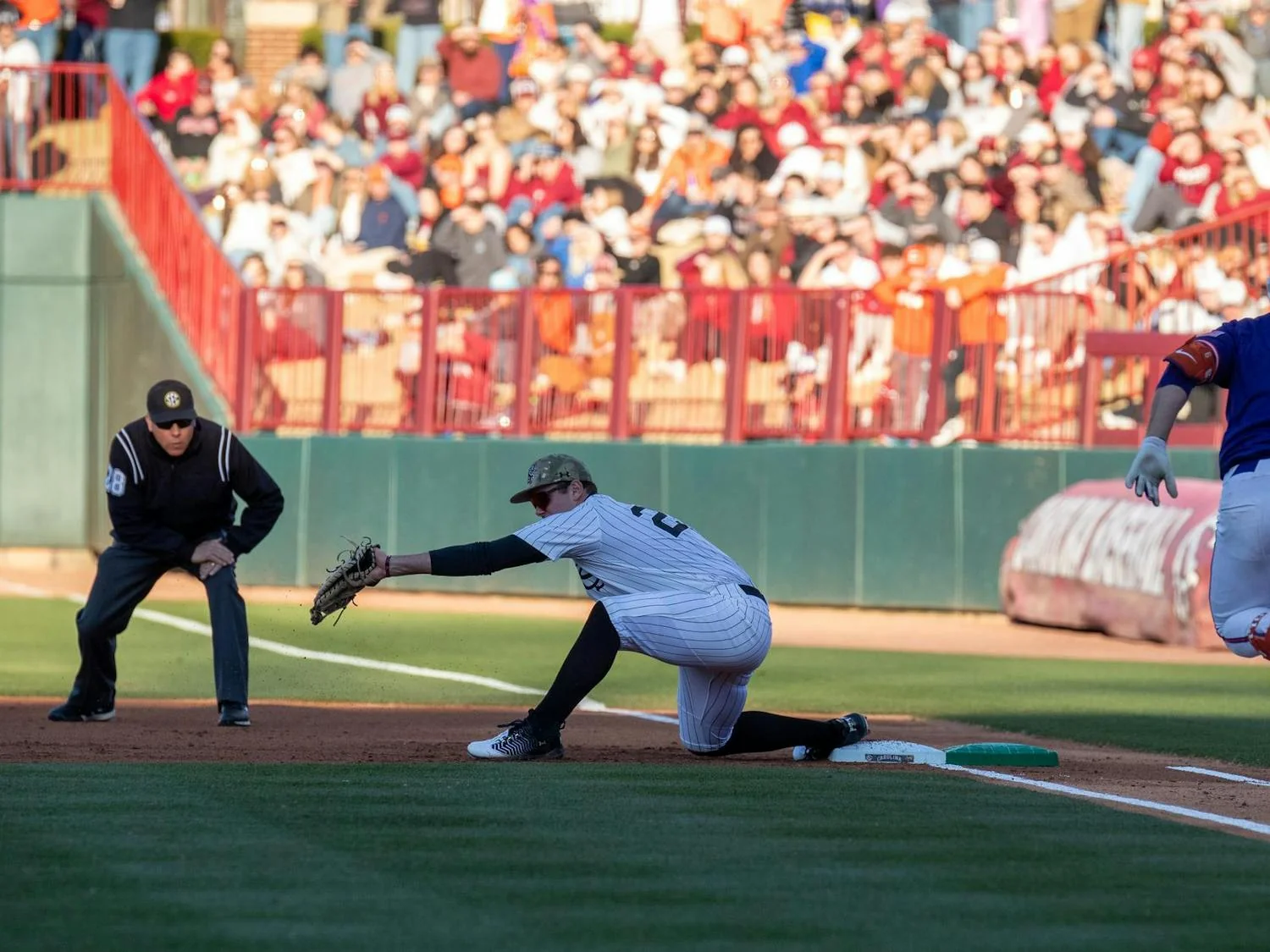
On a normal initial play at first base in NCAA baseball, the batter-runner uses the colored half and the defense uses the white half. The 2027–28 rules require the double first base for regular-season and postseason competition, with a specific exception for facilities the institution does not own. Different instructions apply to dropped third strikes, certain throws from foul territory and plays after the runner has reached first.
The color alone therefore cannot settle every close call. The useful question is what kind of play is happening, followed by which part of the base the player must touch. This guide follows the NCAA baseball rules for 2027 and 2028, checked October 31, 2026.
What is changing at first base in 2027?
The NCAA's Division I changes and Division II and III changes adopt the same basic requirement: use a double base at first in regular-season and postseason competition. Their stated purpose includes giving offense and defense room to operate, potentially reducing contact and reinforcing use of the runner's lane.
The arrangement places the familiar white section on the fair side and a colored section beside it in foul territory. The NCAA permits orange or green for that colored portion. It gives two players approaching the same destination separate targets on the ordinary play, while keeping first base part of the existing sequence of bases.
Think about a routine ground ball to shortstop. The first baseman prepares to receive a throw while the batter-runner arrives at full speed. A single shared target brings their feet into approximately the same space. The double base creates a way for the runner to finish on the outside portion while the receiver works with the white portion. That explains the design's practical value without promising that every collision disappears.
The 2027 requirement also does not mean a double base was unknown in earlier college games. The SEC announced an experimental use at its 2024 tournament. An older clip showing two colors is entirely compatible with a later rule making the arrangement broadly required.
For viewers, the change is most useful as a routing rule. It does not turn every touch of white by a runner into the same violation, because the rule accounts for the location of the ball and whether an initial play is being made. Nor does it make the colored portion an alternative place to stand throughout a baserunner's stay at first. The responsibility changes as the play develops.
There is also a facility exception, explained below, so a single square first base in a 2027 college game is not enough by itself to establish a rules violation. Identify the division, playing rules and venue before judging the setup from one photograph.
Which half should the runner and fielder touch on the first play?
The normal play at first
When an initial play is being made on the batter-runner at first, the normal assignment is white for the defense and colored for the batter-runner. The NCAA's double-base guidance makes that distinction central. It is about the initial play, rather than a permanent division of the base between offense and defense.
Picture a second baseman fielding a routine grounder and making an accurate throw. The receiver works with white; the runner aims for the outside colored target. Watching those two responsibilities separately is more useful than simply asking whether somebody touched first base somewhere. The photo below shows how visibly separate the targets can be, although one still image cannot decide the timing or result of a play.
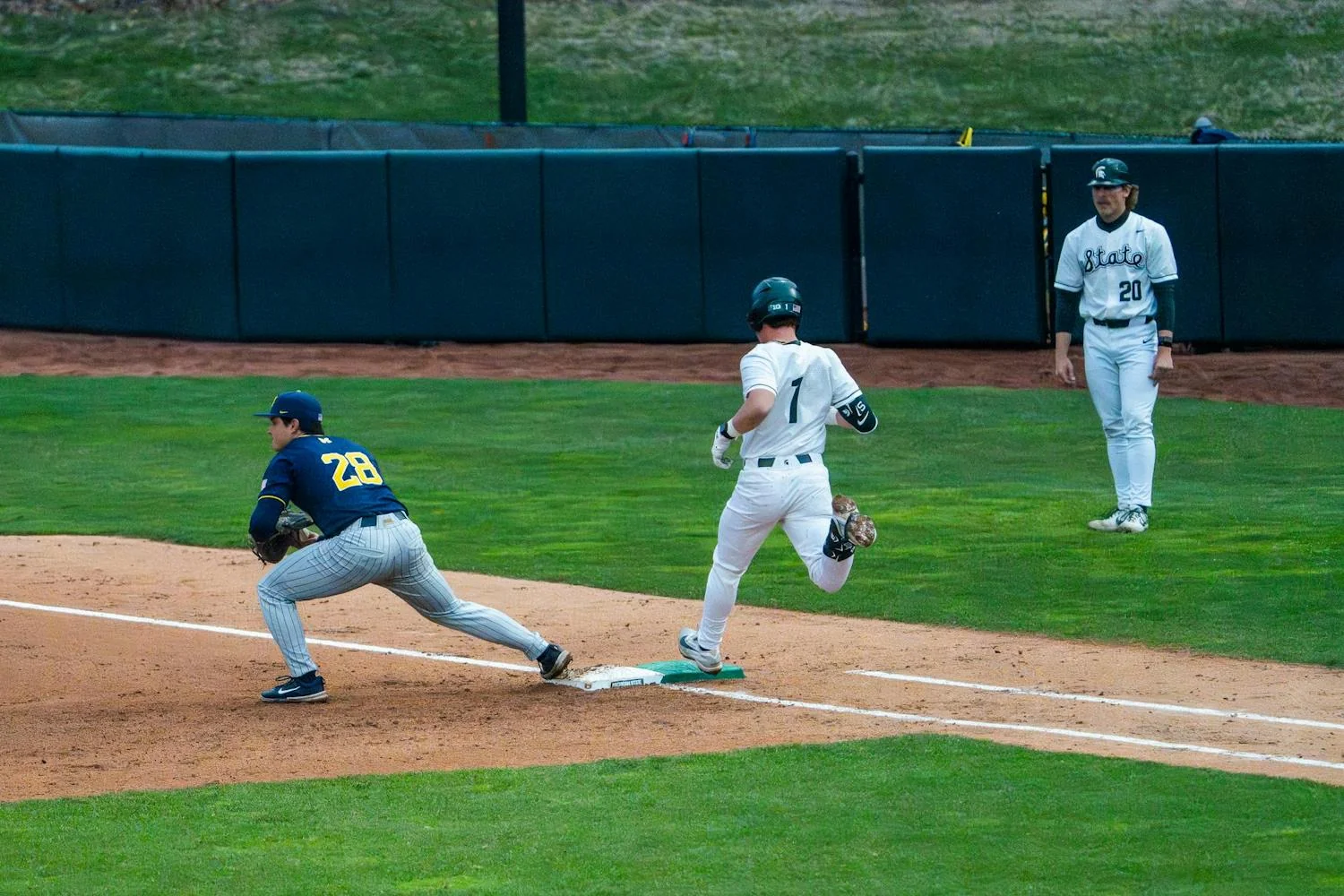
Plays that allow a different route
A dropped third strike has its own exception: the fielder and batter-runner may touch either portion. If the receiver is drawn into foul territory beside the colored half, the runner can use white to avoid a collision. Normal running-lane restrictions still apply in this situation. The mere fact that the runner used white therefore does not establish a violation on that dropped-third-strike play.
A second exception concerns a fair ball fielded near first from foul territory, a throw from foul territory near first, or an errant throw that pulls the defense off white into foul ground. The batter-runner may use either portion and take the last few steps in fair territory to avoid a collision. For this exception, the ordinary running-lane violation rules do not apply. The defense, however, still must touch white to complete the force play.
The difference between those exceptions matters. On the dropped third strike, either player may use either half. In the foul-territory or errant-throw exception, the runner's choice expands while the defense retains the white-base requirement for the force. A description such as “both players can switch sides whenever the throw is bad” loses that distinction.
These permissions also serve a particular purpose: allowing a route that avoids contact. They do not authorize intentional interference. The NCAA retains an out for intentional interference and adds ejection when it is flagrant. Fans should therefore look at why the route changed, where the throw took the receiver and whether the action was an attempt to avoid the collision. A color-only replay misses the circumstances that determine which instruction applies.
Does touching the wrong half always mean an out?
Start by deciding whether the runner actually used the wrong half under the applicable situation. White can be permitted under the exceptions just described. When an initial play requires the colored portion and the runner clearly touches only white, the NCAA treats that as missing the base. What follows depends on the timing of the play.
Separate an appeal from an immediate ruling
The 2027–28 rulebook distinguishes a close play from one in which the runner clearly beats the throw and has both feet on the ground beyond the back edge. In the close-play situation, if the runner has not passed the base with both feet, the runner should be called out for failing to touch the proper base.
If the runner clearly beat the throw but missed the required portion and is beyond it with both feet down, the umpire initially makes no call. The defense can obtain the out by appealing before the runner returns to first. A lack of an immediate signal therefore does not establish that the runner legally touched the required half.
Consider two illustrative ground balls. On the first, the ball and runner arrive almost together and the runner touches only white when colored is required. On the second, the runner is well ahead of the throw, touches only white and continues beyond the bag. The foot contacted the same color, but the rule directs different mechanics. Watching only the instant of contact leaves out the information that explains the call.
The defensive touch deserves equal attention. On an ordinary force play, contacting colored alone does not satisfy the receiver's white-base responsibility. That does not automatically award the runner an extra base or settle a separate tag play; the actual defensive action still matters. Likewise, contact between the players may raise an interference or obstruction question with its own facts. A wrong-half question and a collision question can occur together without becoming the same ruling.
Which half counts after the runner reaches first?
Once the batter-runner reaches first, the NCAA directs the runner to use only white. The colored portion is a target for specified initial plays, rather than a permanent offensive base. This is the most important transition to remember after an ordinary ground ball turns into a baserunner standing at first.
For example, a runner can correctly use colored while beating an infield throw, run through the bag and then return to white. The return is a different part of the sequence from the initial arrival. Standing on colored afterward does not acquire the same status simply because it was the correct target a moment earlier.
The rulebook also addresses hits without an initial play at first. On an extra-base hit, an outfield ball with no chance for a play at the double base, or an infield play without an initial play on the batter-runner, either half can be touched during the initial trip. Once the runner has gone beyond first, a return must be to white.
Picture a clean ball into the gap. The batter-runner can use either half while rounding first toward second. If the outfield return persuades the runner to retreat, white is the target on the way back. The fact that colored was legal while advancing does not carry forward as permission to use colored while returning.
The same white-only instruction provides the answer to ordinary later situations at first: taking a position on the base, returning against a pickoff attempt and retouching in a caught-fly sequence. The normal requirements for advancing and retouching bases remain relevant. The double-base rule identifies the portion that counts; it does not make a runner immune to a tag, change a caught ball into a hit or cancel the obligation to retouch.
This helps explain why the camera may show the same player using different colors during one inning without inconsistency. The initial approach and the later baserunning action are different stages. Follow the runner through the entire sequence rather than applying the first touch's instruction to every subsequent movement. That approach also makes the first-base coach's directions easier to understand when a runner overruns the bag and turns back toward the field.
Why might a 2027 game use a different-looking base?
The exception for fields the school does not own
The approved changes for both Division I and Divisions II and III allow competition at noninstitutionally owned facilities to use 18-inch square bases without a double first base. The exception turns on ownership, rather than simply whether the game is away from campus.
A borrowed professional park is a useful conditional example. If it meets that ownership condition and uses the specified square bases, the absence of an attached colored target can fit the NCAA exception. Calling a venue “neutral” does not by itself establish all of those facts, and a picture of a single base does not reveal its measured size.
This is why an early-season tournament can look different from a campus weekend series without necessarily using a different baseball code. The right follow-up is to identify the facility and its base configuration. There is no need to assume a violation from the television image alone.
A double base and an 18-inch base are separate changes
The 2027–28 changes also permit 18-inch square bases at institutionally owned facilities, provided a double first base is used. The 15-inch square remains the standard. The size option therefore does not let a school-owned field replace the double arrangement with a single larger first base.
These provisions answer different questions. Size describes the dimensions of the individual bags; the double-base requirement describes the arrangement of targets at first. A larger square can provide more surface area, while the adjoining colored portion provides an additional route for the initial play. Treating “18 inches” and “double base” as interchangeable obscures the actual requirement.
Fans comparing rules across levels should also keep the governing organization in view. NCAA divisions share this base change, but that does not establish the rule for every high school, junior college or professional game. Our division guide helps identify the competition. A fall 2026 observation, a 2027 rule and a facility exception each supply a different piece of context.
How to follow a close play without losing the rule's context
Begin with the ball. A batted ball hitting or bounding over white is fair; a ball hitting or bounding over colored without first touching or bounding over white is foul. That is a ball-location rule, distinct from the rule assigning a target to the runner. The colored portion's presence in foul territory does not turn a ball that first touches white into a foul ball.
On a slow roller down the line, watch which section the ball reaches first. On a throw to first, watch where the ball was fielded or thrown and whether the receiver was pulled into foul ground. Those are different questions, even though both can involve an orange or green target near the foul line.
Next identify the stage of the runner's trip. Is this the initial play, a no-play rounding of first or a return after going beyond it? That one distinction prevents several common misunderstandings. Then examine the required touch and, if necessary, the timing that separates an immediate ruling from an appeal.
Video can help, but a camera focused on the glove may hide the runner's feet. A photograph showing the foot above one color may precede the actual contact. An angle from the outfield may reveal the touch but conceal what pulled the receiver away from the ordinary position. Treat each view as evidence of what it actually shows rather than a complete account of the play.
When following the 2027 season, our daily schedule and scores page can help locate games and results. The judgment at first is easiest to follow when the rule is tied to the sequence: the ball creates the situation, the situation determines the permitted route, and the touch completes that part of the runner's responsibility. White and colored are useful visual cues once that context is clear.
Join the conversation
Share a question or a thought about college baseball. Comments are reviewed before they appear. Keep it friendly and on topic.
No comments yet. Start the conversation.
Sign in with Google to leave a comment. Your email address is not displayed.