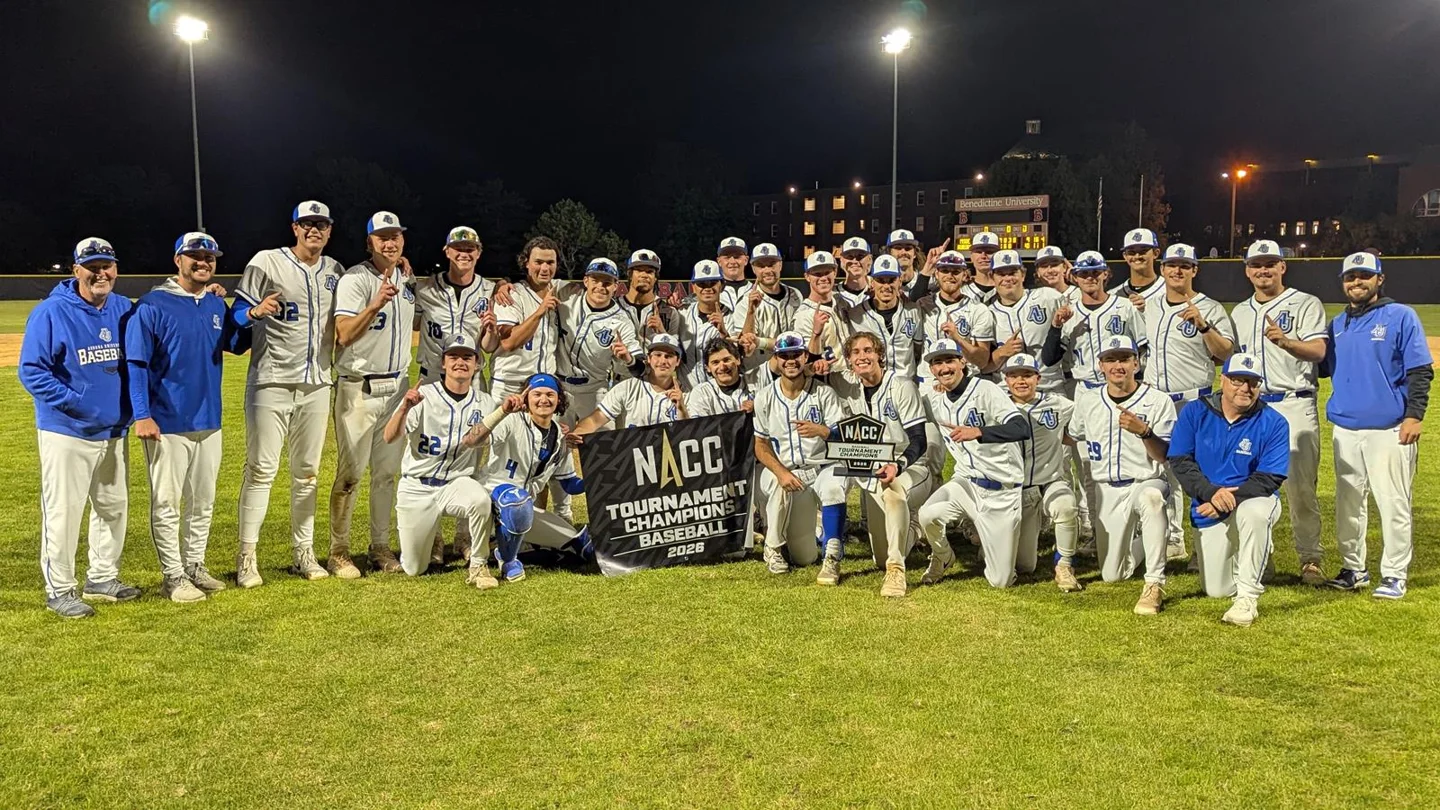
NACC baseball is the Northern Athletics Collegiate Conference's NCAA Division III competition. Its standings, conference tournament and route into the national championship need to be read within that D3 setting. This guide explains the schools, the numbers and the bracket using verified 2026 information, with October 20, 2026 as the checking date. Completed 2026 results are history; a default page for 2027 is a different season.
Identify the NACC and its baseball schools
The conference's official introduction identifies 13 private colleges and universities in Illinois and Wisconsin, all NCAA Division III members. The league began competition in fall 2006 under its earlier Northern Athletics Conference name. Its current full name includes “Collegiate,” which helps distinguish the NACC from similarly abbreviated organizations.
The 2026 baseball field, corroborated by the league's season poll, consists of these institutions:
- Aurora University
- Benedictine University
- Concordia University Chicago
- Concordia University Wisconsin
- Dominican University
- Edgewood University
- Illinois Institute of Technology
- Lakeland University
- Marian University
- Milwaukee School of Engineering
- Rockford University
- St. Norbert College
- Wisconsin Lutheran College
Use that baseball list rather than adding every affiliate mentioned on a general conference page. An institution can belong to a league for a specific sport without participating in baseball there. The same caution applies when consulting older directories: membership and school names should be checked against the season you are following, not treated as permanent facts.
The official baseball hub is the starting point for league news and event routes. For the wider national picture, the site's college baseball divisions guide explains why D3 operates in a separate championship structure. A Division I Top 25 ranking or an Omaha bracket does not describe NACC conference position.
Match the institution name before following a result
Concordia Chicago and Concordia Wisconsin are separate baseball programs. The school abbreviation and opponent line should identify which one is playing before you follow a score or stream. “Concordia” alone is insufficient. Likewise, MSOE expands to Milwaukee School of Engineering, while Illinois Tech identifies Illinois Institute of Technology; recognize the shorter names without silently substituting another university.
Benedictine, Dominican and Marian are also names worth checking in full. When a search result lacks the league, city or athletics identity, open the official school page and compare the opponent and date. A familiar nickname does not make two institutions the same team. This small identity check prevents a correct-looking score from another school entering your conference notebook.
Once the school is clear, save its official baseball schedule alongside the league page. The school source explains one team's full season and travel, while the conference source makes league opponents and postseason developments easier to compare. Using both gives you a more complete view than treating either page as the entire NACC season.
Read NACC standings as two different records
The most important first step is to read the column heading. NACC standings contain a conference record and an overall record. Those are different sets of games, so they can describe the same team without producing the same winning percentage. The conference line explains league position; the overall line captures a broader season.
The archived 2026 standings provide a clear example. Aurora finished 20–4 in conference play and 32–14 overall. MSOE's corresponding records were 18–6 and 30–14. The extra overall games do not become additional league decisions simply because they appear beside the same school name.
Separate league position from the overall season
Use the NACC column when asking who leads the league or how many conference wins a team has collected. Use the overall column when discussing the team's full schedule. A nonconference trip can add wins, losses and valuable experience without directly changing the team's league record. A conference doubleheader, by contrast, can move both columns because those games also belong to the overall season.
The table's games-played and percentage columns help identify the denominator. When teams have played different numbers of games, a raw win total may not explain their relative positions. Check both wins and losses and the listed percentage. Before a season is complete, weather, makeup dates and scheduled byes can leave the table temporarily uneven.
Run totals, last-ten records and streaks add context. They do not automatically describe the league's tiebreaking procedure. A team scoring many runs may be playing well, but a run-difference column should not be treated as a seeding rule unless the applicable policy says so. Likewise, a long overall winning streak can include games outside the conference race.
Check the season and unresolved ties before assigning a seed
Open the year you intend to study. The league's default standings route can move to the next season while older results remain available through the baseball record book. For 2026, use its 2026 row and the linked standings, results, tournament and awards. A blank or newly reset next-season table does not mean the completed season had no results.
Read the legend rather than guessing what a symbol means. The 2026 table distinguishes the regular-season champion from the tournament champion and NCAA automatic qualifier, and it identifies seeds in parentheses. Those markings answer different questions. A team can win a league schedule and still need to win a separate tournament to secure the tournament title.
For tied records, wait for the official seed or bracket announcement. The final 2026 table, for example, shows Illinois Tech and Concordia Wisconsin with the same 15–9 conference record but different seeds. The identical records alone do not explain the ordering. Use the league's applied decision instead of inventing a head-to-head or run-margin rule from the way a table happens to sort.
A preseason poll belongs in another category entirely. It records expectations before games are played. It can frame a season preview, but once results exist, it must not be labelled standings or substituted for the final seeds.
Follow the tournament through its actual bracket
The 2026 NACC tournament qualified eight teams but did not give every qualifier the same opening path. It began with single-elimination games, then moved to a six-team double-elimination stage. That transition is the detail most likely to cause a wrong interpretation if you apply a familiar bracket from another conference.
The official Rockford tournament preview preserved the event's structure and game sequence:
| 2026 stage | What happened | Venue context |
|---|---|---|
| May 6 play-in games | Seeds 5–8 faced single elimination | One game at Benedictine and one at Aurora's Jim Schmid Field |
| Main bracket from May 7 | Six remaining teams entered double elimination | Benedictine University Field in Lisle |
| Championship conclusion | A further final was conditional on the undefeated finalist losing | The published schedule reserved May 10 if needed |
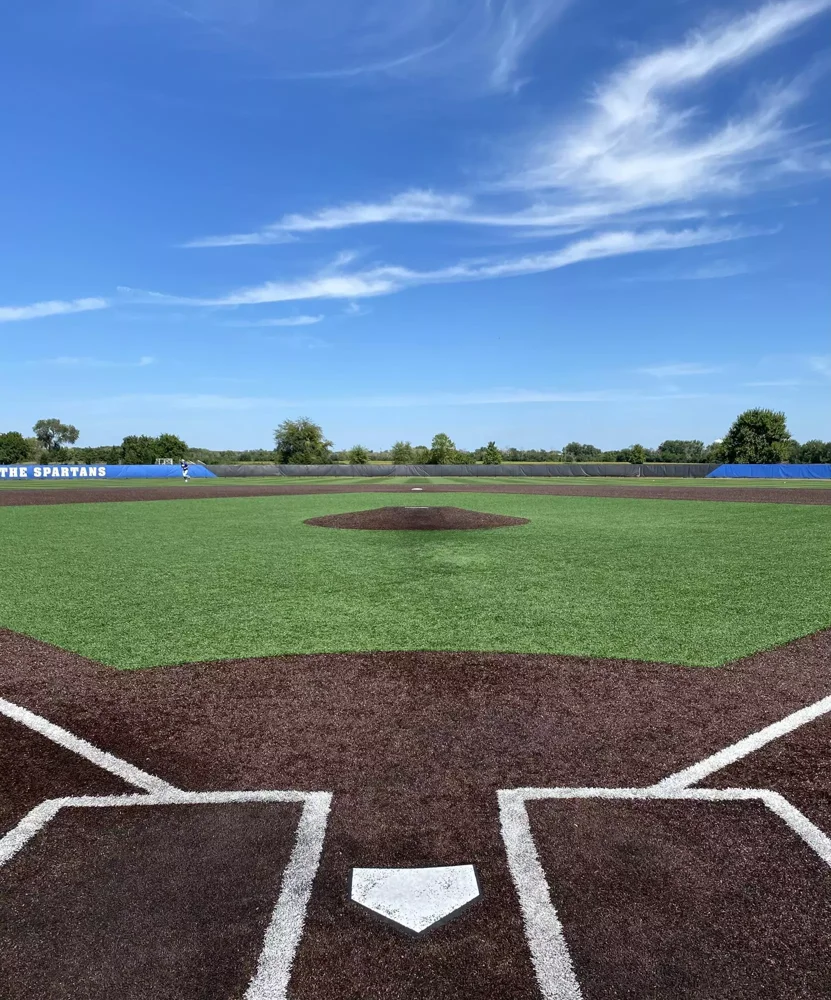
Keep the location distinction visible. Jim Schmid Field at Stuart Sports Complex is in Montgomery, Illinois; the main tournament venue was in Lisle. An Aurora game and a game on Aurora's home field are not automatically the same thing. The event's game line, rather than the participating team's name, tells you where to travel.
Track each team's path rather than guessing from its seed
Start by identifying the stage. A loss in the opening single-elimination game ended that team's tournament. Only the teams reaching the next stage received the protection implied by double elimination. Saying that every NACC qualifier could lose once and keep playing would therefore misdescribe the 2026 event.
In the main stage, track both the game number and whether the team has already lost. A winner and a loser from one game can be routed into very different workloads. The published 2026 bracket also distinguished the lower and higher surviving play-in seeds before assigning their next opponents. Do not fill those destinations by assuming the first game listed always feeds the first line you notice.
A conditional final is another state to follow, not an extra game guaranteed to occur. If the team arriving without a loss wins the championship game, the event can finish there. If it loses, the bracket can require the additional game described by its rules. Read the actual event announcement before booking the reserved final day as certain baseball.
The completed 2026 result shows how that worked in practice. The league's championship recap records Aurora's 10–9 win over MSOE on Saturday, May 9, securing the tournament title and automatic NCAA Division III berth. A possible Sunday finish in the original schedule was not a promise of another game after that clinch.
The path also changes the baseball problem. More games create more innings to cover, and a team coming through elimination games can need different bullpen decisions from an unbeaten finalist. Watch the innings already pitched and the available arms rather than assuming that the higher seed always has the fresher staff. Tournament position and pitching resources interact throughout the weekend.
Put the 2026 awards beside the season results
The league's 2026 awards announcement identified Concordia Chicago catcher/designated hitter Brandon Mahler as Position Player of the Year, MSOE's Zach Brzezinski as Pitcher of the Year, Benedictine's Braden Behrens as Freshman of the Year, and Aurora's Adam Stevens-led group as Coaching Staff of the Year. Those honors recognize different kinds of contribution rather than four versions of the same statistic.
Mahler's award centers the everyday offensive contribution. Brzezinski's recognizes pitching, where innings, run prevention and repeatability belong beside the win total. Behrens's award evaluates an emerging player within a freshman category. The coaching-staff honor addresses a team achievement and the work behind it. When following the league, those categories provide a more useful introduction to the season's standouts than copying one ordered list of names.
Read the date attached to the statistics. The May 7 release discussed players entering the conference tournament. Its figures were not automatically the final totals after all postseason games. Use it to identify the award recipients and understand the voting context; use the eventual season statistics when making a final numerical comparison.
Keep similar player names straight as well. Brandon Mahler was the catcher/designated hitter receiving the major award, while Jake Mahler appeared separately as a Concordia Chicago third baseman. A surname search can blend their games if you do not check the first name and position. Player identity deserves the same care as the school identity in a league with several familiar abbreviations.
Tournament recognition is another separate layer. Conner Hogan was the 2026 tournament MVP, according to the league's championship recap. That honor describes the event, while the season awards reflect their own selection scope. A player can have an especially important tournament without that making him the regular-season award winner, and the reverse is equally possible.
Team titles need the same distinction. Aurora won both the 2026 regular-season race and the tournament, but the league archive records MSOE as the 2024 season champion and Benedictine as that year's tournament champion. Winning the schedule and winning the bracket are related achievements with different tests. One rewards the accumulated league record; the other depends on navigating a concentrated set of elimination and advancement decisions.
Place the awards beside those results rather than using either as a shortcut. Together, they help explain who carried meaningful responsibilities, how a team performed across the season and which players delivered when the tournament narrowed the field.
Build a reliable routine for scores, streams and the next season
Save three routes: the league baseball hub, the official schedule for the team you follow and the season row in the conference record book. Use the hub for new announcements, the team for its next game and the archive for completed-season comparisons. That division of tasks prevents an old tournament article or a newly reset standings page from becoming your only source.
For results, open the correct date and check that a game is final before counting it as a win or loss. A postponed game, a scheduled second game and a completed opener can appear near each other on a doubleheader day. The league's 2026 calendar archive helps recover the historical event list; the next season needs its own dates.
Use the game listing for the live experience
The 2026 Rockford play-in notice illustrates a useful event page: it identified the teams, date, local time and actual field and supplied separate video and live-stat links. Follow those official links for your game rather than assuming one platform covers every NACC school. A video destination and a live-stat feed are different ways of following the action.
Check the specific event after opening the player. Make sure it names the intended teams and date, and read any account or payment requirement before subscribing. A visible Watch link does not establish that access is free or that a full replay will remain available. Likewise, an admission ticket for attending a game is not automatically a streaming purchase.
For a doubleheader, identify game one and game two separately. A listed time for the second game can depend on the first game's duration, and weather can change the arrangement. Recheck the school and event notices before travelling or deciding a broadcast is missing. Keep the venue and time zone with the game in your notes, especially when combining a league schedule with a device that converts times automatically.
Keep the conference tournament separate from the Division III championship
The 2026 NACC tournament winner received the conference's automatic NCAA Division III berth. That secured entry, not a guaranteed opponent, national seed or home regional. Follow the NCAA's selection and host information for those decisions. The league recap establishes Aurora's bid; the national championship announcement establishes what happened next.
Use the NCAA Division III baseball championship resource for the correct national competition. D3 has its own regional and super regional rounds and championship calendar. Familiar stage names do not authorize importing another division's bracket, dates or venues. In particular, a NACC guide should not send a reader to an Omaha schedule as though it were this conference's national destination.
When the next season's notices arrive, repeat the checks rather than carrying every 2026 detail forward. Confirm baseball membership, the published conference schedule, tournament qualification and the event's actual format. The 2026 examples make the system easier to understand, but a new rule or venue announcement should govern the new season. That routine lets you follow the NACC accurately from the first league doubleheader through the final national appearance.
Join the conversation
Share a question or a thought about college baseball. Comments are reviewed before they appear. Keep it friendly and on topic.
No comments yet. Start the conversation.
Sign in with Google to leave a comment. Your email address is not displayed.