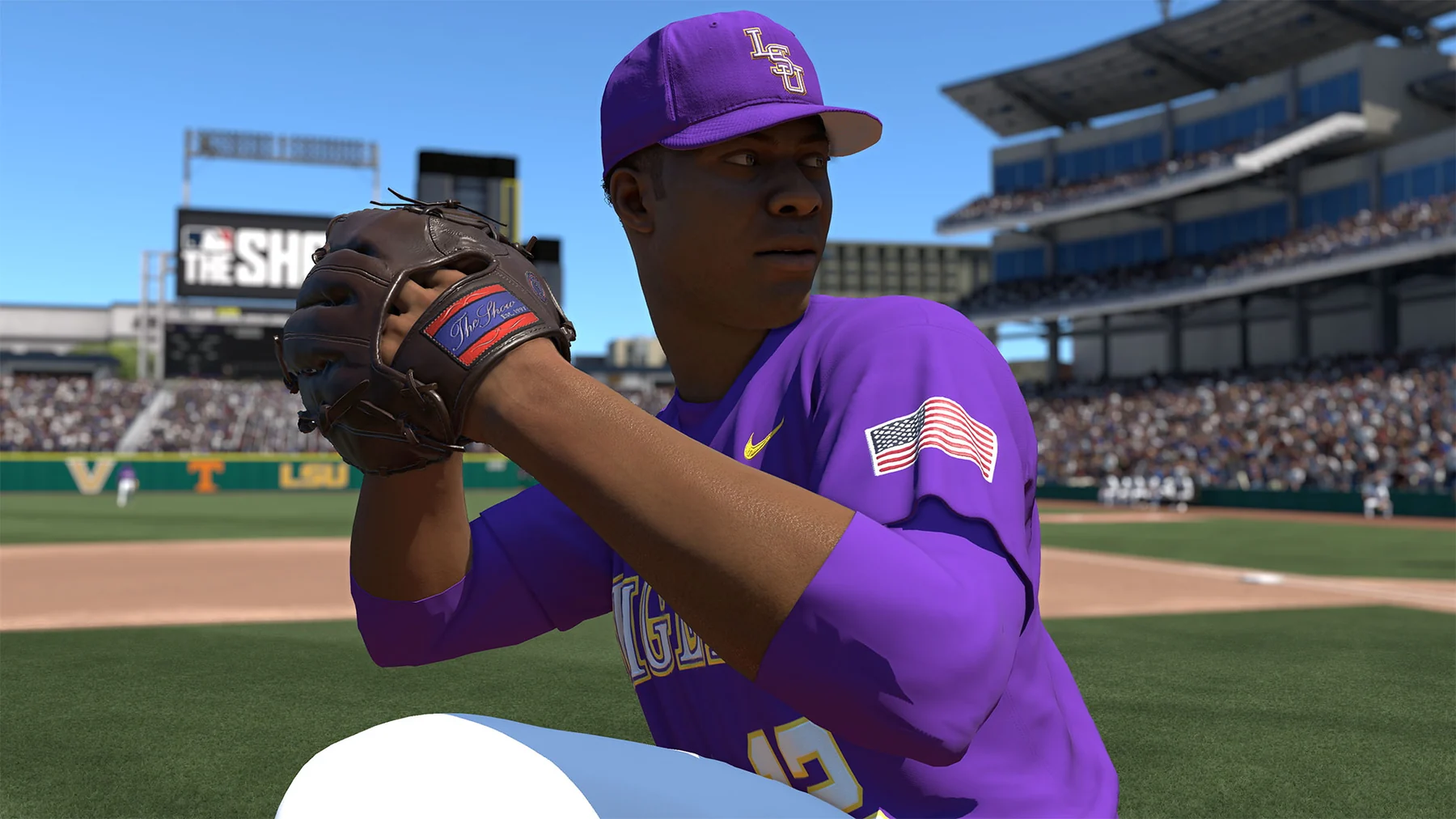
College baseball video games exist in both modern and retro forms. MLB The Show 26 includes 19 universities and College World Series content within Road to the Show; MLB The Show 25 offers an earlier eight-school college experience. EA's MVP 06 and MVP 07 NCAA Baseball remain historical options for a game built around college teams.
The best fit depends on whether you want a player's college-to-pro career or a college program Dynasty, and which console you own. This guide compares publisher-documented features checked on September 29, 2026, explains the platform differences, and separates real releases from misleading free-play claims and unconfirmed future titles.
What counts as a college baseball video game?
There are two substantially different ways to play licensed college baseball. One is a dedicated college game in which the schools and their competition form the main experience. The other is a college stage inside a larger baseball career game. Both involve college teams, but they answer different wishes. Someone hoping to recruit a roster over multiple seasons may be disappointed by a mode designed around one prospect's journey to professional baseball.
That distinction explains why two seemingly contradictory answers often appear in searches. EA's MVP 07 NCAA Baseball launch announcement describes a college-focused PlayStation 2 game with a Dynasty mode. The MLB The Show 26 manual describes a college experience within Road to the Show. The newer game means that saying college baseball simply vanished from video games after MVP 07 is inaccurate. It does not mean that the two products offer interchangeable modes.
A third category is customization. A baseball game may let users create uniforms, rename players or build a team that resembles a school. That can be enjoyable, but a community creation does not establish official university licensing, real NCAA schedules or a new publisher-backed college release. When a video or download page uses a college title, check the underlying game and the author of the modification before assuming it is a separate product.
Use three questions to define what you want: do you want to control a single player or an entire program, does your preferred school need to be officially included, and must the game run on hardware you already own? Those answers narrow the field more effectively than a general search for the best college baseball game. They also help separate a missing feature from a different design goal.
This guide evaluates documented features and supported platforms rather than claiming a new hands-on playtest. It focuses on the college portion of each product. For the actual games being played by those schools, our college baseball schedule serves a separate purpose: a video game's fictional career or historical roster should not be used as a source for today's fixtures.
MLB The Show 26 offers the clearest modern college route
For a player who wants an officially documented college experience in a current console baseball game, MLB The Show 26 is the clearest starting point. Its college content belongs to Road to the Show, the mode built around your created ballplayer. The goal extends beyond campus toward a professional career, so the college stage should be evaluated as part of that journey.
What the college career includes
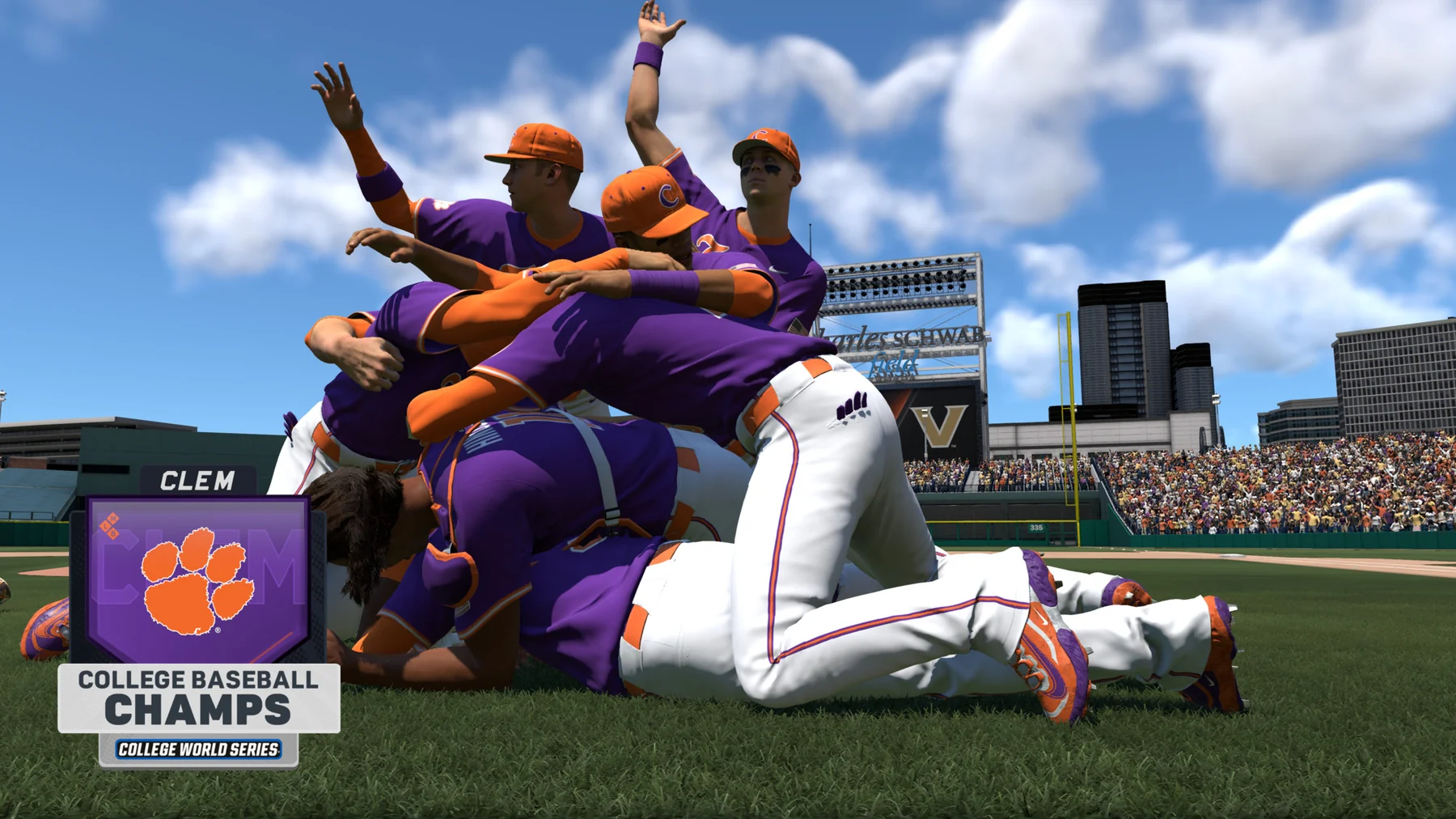
The publisher's feature manual describes up to 19 licensed NCAA programs and Charles Schwab Field in Omaha. The official gameplay announcement confirms 11 additional schools compared with the prior edition, naming Arkansas, Florida, Stanford and Michigan among the additions. It also confirms the licensed NCAA Men's College World Series format and bracket.
Those details are meaningful for a college fan. A recognizable destination, an identified group of universities and an official championship structure give the amateur portion a specific baseball setting. They offer more than simply dressing a professional team in college colors. The progression still follows the prospect, however, and choices or opportunities belong to that player's career rather than a promise to reproduce every school's real season.
Where the college experience stops
Nineteen licensed programs are a selected field. They do not represent every Division I institution. Before buying specifically for a favorite school, check the edition's actual college selection; recognizing a conference name is not enough. Similarly, the documented Omaha venue should not be expanded into a claim that every included university has its campus ballpark modeled.
The game's separate Franchise documentation describes professional team management. It should not be presented as an NCAA recruiting dynasty just because another mode contains colleges. A fan wanting to guide a freshman into the professional draft has a clear fit here. A fan wanting to remain a college coach through generations of recruits is asking for a different design.
This is a feature-based recommendation, not a claim that every presentation element, roster detail or gameplay balance setting has been independently tested. Compare the documented mode with the experience you actually want, and use the real-world teams directory only for context about the schools, not as a list of teams guaranteed to appear in the game.
How MLB The Show 25 differs
MLB The Show 25 already contains licensed college baseball. Its Road to the Show manual describes a choice between going from the Amateur Showcase toward the professional draft and attending college first. College participation is presented as an opportunity to develop the created player's draft stock. If you already own this edition, you may have access to the kind of college career introduction you were searching for.
Eight schools and a shorter starting point
The publisher's college page for MLB The Show 25 lists eight programs: LSU, Tennessee, UCLA, Cal State Fullerton, South Carolina, TCU, Texas and Vanderbilt. Read the edition named in the page's main content rather than assuming that a current copyright footer turns an older feature page into a guide to the newest game.
The clear comparison with 26 is the size and structure of the documented amateur experience. The earlier game has the eight-school starting point; the newer edition expands the selection to 19 and adds the officially described College World Series structure. That is a meaningful difference if the additional schools or championship presentation are central to your interest. It is a less compelling reason to replace a game you already enjoy if your main wish is simply to give a created player a college background.
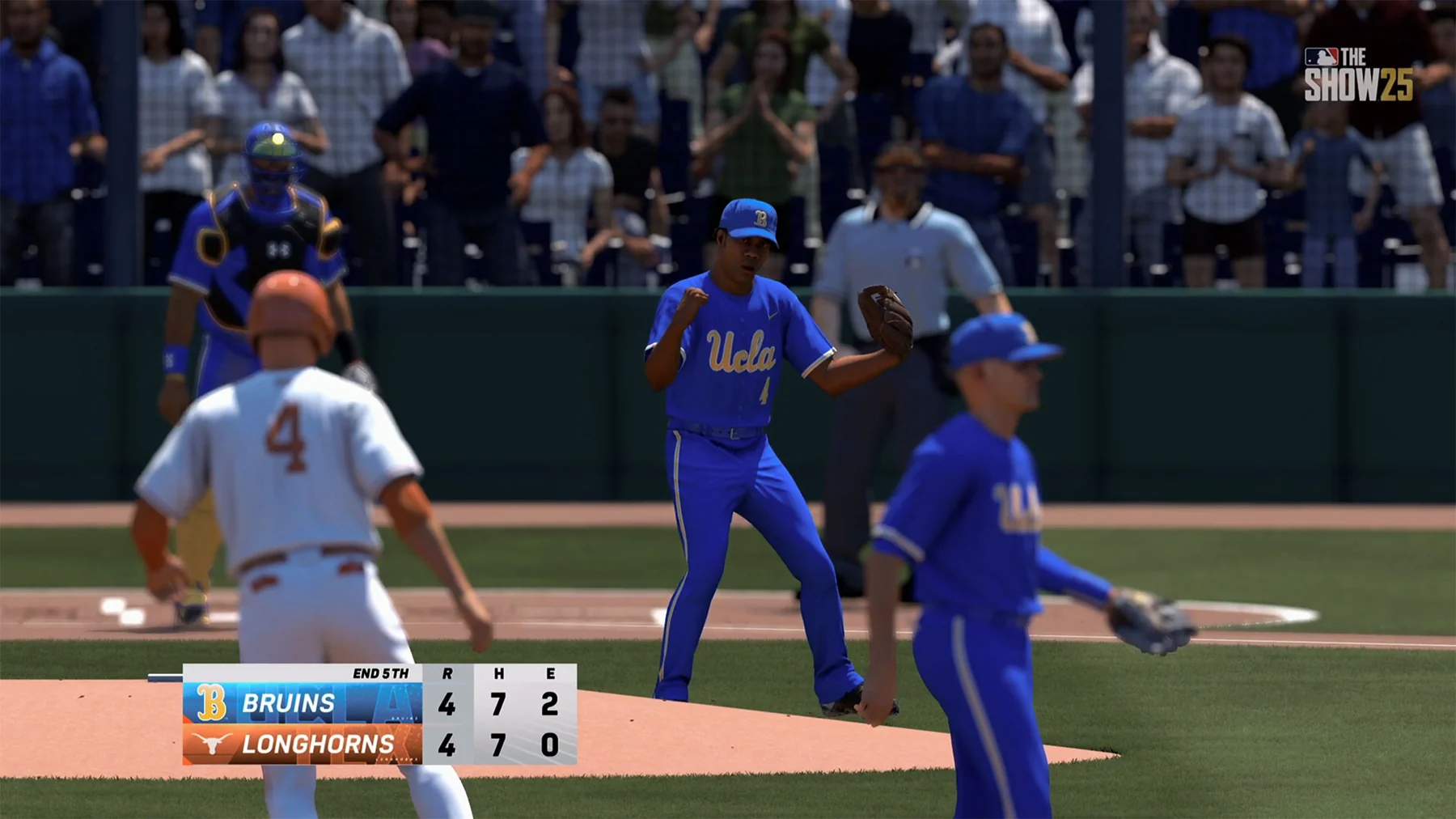
The word recruiting can be misleading in this context. In the documented Road to the Show experience, the created prospect is being recruited. It does not establish that the user becomes a college coach who evaluates and signs an entire incoming class. That distinction is particularly important for players arriving from a college football dynasty mode and expecting an equivalent structure.
Before choosing between editions, check your preferred school, platform and desired mode together. A lower-priced copy is not a useful purchase if it lacks the school or feature that motivated the search. Conversely, a newer year is not necessary merely to make the statement that college teams appear in the game. Keep that practical comparison focused on the documented differences instead of assuming every new edition automatically supplies a complete standalone NCAA simulation.
Why the older MVP NCAA games still matter
MVP 06 NCAA Baseball and MVP 07 NCAA Baseball remain relevant because college competition forms their central identity. They are not simply older versions of a modern created-player career mode. For someone whose main interest is choosing a school and building a college program, that difference can matter more than the age of the graphics.
MVP 06 and MVP 07 were built around college teams
A contemporary interview with EA developer Ben Brinkman discusses developing MVP 06 for PlayStation 2 and the original Xbox. Its follow-up, MVP 07, was announced for PlayStation 2 in EA's February 6, 2007 release. That release describes 152 playable teams from 16 conferences, a Dynasty mode and team creation tools. It also identifies Rock and Fire pitching as a right-stick mechanic introduced in the newer edition.
Those features explain the continuing interest without requiring a claim that the older games are objectively better. A broad historical college field and a program-centered mode serve a different purpose from guiding one athlete through a brief amateur stage. The right choice depends on which part of college baseball you want to control: the prospect's development or the school's longer competitive story.
The team counts belong to the shipped historical product. They should not be mistaken for today's NCAA membership, current conference alignment or a complete collection of modern athletes. Community roster work can change a particular installation, but it is separate from what EA originally released.
Choose retro hardware with the exact edition in mind
The original Xbox version of MVP 06 is not an Xbox One or Xbox Series release. Likewise, MVP 07's PlayStation 2 branding does not establish a native PS4 or PS5 edition. Treat the precise title, platform label and disc region as essential purchase details. A listing that mentions several console generations may describe the seller's assumptions rather than tested compatibility.
For an original-hardware setup, check the console, controller, memory card and display connection together. A readable disc alone does not make a complete playable system. Ask whether the seller tested that particular copy and whether saves work; those practical details matter more than a nostalgic description of the series.
Finally, separate preserved offline modes from historical network features. EA's old announcement discussed internet-linked ESPN functions, but a launch-era feature list cannot verify service availability in 2026. Buy a retro game for the supported setup and modes you can establish today, rather than assuming that every network feature printed on an old box remains operational.
Match the game to your console and preferred experience
Start with the hardware you can actually use. The publisher's MLB The Show 26 launch announcement lists PlayStation 5, Xbox Series X|S and Nintendo Switch. It does not list native PS4, Xbox One or Windows editions. An older console in the same brand family is not interchangeable with the models named in that announcement.
| Your main goal | Option to examine | Important qualification |
|---|---|---|
| A modern college-to-pro player career | MLB The Show 26 | 19-school selection within Road to the Show |
| Use a game you may already own | MLB The Show 25 | Eight-school college career starting point |
| A historical college program experience | MVP 07 NCAA Baseball | PlayStation 2 release and historical team selection |
| College baseball on original Xbox hardware | MVP 06 NCAA Baseball | Original Xbox edition, not a promise of later-console support |
For example, a PS5 owner who wants an officially represented college before entering the professional draft should first compare the current Road to the Show offering with the university they want. A collector with a working PS2 who wants a college Dynasty has a different reason to investigate MVP 07. Neither purchase becomes better simply because another game has a larger number printed on its team list; the mode structure remains decisive.
Separate local play, online multiplayer and access to the game itself. The official PlayStation page for MLB The Show 25 identifies online play as optional while specifying PlayStation Plus for online play. That does not mean a subscription is a substitute for every purchase or that every mode works under identical requirements. Read the listing for your exact edition and platform.
For PC searches, remote play, cloud access and emulation are different arrangements from a native Windows release. Check the service, eligible device, game license and controller requirements of the particular route being offered. A video showing gameplay on a laptop establishes neither an official PC port nor that the viewer can reproduce the setup without additional hardware.
Finally, compare the complete cost of the setup rather than only the game listing. A retro disc can require a console and accessories; a digital purchase needs the right platform account and supported device. Confirm those essentials before spending money on an edition that cannot deliver the college experience you intended.
Check free-play claims and future release rumors carefully
A search for free college baseball games can mix several different offers: a temporary trial, a subscription benefit, a simple browser game, a community modification and a commercial console game. The word free does not tell you which one is being offered. Check the actual product title, publisher, platform and access terms before assuming it provides licensed NCAA teams.
The official MLB The Show 26 store listing is a useful model for verification because it identifies a real product and its edition details. A promotional trial or subscription arrangement, when available, can have an end date, membership requirement or regional restriction. It should not be described as permanent ownership. Similarly, a free roster file may still require a purchased base game.
Old console software deserves the same clarity. A download described as abandonware is not itself evidence that the publisher has made the game free. Use legitimate copies and documented access routes, and distinguish a fan-made patch from the underlying commercial game. An attractive thumbnail or a renamed download does not create an official new edition.
What would count as a real announcement
As of this guide's September 29, 2026 review, the publisher material examined did not establish a separate release titled College Baseball 25 or a standalone College Baseball 2027 game. That is a statement about the available confirmation, not a prediction that no future game will ever appear. The current, documented college options include the Road to the Show content discussed above.
For a future release claim, look for a named developer or publisher, an announcement on that organization's own site, confirmed platforms and a stated date or release window. The dated MLB The Show 26 announcement demonstrates those ingredients. A fan concept, a forum wish list or a social post repeating another site's rumor does not provide the same evidence.
Also distinguish a new mode, downloadable content, a roster update and a standalone game. A publisher can add colleges to an existing franchise without announcing a new NCAA-only series. If a headline says college baseball is returning, read the mode description before deciding what is actually returning and what you will be able to control.
For a purchase today, choose among the verified games according to hardware, school selection and mode. For a future title, wait for concrete publisher information before treating a search phrase as a release date. That approach keeps the answer useful even as the college portion of baseball games continues to change.
Join the conversation
Share a question or a thought about college baseball. Comments are reviewed before they appear. Keep it friendly and on topic.
No comments yet. Start the conversation.
Sign in with Google to leave a comment. Your email address is not displayed.