Our way-too-early college baseball rankings for 2027 are an October contender assessment, with roster evidence and unresolved questions beside each choice. They are editorial predictions, checked October 20, 2026, rather than an NCAA poll or a completed preseason Top 25. The useful question is which programs can turn their current players into a complete spring team and then survive the pitching demands of the postseason.
What an October forecast can tell us about 2027
Start by separating three different judgments: who finished the last season best, who has built the strongest long-term program and who projects best for the next season. Those lists can overlap without matching. A championship establishes what a team achieved with its completed roster. It cannot by itself tell us which players remain, who replaces lost innings or how a transfer fits a new lineup.
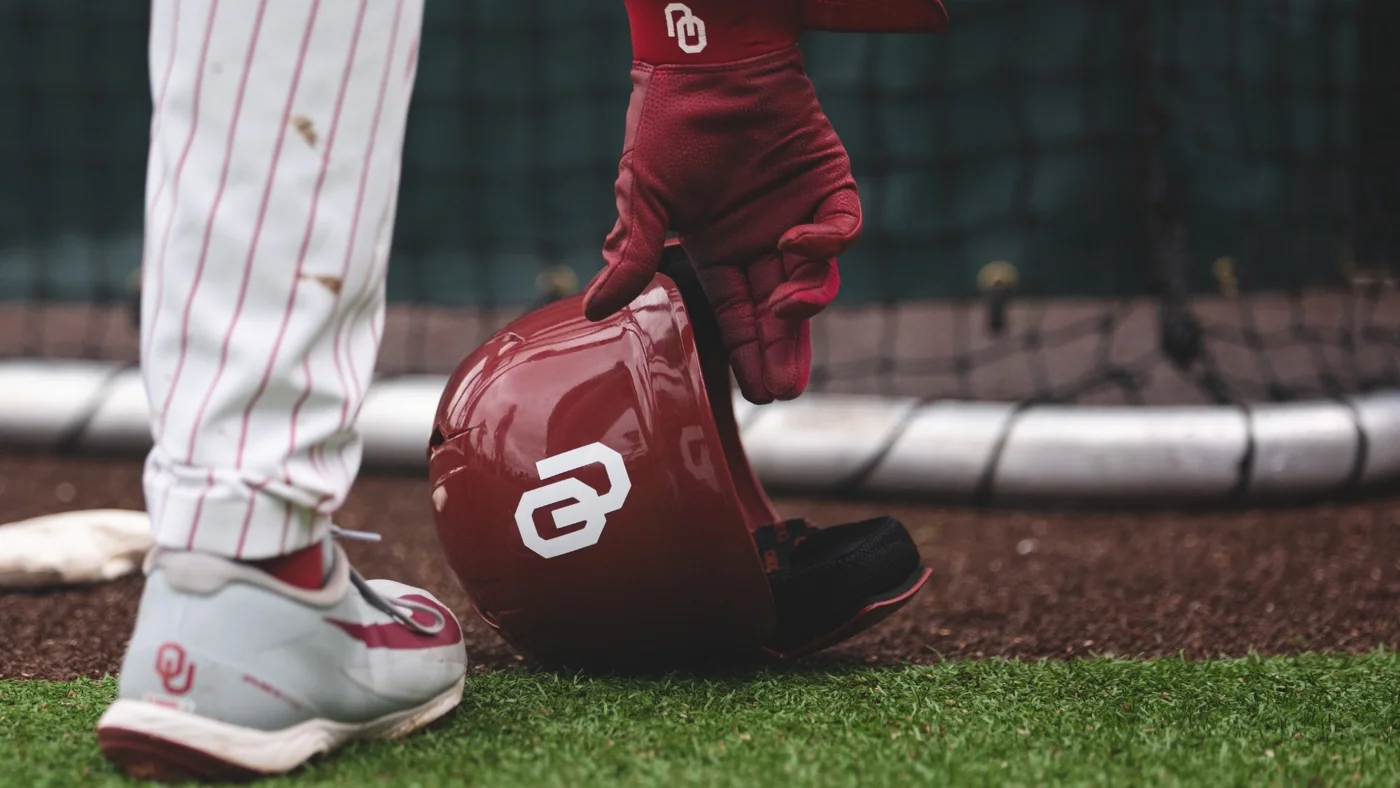
The 2026 championship belonged to Oklahoma, which defeated North Carolina in the deciding game of the finals. That is the past-season baseline. The D1Baseball Top 25 hosted on NCAA.com also identifies its publisher and date. Neither should be silently relabeled as an October ranking of the 2027 roster.
Our tiers prioritize a team that can be explained in baseball terms. Returning hitters matter when they can still cover the necessary positions. Starting pitchers matter when there is a credible plan for the rest of the weekend. Newcomers matter when they solve a specific need rather than simply adding names to a recruiting announcement. We also give uncertainty a place in the judgment rather than burying it beneath a precise rank.
That produces a shortlist instead of a manufactured one-through-twenty-five table. Schools in the same tier are close enough that a role change, a verified roster update or the first sustained look at the rotation could change our preference. The order of discussion is not a claim that two programs are separated by a measurable amount of talent.
Pitching depth receives particular weight. A lineup can be difficult to face while the team still lacks a reliable way to finish a series. Conversely, returning innings can support a contender even when some offensive roles remain unsettled. We want to identify the unit that gives each school a foundation, then name the task that could prevent it from reaching its ceiling.
This is a dated starting position that should be tested when games begin. It is not a tournament field, a hosting projection or a promise that the named programs will all reach Omaha. For the differences among polls, RPI and selection, use our college baseball rankings explanation. Here the focus is the roster case behind a 2027 prediction.
Our first contender tier starts with a verified roster case
Texas, Oklahoma and Georgia are our leading October tier for spring 2027. The reasons differ. Texas offers established starting-pitching quality and a productive returning offensive centerpiece. Oklahoma brings meaningful continuity from its title roster. Georgia combines returning hitters with a deep group of identified additions, giving it considerable upside and more integration risk.
We would not assign the same confidence to every part of those cases. Texas has the most straightforward argument at the top of its roster. Oklahoma must connect its retained innings to a changed supporting cast. Georgia has more work to do before a strong collection of individual players becomes a reliable weekend team. The tier identifies a ceiling worth taking seriously; it does not erase the different routes to reaching it.
Returning production matters most when the roles still fit
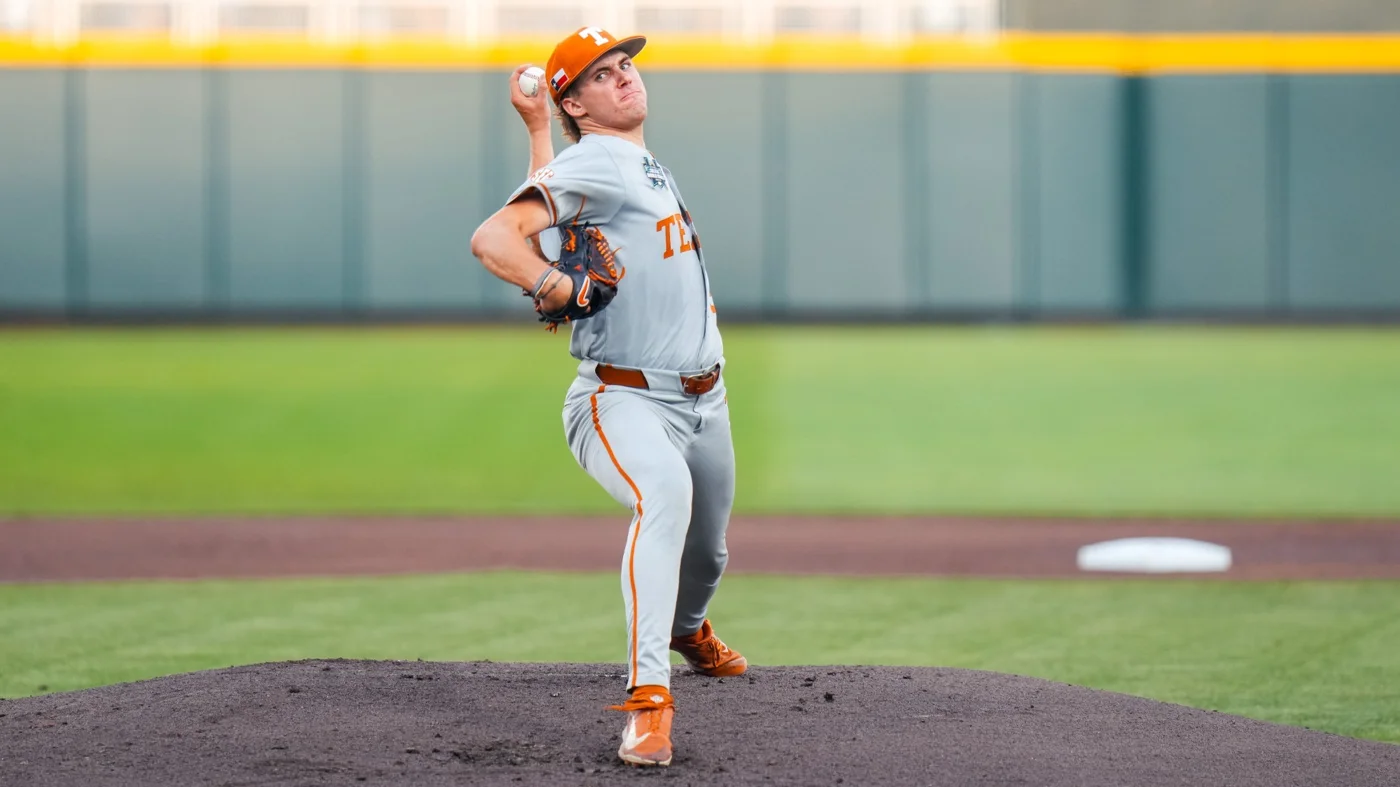
Texas lists Dylan Volantis and Anthony Pack Jr. on its 2027 roster. Their official 2026 summaries show Volantis with 95 innings, 135 strikeouts and a 2.08 ERA, and Pack with a .355 average, .480 on-base percentage, twelve home runs and twenty-one steals. Those completed-season contributions give the projection a foundation on both sides of the ball.
Volantis matters because a credible starting assignment is more useful than a list of promising arms without established workloads. Pack matters because reaching base, running and producing extra-base damage give the lineup several ways to create pressure. Our inference is that this pairing reduces uncertainty in two essential roles. It does not establish the remaining rotation or guarantee another offensive step forward.
The Texas test is what happens around the stars. If the opening starter works deep but the next two games require emergency bullpen coverage, the weekend still becomes difficult. If Pack reaches base regularly but the supporting lineup cannot sustain useful at-bats, his production becomes less valuable to the team. A strong early case becomes a more confident prediction when those surrounding jobs are performed consistently.
Oklahoma's October fall notebook identifies Cord Rager, Xander Mercurius and Nick Wesloski among returning starters and says nearly half the team's innings return. Dasan Harris and Jason Walk are among fourteen returning players. That is a current-roster reason to respect the champion, rather than relying entirely on the previous June.
We particularly value retained responsibility. A staff can build an innings plan around pitchers who have already handled meaningful work. Returning players also offer a point of reference while new pieces are evaluated. The uncertainty remains real: last season's sequence of timely hitting and successful pitching decisions cannot simply be carried forward as a guaranteed team trait.
A transfer class needs to solve a specific baseball problem
Oklahoma reports twenty-five newcomers, including nineteen transfers. That makes continuity and turnover simultaneous parts of its projection. The additions must cover actual defensive positions, lineup needs and pitching assignments. Counting experienced names is only the beginning; the stronger argument is that those players give the staff workable options without weakening another essential role.
Georgia's September update reports twenty-eight newcomers after thirteen draft selections. Henry Allen returns from a .321 season with thirteen homers, while Jack Arcamone returns from a .302 season. There is an offensive base to build around, alongside a substantial need to establish the team's new identity.
The school's SEC announcement names incoming hitters Mikey Bell, Jake Hanley and Naulivou Lauaki Jr., plus pitchers Cristofer Cespedes, Marcos Paz, Luke Howe and Jason Flores. Their presence supports a serious reloading case. Our judgment still depends on the combination: which players defend reliably, which pitchers can repeat their roles and whether the lineup creates pressure beyond its strongest bats.
Georgia therefore has the widest uncertainty band in this first tier. We would maintain the bullish projection if the new arms establish reliable jobs and the offense works as a complete order. We would lower it if the staff struggles to turn individual talent into routine outs. Strong portal evaluations are useful evidence about ingredients; spring performance must show the resulting team.
The next tier can rise by answering harder pitching questions
LSU, Tennessee and North Carolina are our next-tier challengers. Each has current roster substance to rise, with different questions about the pitching assignments. This is a narrower claim than saying they lack talent. A team can have several desirable arms and still need to decide which combination best covers starting, bridging and finishing games.
LSU's September roster release identifies eight returning position players with starting experience and eight pitchers who have already recorded LSU innings. Casan Evans, William Schmidt and Cooper Moore are among those pitchers; Steven Milam and Cade Arrambide are among the returning position players. The incoming group includes eight Division I transfers and fourteen high-school signees.
That combination gives the Tigers several ways to improve. They are not starting without known college performers, and the younger additions expand the staff's options. But having pitched at LSU is not the same as having a settled role in the next rotation. In the same release, Jay Johnson describes the lineup and starting assignments as open competition. Our prediction respects that uncertainty instead of naming a Friday starter the coach had not named.
We would move LSU upward if the staff establishes an innings plan that remains useful after the first starter exits. Watch whether the early relievers can enter with runners aboard, whether the team has enough reliable strikes to avoid long innings and whether a pitcher used heavily one day leaves a workable alternative the next. Those questions are more informative than counting how many roster names once appeared on a prospect list.
Tennessee's October preview identifies thirteen returners and twenty-four newcomers entering Josh Elander's second season. The current roster confirms additions including infielder Chris Ramirez from California Baptist and infielder Wyatt Hanoian from Air Force. Those are concrete roster changes; the eventual lineup order remains a projection.
On the mound, Cam Appenzeller's official 2026 summary lists sixty-four strikeouts in 56 2/3 innings across twenty appearances and two starts. That is evidence of meaningful work, with a specific role question attached. A pitcher who has supplied extended relief can be valuable in several ways, but moving him into another assignment creates a job someone else must fill.
For Tennessee, the upgrade case is therefore about allocation as much as accumulation. We want to see the staff use its best pitchers in roles that help the entire week rather than solve one game while weakening the next two. The newcomers give the lineup additional possibilities; the pitching plan must turn those possibilities into enough complete weekends to justify a higher tier.
North Carolina supplies a substantial ACC case. Its current 2027 roster lists Caden Glauber, Walker McDuffie and Gavin Gallaher. The argument is therefore based on confirmed current personnel rather than automatically carrying over the entire national runner-up roster. Those returning names connect experienced pitching to a familiar position-player contribution.
The school's 2026 All-ACC report identifies Glauber and McDuffie as first- and second-team relief-pitching selections, respectively, with Gallaher also earning conference honors. Its June 30 season assessment credits Glauber with thirty appearances. This gives the Tar Heels an established high-leverage foundation while leaving a meaningful question about the best arrangement of the staff.
Our UNC upgrade trigger is a credible starting plan that preserves enough of that relief strength. Moving a successful multi-inning arm into the rotation can improve one job while opening another. Leaving him available later can protect leads but requires starters to supply the earlier outs. We would move Carolina toward the leading tier if the staff resolves that tradeoff without making either unit fragile. Gallaher's presence also keeps the lineup discussion attached to a current returner, while the rest of the order must establish its new balance.
UCLA illustrates why we have kept this shortlist selective. Its July draft report identifies Roch Cholowsky, Logan Reddemann, Mulivai Levu and Roman Martin among day-one selections. A preview that simply pastes UCLA's previous standout lineup into 2027 would miss essential roster questions. We are keeping the Bruins on the wider watchlist while looking for a current, complete roster case, rather than assuming a summer national-team appearance settles every player's spring status.
This second tier is not a ceiling. LSU, Tennessee or North Carolina could become the stronger choice once the roles are clearer, while one of the leading three could reveal a weakness our October evidence understates. The purpose of naming the questions now is to make a later change explainable through baseball evidence instead of the emotional effect of one result.
Read the early rankings against the tests still ahead
The useful schedule question is where a prediction will face a meaningful test. Georgia's announced 2027 slate includes visits to Oklahoma on April 2-4 and Tennessee on April 23-25, followed by a home series against Texas on May 20-22. Those matchups connect several of our current cases directly. They will test both the leading tier and the challengers, rather than allowing every projection to live in isolation.
Tennessee's schedule announcement places Oklahoma in Knoxville for the March 19-21 conference opener. That is an early opportunity to compare the Volunteers' developing roles with the Sooners' returning pitching foundation. It is not a guarantee of a final national hierarchy after one weekend. Read the actual performance and circumstances before treating the series score as the entire answer.
For each test, look beyond who won the first game. Did a starter keep his team competitive without exhausting the bullpen? Did the lineup continue to produce when the opponent changed the pitching look? Did the defense turn ordinary chances into outs? A series can reveal the weak point in an early prediction even when the final result is close or one team escapes with two wins.
Opponent quality matters alongside the result. Success against a capable staff is more informative than a large run total against a weaker pitching group. At the same time, do not dismiss every uneven outing as meaningless because the opponent was strong. The purpose is to identify repeatable strengths and weaknesses, keeping the level of the test in view.
A weekend series and an elimination bracket expose different weaknesses
The NCAA tournament format explains why an Omaha prediction requires more than an attractive rotation on paper. Regionals use four-team, double-elimination brackets, while super regionals are best-of-three series. The route can therefore demand different workloads from the same staff, particularly when a team must recover after losing.
A normal weekend lets the staff begin with a planned sequence. An elimination path may force extra innings coverage or require an important reliever before the ideal matchup arrives. That is why we keep returning to usable roles for LSU, Tennessee and North Carolina, and the integration of Georgia's incoming arms. The relevant depth is the depth a coach can trust in that situation, not simply the number of pitchers listed on the roster.
Texas and Oklahoma face the same test from stronger initial reference points. A known front-end starter helps, but it cannot retire every hitter in a regional. Our bracket guide explains the rounds in detail; the implication for these predictions is to value a complete staff capable of handling more than one favorable script.
What would change these predictions before opening weekend
The first update trigger is a verified change in who is available and what job he is preparing to do. Use a current school roster, a dated team announcement or a clear coach statement. A previous season's player page, a summer appearance or an old projected lineup cannot establish every part of the coming spring. Where the information is unsettled, keep the uncertainty in the prediction.
For Texas, we want a clearer view of the innings around Volantis and how the lineup supports Pack. For Oklahoma, we want to see the returning starters connect with the incoming group rather than judging the roster solely by its championship label. For Georgia, the important question is whether the new pitching and positional pieces form a dependable combination. Those are different tests and should produce different reasons for an upgrade or downgrade.
For LSU, Tennessee and North Carolina, role clarity could narrow the gap to the leading tier quickly. Carolina in particular must balance established relief quality with the need for a reliable starting sequence. An established starting sequence and useful relief alternatives would improve the projection more than a single impressive individual outing. Conversely, continued uncertainty about covering the later games would keep our confidence limited even if a few headline players perform well.
Fall information helps answer these questions, but it needs context. Exhibition workloads, opponents and experimental assignments are different from a full spring weekend. A new role should be supported by what the team says and repeated evidence of how the player is used. Do not turn one favorable inning or one scrimmage score into a complete season forecast.
This shortlist also has a clear limit: its six primary cases cover five SEC programs and North Carolina from the ACC. It is not a census of national contenders, and absence here is not a prediction that another school cannot reach Omaha. The UCLA example shows why we prefer to leave a roster question open rather than fill a supposedly complete table with inherited assumptions. Broader national coverage should grow with equally specific, current evidence.
Keep the October tiers beside the evidence that could change them. When the season begins, compare these roster expectations with actual games and the dated tables on our rankings page. Follow Texas, Oklahoma, Georgia, LSU Tennessee and North Carolina for their schedules. The best early prediction is one that tells you what to watch for next and remains willing to change when the baseball changes.
Join the conversation
Share a question or a thought about college baseball. Comments are reviewed before they appear. Keep it friendly and on topic.
No comments yet. Start the conversation.
Sign in with Google to leave a comment. Your email address is not displayed.