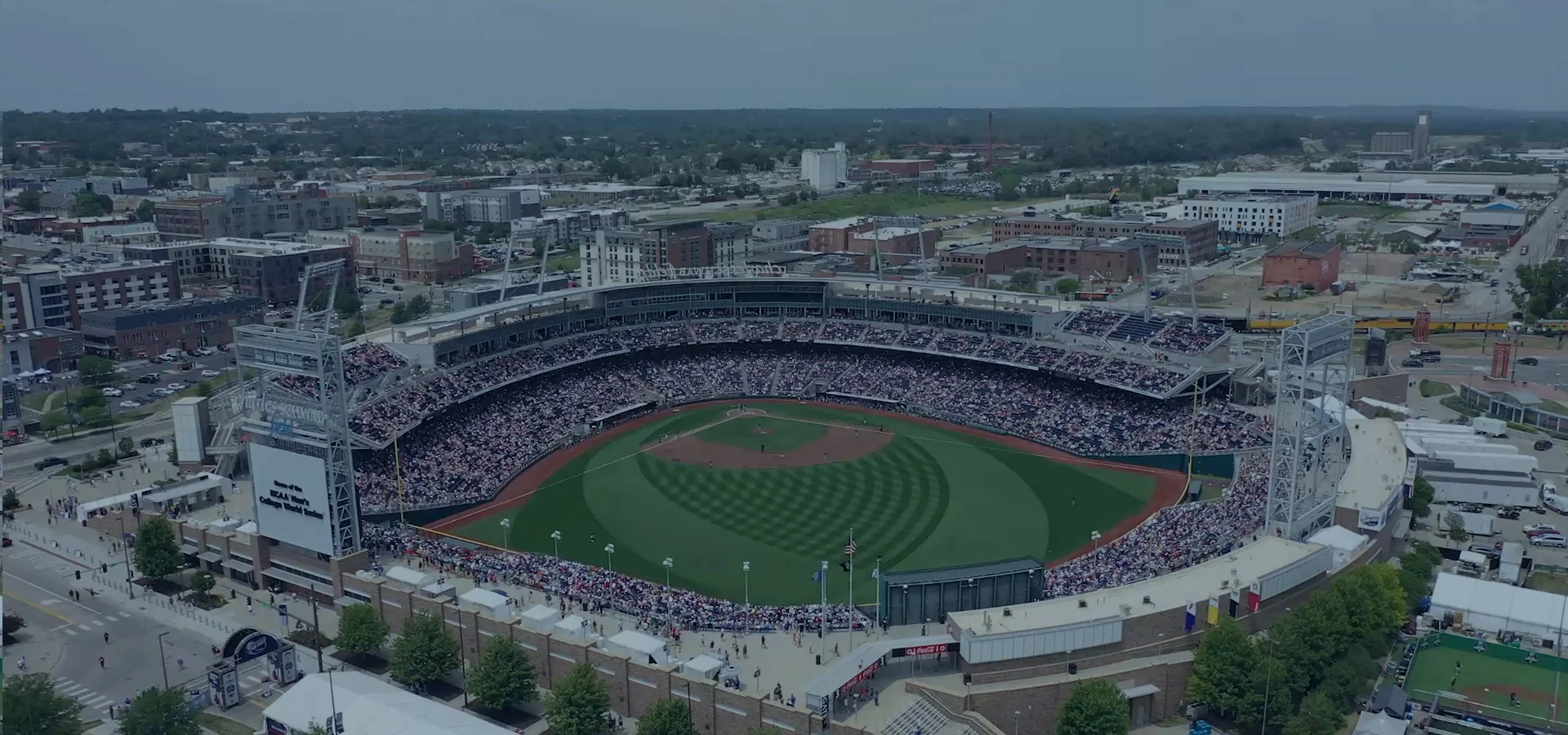
The best college baseball programs depend on what you value: championships, repeated chances to win in Omaha or achievement over a recent run of seasons. USC, LSU, Texas and Florida State illustrate why those questions can produce different answers. This guide compares documented results and explains the criteria; it does not present an NCAA official ranking or a recruiting recommendation.
Decide what best means before comparing programs
Start by deciding what your comparison is supposed to explain. A championship total measures the highest achievement accumulated over time. Repeated Men's College World Series appearances show how often a program reached the final stage. Results over a recent, fixed window tell you something more specific about a particular run of teams. None of those measures automatically answers how strong next season's lineup will be.
For this article, championship history establishes the historical ceiling, Omaha appearances help assess repeated opportunity and a clearly dated recent window checks whether older reputation still tells the whole story. We keep those pieces visible rather than blending them into an unexplained score. The programs selected below illustrate different kinds of achievement; they are not an exhaustive list of deserving schools.
A useful comparison also needs a date. Two articles can both contain accurate totals while referring to different record books or completed seasons. Here, the historical comparisons and recent-season examples explicitly use results through 2025 where that is the verified source coverage. They should be read as a dated assessment, rather than relabeled as a live 2026 poll.
Searches for the best baseball colleges also bring up a separate student-athlete question. NCSA's own Power Rankings explanation combines its network's college-search interest with academic rankings, graduation rates and average cost after aid. That methodology is relevant to exploring college fit. It does not make the list a ranking of who would win a baseball series, and an average cost is not a personal financial-aid offer.
For a spectator, the most useful shortlist may emphasize a program's history, a competitive upcoming series and a ballpark they can visit. For a prospective player, academic suitability, actual cost, development and a realistic role require separate investigation. Treating one trophy list as the answer to both questions hides the information each person needs.
Before using any list, therefore, write down its subject, time period and measure. Is it comparing programs across decades, one season's teams or colleges as places to study and play? That small check makes apparent disagreements easier to understand and gives the examples that follow a fair basis for comparison.
Read championship history without erasing the era
The NCAA's General CWS Records, page 11 provides a useful common baseline. Its national-champions table runs through 2025. The selected programs below illustrate different title histories; this is not a complete top ten or a new official ranking. The most recent title column is particularly useful because equal totals can conceal very different timelines.
| Selected program | Titles through 2025 | Latest title in that record |
|---|---|---|
| USC | 12 | 1998 |
| LSU | 8 | 2025 |
| Texas | 6 | 2005 |
| Arizona State | 5 | 1981 |
| Arizona | 4 | 2012 |
| Cal State Fullerton | 4 | 2004 |
| Miami (Florida) | 4 | 2001 |
| Oregon State | 3 | 2018 |
| Stanford | 2 | 1988 |
| Vanderbilt | 2 | 2019 |
USC sets the historical title benchmark
USC's official baseball archive records 12 championships and five consecutive titles from 1970 through 1974. Its championship histories identify 1998 as the twelfth title. Those achievements establish a historical standard that a comparison centered on trophies must acknowledge.
The concentration matters as much as the total. Five in succession describes sustained dominance within a particular era, rather than a collection of isolated excellent seasons. It is a strong answer to the question of which program produced an extraordinary championship run. It is a different answer from predicting the strongest team on an upcoming weekend.
Read the record in both directions. Avoid discounting older championships simply because you did not see them, but also avoid assigning those results to the current roster. A program inherits its history; a new team still has to produce its own pitching, defense and postseason results. Keeping that distinction visible respects the achievement without turning reputation into a forecast.
LSU connects a later dynasty with recent titles
LSU's official championship list, updated June 22, 2025, records eight baseball titles: 1991, 1993, 1996, 1997, 2000, 2009, 2023 and 2025. Counting those years shows five championships from 1991 through 2000 and another pair in the 2023-25 window. Its historical case therefore includes both a concentrated earlier run and much more recent championship achievement.
This is why a single label such as traditional power can conceal useful differences. USC and LSU both have exceptional trophy records, but the timelines explain different things. When comparing them, decide whether you are emphasizing the greatest accumulated collection, a peak stretch or evidence closer to the period you are following.
The rest of the table should be read with the same discipline. A tie in titles does not establish equal current strength, and the date of a last championship does not summarize every successful season since. Use the table to identify questions for the next comparison, rather than allowing it to end the discussion.
Look for repeated trips to Omaha and sustained opportunity
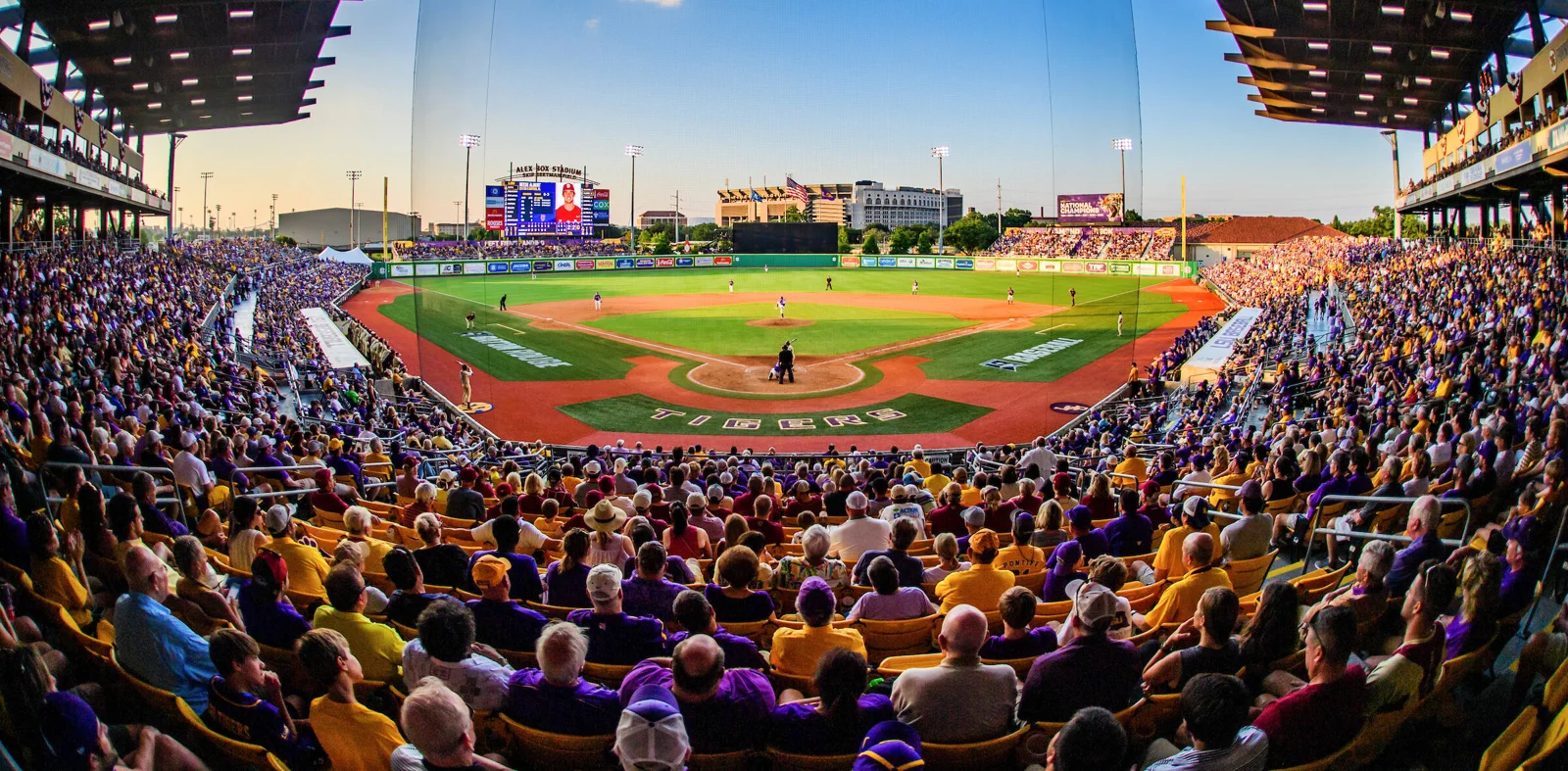
A title counts the final achievement; an appearance counts the opportunity to compete at that stage. The NCAA appearance leaders, through 2025, on page 14 list Texas with 38 Men's College World Series appearances, Miami with 25 and Florida State with 24. Those totals add an essential dimension to a comparison that would otherwise be dominated by the champions column.
Texas and Florida State show why appearances matter
Texas combines six championships in the historical table with the largest appearance total in that record. Its case is therefore about both winning the final prize and repeatedly reaching the tournament's closing stage. If your definition of a great program includes making deep postseason baseball a recurring part of its identity, that combination is compelling evidence.
Florida State provides a different test of your criteria. The same NCAA record lists 24 appearances, three runner-up finishes and no championship through 2025. Excluding it from a discussion of sustained achievement solely because of the empty title column would ignore how often it earned a place among the final contenders. Conversely, appearances should not be quietly relabeled as championships. Both facts belong in the comparison.
It is also easy to confuse tournament participation with an Omaha trip. Florida State's May 29, 2025 regional preview identified that season as its 61st NCAA postseason appearance while separately recording 24 College World Series berths. The larger number describes entry to the national tournament, not 61 visits to its final stage.
These examples suggest a fairer reading than a quick conversion percentage. The denominator spans different years and tournament structures. A ratio made from all-time titles and appearances can describe the record, but it should not be presented as the chance that the next team will win. Keep an achievement count separate from a forecast.
A postseason pipeline is different from a single hot run
To evaluate repeatability, make a season-by-season sheet using the same dates for every school. Give NCAA selection, winning a regional, reaching Omaha and winning the title separate columns. That prevents a strong regional appearance from being treated as identical to a semifinal season, while still recording progress that a champions-only list would miss.
Look at the distribution, not just the sum. Several deep runs spread across the window suggest repeated opportunities; one exceptional season surrounded by early exits tells a different story. Neither pattern should be concealed by selecting only the years that flatter your preferred program. If you shorten the window, shorten it for every school you compare.
Account for seasons in which the championship was not played. The NCAA record marks 2020 as canceled because of the COVID-19 pandemic; treating it as an ordinary postseason failure would distort the comparison. Finally, remember that repeat participation is evidence about a program's results. It does not establish a guaranteed role for a recruit or lock in the quality of a future roster.
Test the historical picture against recent completed seasons
Recent performance deserves its own evidence. A program can have a strong long-term foundation and still experience sharply different finishes from one season to the next. Use completed seasons with clear endpoints, then record each outcome. The 2023-25 comparison below is a selected example using the same three-year window for LSU and Tennessee, rather than an attempt to rank every program.
Compare results across the same window
| Program | 2023 | 2024 | 2025 |
|---|---|---|---|
| LSU | National champion | Regional final exit | National champion |
| Tennessee | Omaha, tied fifth | National champion | Super regional exit |
LSU's two titles are documented in its championship history and 2025 final recap. Between them, its 2024 season ended against North Carolina in the Chapel Hill Regional final. Including that middle season matters: two championships in three years is exceptional, but it does not mean three consecutive trips to Omaha.
Tennessee's official season histories record the 2023 Omaha finish and the 2024 championship. Its 2025 elimination recap documents a super regional loss at Arkansas. That sequence shows repeated advancement alongside a title, with a different pattern from LSU's window. It deserves to be described in full rather than reduced to the single season that best serves an argument.
There is also a verified 2026 result beyond the historical record book's cutoff. Oklahoma's June 22, 2026 championship recap records a 13-2 win over North Carolina in the deciding final game, giving the Sooners their third title after 1951 and 1994. Oklahoma finished 43-23. This is a separate season update; the earlier tables remain explicitly labeled through 2025 rather than mixing dates without explanation.
That distinction illustrates why recent evidence must be checked independently. A historical table can be accurate and still precede a newly completed championship. When expanding a comparison through 2026, add the 2026 outcome for every program in the chosen comparison, not only the champion. A selective extra year would give one school an additional opportunity while freezing the others.
For a next-season decision, take one further step: separate those completed results from the team now being assembled. Review the current roster, returning roles and schedule before treating the last trophy as a prediction. The historical record tells you what the program achieved. The same-window sheet tells you how its recent teams finished. Together they provide a stronger basis for discussion than either a reputation-only list or a single hot postseason.
Turn the comparison into a shortlist you can use
A useful shortlist gives each program a reason to be there. USC belongs in a championship-history discussion; LSU connects a major title record with the recent examples examined here; Texas illustrates repeated Omaha opportunity; Florida State tests how much weight you give sustained contention without a title through the stated cutoff. Those are distinct cases, so you do not have to force them into one unexplained order.
A fan itinerary and a recruiting shortlist need different evidence
For a fan planning a trip, begin with the baseball you want to experience. You might prefer a historic program, a particular rivalry or a series that fits your dates. Then move from reputation to an actual fixture. An official school schedule such as LSU's identifies the opponent and venue and can show times still to be announced. That information determines the visit in a way a trophy count cannot.
Keep a compact evidence sheet rather than a list of names without context. It can help you compare options and remember which details still need checking.
| Your question | Useful evidence | What it leaves open |
|---|---|---|
| Which history interests me? | Dated title and Omaha records | The strength of the next lineup |
| Which game can I attend? | Current schedule, venue and ticket information | Later time or venue changes |
| Which college fits my plans? | Academic program, actual aid offer and direct baseball discussions | A guaranteed future role |
A prospective player needs a different sheet. Keep baseball achievement in one column, then investigate the academic course, personal cost and the program's view of your development and possible role. A school can be an extraordinary champion without being the right college choice for a particular student. Equally, an appealing college-fit ranking does not establish that its team is the strongest on the field.
Use NCSA's stated methodology to understand what its list measures before applying it to your situation. Follow up with direct school information and individual discussions rather than treating a ranking position or average cost as a personal promise.
If your question is about this season's poll, our college baseball rankings guide explains that different task. If your priority is finding a reachable ballpark, use the D1 college baseball map and then check the fixture. Long-term program comparisons are most useful when their dates and criteria lead to a concrete next step.
Join the conversation
Share a question or a thought about college baseball. Comments are reviewed before they appear. Keep it friendly and on topic.
No comments yet. Start the conversation.
Sign in with Google to leave a comment. Your email address is not displayed.