Who won the 2026 NCAA baseball tournament?
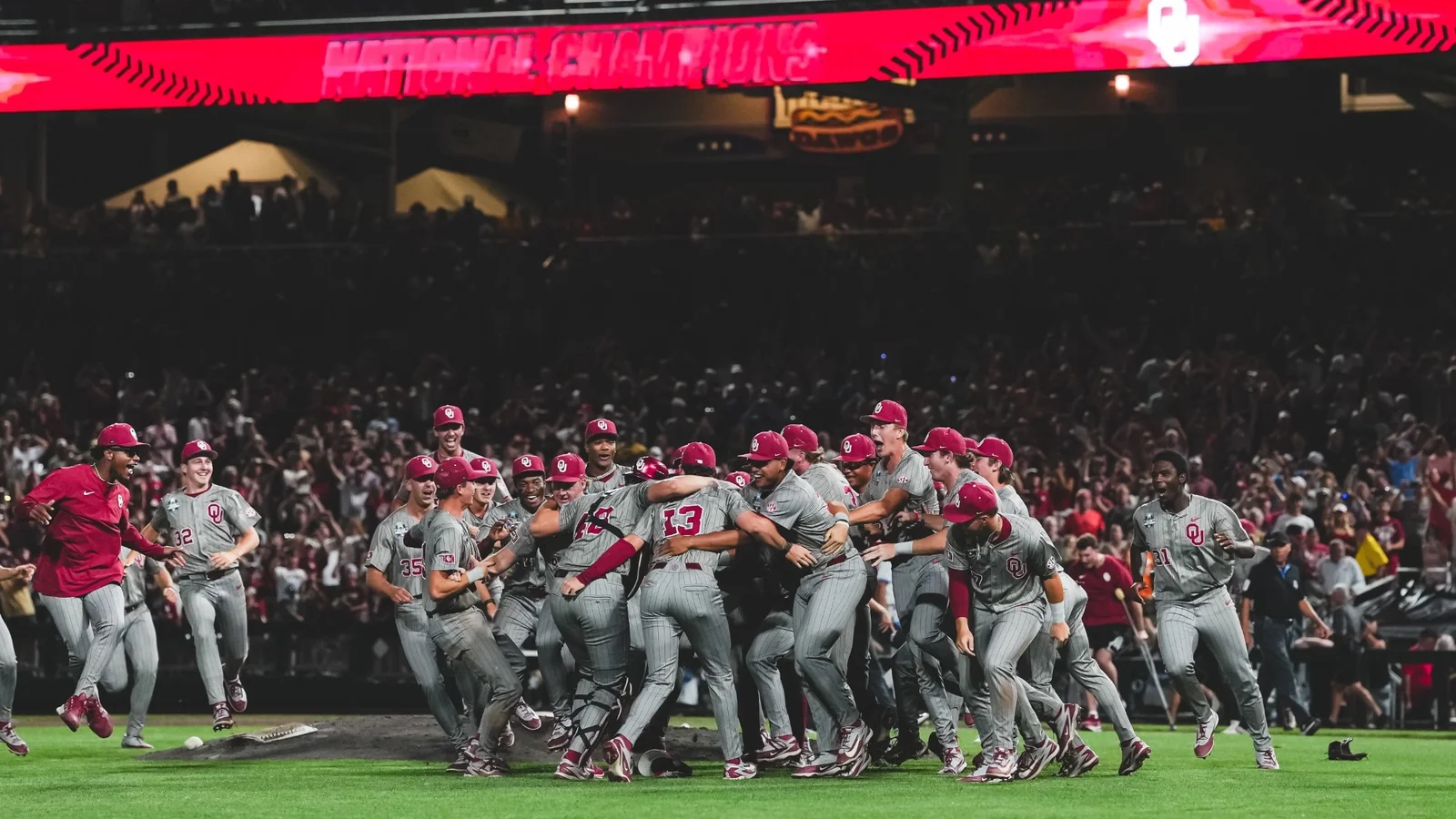
Oklahoma won the 2026 NCAA Division I baseball championship, beating North Carolina 13–2 in Game 3 on June 22 at Charles Schwab Field Omaha. The Sooners won the best-of-three Men’s College World Series finals two games to one. It was their third national title, following championships in 1951 and 1994, and they finished the season 43–23. Oklahoma’s championship recap
The postseason began May 29. Teams opened in four-school regionals, winners advanced to head-to-head super regionals, and the last eight traveled to Omaha. June 22 was originally reserved for a possible deciding finals game. North Carolina’s Game 2 win meant the tournament used the full date window. NCAA prechampionship manual · Omaha’s official results
- May 29–June 1: Sixteen regionals opened the bracket.
- June 5–8: Eight best-of-three super regionals determined the Omaha field.
- June 12–22: The Men’s College World Series narrowed eight teams to two finalists and ended with the deciding championship game.
Where to find the printable 2026 bracket
The original NCAA printable bracket PDF, posted by Tennessee Athletics on selection day, puts all 64 teams on one landscape page. It shows the starting matchups, team records as of selection, and the hosts marked with an asterisk. The document has blank spaces for advancing teams. Print it if you want to mark a school’s route by hand or keep the initial field alongside the completed results. Tennessee’s official document page
Read the seed in the right context when you trace a team. The numbers beside the four schools in a regional identify their positions in that local group. The separate national top sixteen list ranks seeds across the full field. Oklahoma started as the No. 2 seed in its Atlanta group, where host Georgia Tech held the No. 2 national seed. Look up the site before interpreting a number beside a school name. For the completed Omaha portion, use the organizer’s game-by-game scores, which include the title series through the last out. Men’s College World Series results by date
Regional results and the road through Atlanta
Each of the sixteen regional sites started with four teams. A club could survive a single defeat and still advance, which gave the first loss a practical cost: the team had to win its remaining games, often by playing twice in a day. The list below follows the original bracket’s pairings, keeping each eventual super regional pair together. NCAA regional results packet
How to read the regional winners
| Regional site | Advanced |
|---|---|
| Los Angeles | Cal Poly |
| Morgantown | West Virginia |
| Hattiesburg | Little Rock |
| Gainesville | Troy |
| Chapel Hill | North Carolina |
| College Station | Southern California |
| Lincoln | Ole Miss |
| Auburn | Auburn |
| Atlanta | Oklahoma |
| Lawrence | Kansas |
| Tallahassee | St. John’s |
| Tuscaloosa | Alabama |
| Austin | Texas |
| Eugene | Oregon |
| Starkville | Mississippi State |
| Athens | Georgia |
Some destinations were settled without a reset game. Cal Poly went unbeaten in Los Angeles, beat Saint Mary’s 5–2 in the regional final, and earned its first super regional berth. Top overall seed UCLA was already out after two losses to Saint Mary’s, so Cal Poly won the site without facing its host. Another regional might end with two finals games if the team coming through the elimination side wins the first meeting. For the format behind those extra games, see the division tournament bracket explainer. Cal Poly’s clinch recap
How Oklahoma escaped the Atlanta Regional
Oklahoma played twice on May 30. It beat The Citadel 8–3 in its opener, then lost 9–3 at Georgia Tech. The loss left the Sooners one defeat from elimination while Georgia Tech could still advance with a single win over them. Oklahoma started May 31 by beating The Citadel 15–5 again. The Sooners came back to beat the host 15–8 that evening, which gave both teams one regional loss and created a deciding game on June 1. Oklahoma’s official schedule and scores
The final tested Oklahoma after it had already used a full weekend’s worth of pitching. The Sooners led 3–0 early, allowed seven consecutive runs and trailed 7–3 entering the seventh. Senior reliever Jackson Cleveland finished with three and two-thirds scoreless, hitless innings. That stretch let Oklahoma finish its comeback and hold the tie long enough for Dayton Tockey to bat in the bottom of the tenth. Tockey drove a full-count pitch over the center-field wall for the walk-off and an 8–7 win. It was Oklahoma’s fourth win in five regional games. Oklahoma’s deciding-game recap
The distinction between Sunday and Monday matters for anyone looking up the bracket. Sunday’s win extended the round. Monday’s walk-off changed the school written into the super regional slot. Georgia Tech beat the eventual national champion once and still lost the regional because Oklahoma beat it in both remaining chances. The score sequence explains why a single early result gives an incomplete account of a double-elimination weekend.
Super regional results and the eight Omaha qualifiers
The regional winners moved into eight best-of-three matchups from June 5 through June 8. A team needed two victories over one opponent to claim its place in Omaha. Seven series ended in sweeps. North Carolina’s series against Southern California was the only one that used a third game. NCAA bracket through the super regionals
| Advanced to Omaha | Opponent | Series |
|---|---|---|
| West Virginia | Cal Poly | 2–0 |
| Troy | Little Rock | 2–0 |
| North Carolina | Southern California | 2–1 |
| Ole Miss | Auburn | 2–0 |
| Oklahoma | Kansas | 2–0 |
| Alabama | St. John’s | 2–0 |
| Texas | Oregon | 2–0 |
| Georgia | Mississippi State | 2–0 |
North Carolina used all three of its available games in Chapel Hill. Southern California won 9–5 on June 5. The Tar Heels answered with a 4–0 shutout and then trailed heading into the bottom of the ninth of Game 3. Two runs in that inning gave them a 4–3 walk-off and the Omaha berth. One team won Friday, the other won Saturday, and Sunday’s result broke the actual tie. Compare those results to what happened in Lawrence, where three dates also appear in the record but only two games were played. UNC’s Game 1 recap · Game 2 box score · Game 3 recap
How Oklahoma clinched at Kansas
Oklahoma won Game 1 at Kansas 8–1 on June 6. The following evening, the Sooners were the designated home team at Hoglund Ballpark, which put them at bat in the bottom halves even though Kansas hosted the series. After Kansas tied the score in the top of the second, Oklahoma scored six in the bottom half. Dayton Tockey added a solo home run in the third, giving the Sooners an 8–1 lead before weather forced play to stop for the night. Oklahoma’s Lawrence clinch recap
Play resumed June 8 with that lead intact. Oklahoma scored four in the sixth and another in the eighth to finish a 13–2 win. Kansas’s box score carries the start date, June 7, while both schools published the clincher on June 8. That is one game spanning two days and a 2–0 series for Oklahoma. A reader pairing the June 7 box score with the June 8 press release should put both under Game 2. The result ended Kansas’s school-record-tying 45-win season and sent Oklahoma to Omaha for the first time since its 2022 runner-up finish. Kansas Game 2 box score · Kansas’s series recap
From the Omaha opener to the championship series
Omaha split the eight remaining teams into two four-team groups. West Virginia beat Troy 7–5 and North Carolina beat Ole Miss 6–2 in the June 12 opening games. The next day, Oklahoma beat Alabama 9–0 and Georgia beat Texas 7–1 on the other side. At that point every team still had a route to the title, but the four opening losers faced elimination in their next game. Omaha’s official game log
Both finalists took the shorter route. An unbeaten team that won its bracket final could clinch in three games, which left the possible rematch unused. For a team carrying one loss, beating the unbeaten opponent once would have handed each team a loss and created a second meeting. Georgia and West Virginia had that chance June 17. Neither forced a rematch.
Oklahoma’s side of the bracket
Freshman left-hander Cord Rager held Alabama to three hits in seven innings, struck out eight and did it on 88 pitches. L.J. Mercurius finished the 9–0 shutout with two scoreless innings. Oklahoma then edged Georgia 4–3 on June 15 to reach the bracket final without a loss. Georgia had to beat Texas 2–0 in an elimination game the following day to get another chance at Oklahoma. Oklahoma’s Alabama recap · Official Omaha results
The second Georgia matchup moved away from the one-run margins that had shaped much of the route. Oklahoma hit five home runs in its 11–4 win on June 17. Right fielder Dasan Harris and center fielder Jason Walk hit two each. Georgia had brought an unbeaten record into the first meeting with Oklahoma, then took both bracket losses from the same opponent. The five-homer performance ended that side of the event on Wednesday. Oklahoma’s June 17 recap
North Carolina’s side of the bracket
North Carolina beat Ole Miss 6–2, then broke open its first game against West Virginia with three runs in the seventh inning to win 5–2 on June 14. West Virginia stayed alive with a 12–0 win over Troy on June 16, setting up a second meeting with the Tar Heels. North Carolina had to beat the same school twice, just as Oklahoma had to do against Georgia. North Carolina’s June 14 recap · Official Omaha results
The Tar Heels opened a 12–1 lead in the rematch on June 17. The Mountaineers scored five in the seventh and another in the eighth, but North Carolina held on 12–7 to finish its side undefeated. It was UNC’s first trip to the championship series since 2007. When both sides settled on Wednesday, the two 3–0 teams advanced to a new series that started from zero. North Carolina’s clinch recap
How Oklahoma beat North Carolina for the title
Oklahoma won Game 1 on June 20 by a score of 9–3. North Carolina answered with a 6–2 win on June 21. The Sooners won the June 22 decider 13–2. Each club came into the finals without a loss in Omaha, then each had to deal with one before June 22. In this round the first loss left one path to the title: win the remaining games. 2026 championship series results
The game that kept the series going
Oklahoma catcher Deiten Lachance hit two home runs in the opener. His first came in the top of the first inning. North Carolina scored three runs in the bottom half, and Lachance’s second homer tied it in the third. The Sooners scored four in the fourth. Starting pitcher Cord Rager got through four scoreless innings after North Carolina’s opening rally, and the bullpen completed a stretch of eight straight scoreless innings. Oklahoma’s 9–3 win made Sunday an elimination game for the Tar Heels. Oklahoma’s Game 1 recap
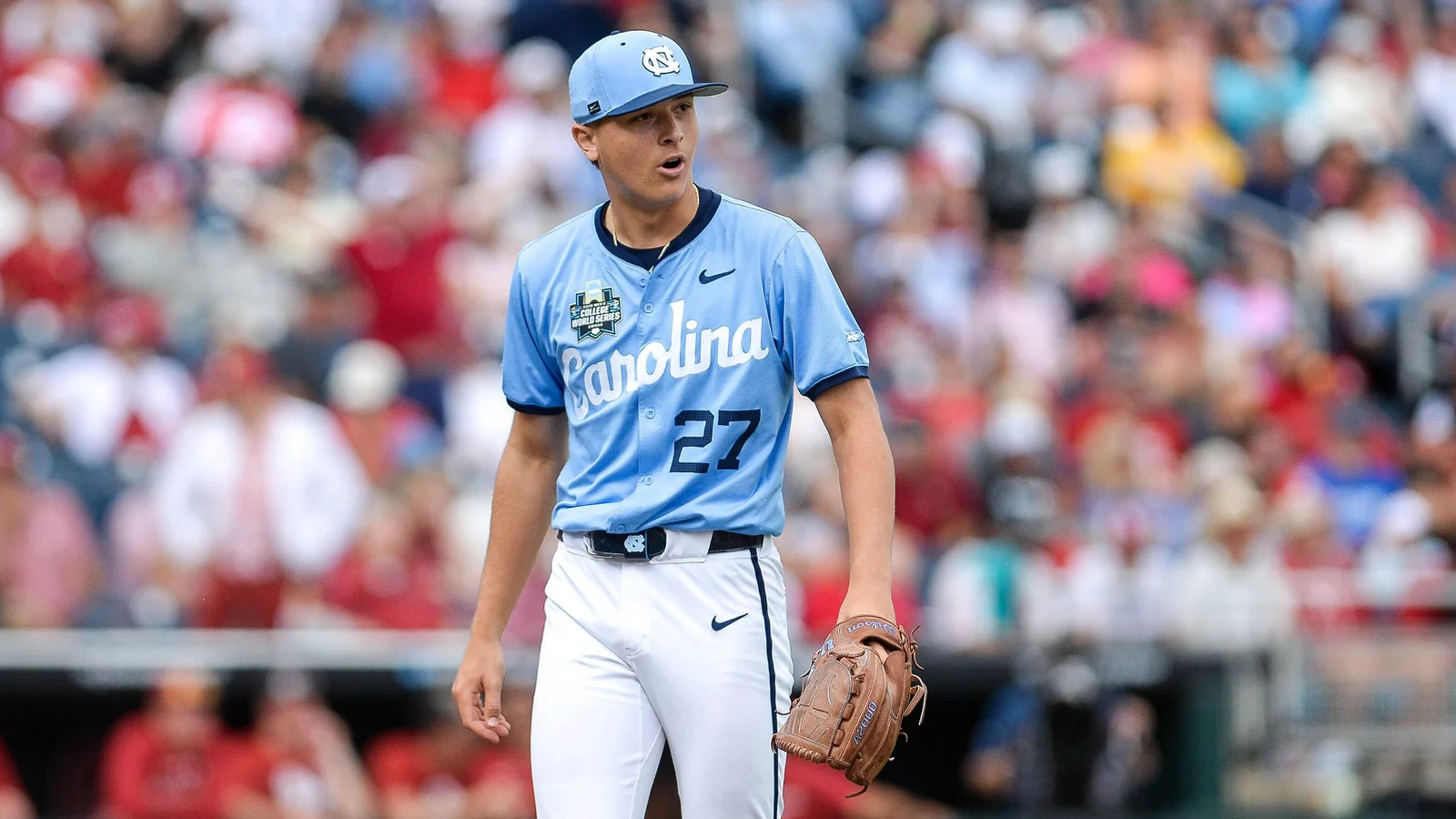
The first inning of Game 2 looked dangerous again for North Carolina. Oklahoma scored twice, then starter Ryan Lynch stopped the scoring. Jake Schaffner’s two-run triple tied it in the third, and he scored the go-ahead run on a wild pitch. Caden Glauber took over in the fifth and held Oklahoma scoreless for the final five innings. He allowed one hit and struck out eight. Second baseman Gavin Gallaher started the double play that ended the game. The Tar Heels had protected their lead through the final out and snapped a nine-game Oklahoma winning streak. North Carolina’s Game 2 recap
What decided Game 3
The Sooners scored two in the second and one in the third before North Carolina pulled to 3–1. Oklahoma gave the ball to L.J. Mercurius with one out in the third. He covered five and two-thirds innings, allowed one run and struck out five. That was the decisive stretch for the bullpen, taking Oklahoma from an early pitching change all the way to the ninth. Across the two elimination games, the team that received at least five innings from its first reliever won. Game 3 box score and play-by-play
Oklahoma added three runs in the fourth, two on Jaxon Willits’ single. Kyle Branch delivered a two-run single in the sixth and a three-run homer with a full count in the eighth. His two swings accounted for five of his six RBIs that night. Oklahoma struck for four runs in the eighth, pushing its lead to 13–2, and Jackson Cleveland struck out the side in the ninth. Branch was 3-for-4. Willits also went 3-for-4 and walked twice, finishing with 13 hits across six games in Omaha and earning Most Outstanding Player. Oklahoma’s title game recap
The difference in scoring was larger than the hit totals suggest. Oklahoma had fourteen hits and North Carolina had ten. The Sooners scored in six different innings and had four innings with multiple runs. The Tar Heels scored once in the third and once in the seventh. The line score shows how often Oklahoma put pressure on the staff, even before the four-run eighth put the game out of reach. Deciding game line score
Oklahoma finished the NCAA tournament 11–2. The breakdown was four wins and a loss in Atlanta, two wins at Kansas, three bracket wins in Omaha and two wins in three games in the finals. Nine of those eleven victories came against national seeds, including two each against Georgia Tech, Kansas, Georgia and North Carolina plus one against Alabama. The Sooners had a regional seed of their own, but entered outside the national top sixteen. The route shows how much work they had to do before a decisive final score could make the championship look comfortable. Oklahoma’s postseason record and national-seed results
Join the conversation
Share a question or a thought about college baseball. Comments are reviewed before they appear. Keep it friendly and on topic.
No comments yet. Start the conversation.
Sign in with Google to leave a comment. Your email address is not displayed.