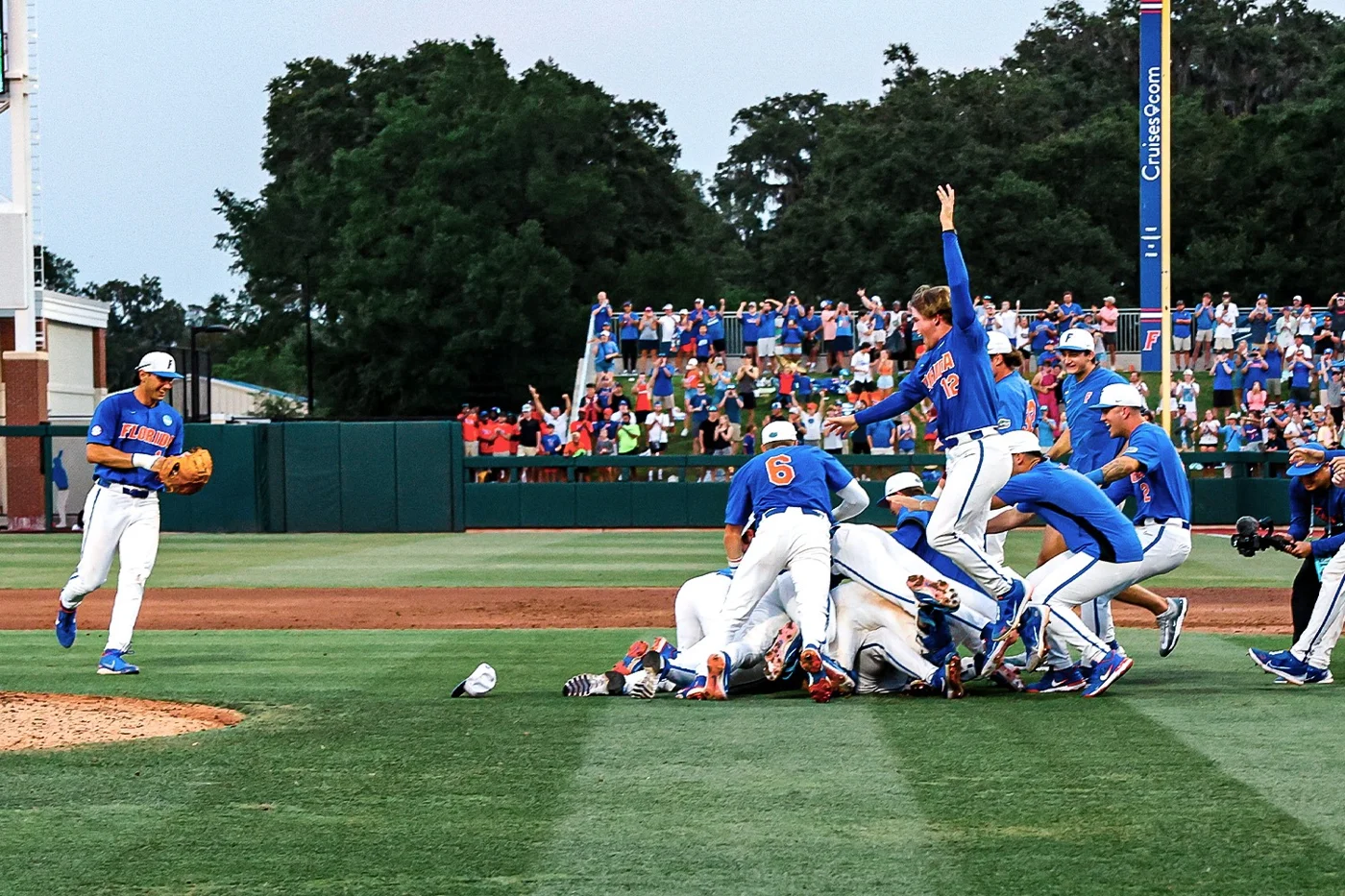
D1Baseball's 2026 Top 100 Programs ranks the strength and direction of college baseball programs across seasons. It is different from a weekly Top 25, a single-season RPI table or a list of individual prospects. This guide explains the publicly described method and uses verified school examples to show how to read the result. Information was checked October 20, 2026.
What the 2026 Top 100 Programs list actually ranks
The important word is programs. A team ranking asks how good a particular roster is at a particular point. A program evaluation asks whether the organization behind successive rosters can keep winning, developing players and competing for postseason opportunities. A school can therefore have a stronger long-term program position than its latest final-season team ranking.
LSU's October 15 announcement provides a public summary of D1Baseball's method. It emphasizes the past decade, especially the latest five seasons, while looking ahead five to ten years. Recent regional participation, regional titles, Omaha appearances and national championships supplied a points-based foundation. Editorial adjustments considered coaching, facilities, financial-aid circumstances, conference context, momentum, recruiting and development.
That description establishes a mixed approach: results are part of the foundation, but the final list includes judgment about the conditions behind those results. It does not provide enough detail to calculate an independent score or reverse-engineer every place. Do not attach invented percentages to the categories or describe the published order as the inevitable result of one transparent formula.
The same LSU release confirms LSU, Texas, North Carolina, Tennessee and Florida as the first five programs, in that order. Those are verified placements from an official school report. For the complete countdown and each program's original analysis, use D1Baseball's own coverage. The discussion here interprets the exercise rather than reconstructing the entire hundred-entry list.
It is also an edition, not a table refreshed after every series. Florida's report identifies six editions dating to 2015. Keep the 2026 edition label attached when sharing a program's position. Moving up in a weekly poll in April would not automatically change the number awarded in this October program exercise.
For a fan, the distinction is useful rather than merely technical. A good program can replace graduating or drafted players, maintain a development process and keep producing competitive teams. A great individual season can occur without establishing the same durability. The ranking tries to evaluate that wider setting, so it should be read alongside the season's results rather than used to erase them.
Read the method as a comparison of whole programs
The most useful interpretation separates observed results from the judgment about whether a program can sustain them. You can verify a regional appearance or a draft selection. You still have to interpret what those outcomes say about the next group of players. The following comparisons are our way of reading the publicly described method, rather than extra categories or weights attributed to D1Baseball.
Recent results and championship peaks answer different questions
A title is the highest team achievement, but the surrounding seasons affect the program argument. The NCAA championship history records LSU titles in 2023 and 2025, Tennessee in 2024 and Oklahoma in 2026. Those entries explain why recent championship success belongs in a contemporary discussion. They do not make every other form of sustained success irrelevant.
Consider two hypothetical programs. One wins a title and then struggles to reach the tournament. Another repeatedly hosts regionals and reaches Omaha without winning the final series. The first has the greater single peak; the second may have the steadier record of creating championship opportunities. A program ranking must make a judgment about both, while a title list can simply record the winners.
This is why comparing the same time window matters. A school's all-time trophy count includes teams, coaches and competitive conditions outside the latest five seasons. Historical achievements remain meaningful, but they cannot silently substitute for the window the current exercise emphasizes. Equally, one disappointing regional cannot establish that a consistently productive organization has lost all its underlying strengths.
Player development needs more than one draft headline
Florida's August 2026 development report offers a concrete example: forty-three MLB debuts since 2008, divided between twenty-two pitchers and twenty-one position players. The value of that evidence is its span and range. It covers different cohorts and different jobs rather than relying on a single exceptional alumnus.
A draft pick and an MLB debut are separate outcomes. The draft captures a professional club's decision to invest in a player; the debut comes after further development and selection. Neither number should be mixed with the other. Nor should a college claim sole responsibility for every later professional improvement. A careful comparison asks which milestone is counted and which years and players it includes.
For a program assessment, repeated development across cohorts supports a stronger argument than a celebrity name alone. It suggests useful questions about instruction, role changes and how a team prepares replacements. A prospective player should go further and ask about development in his own position. A celebrated pitcher pipeline cannot by itself answer a catcher's question about playing opportunity or daily instruction.
Facilities and support matter through what a program can sustain
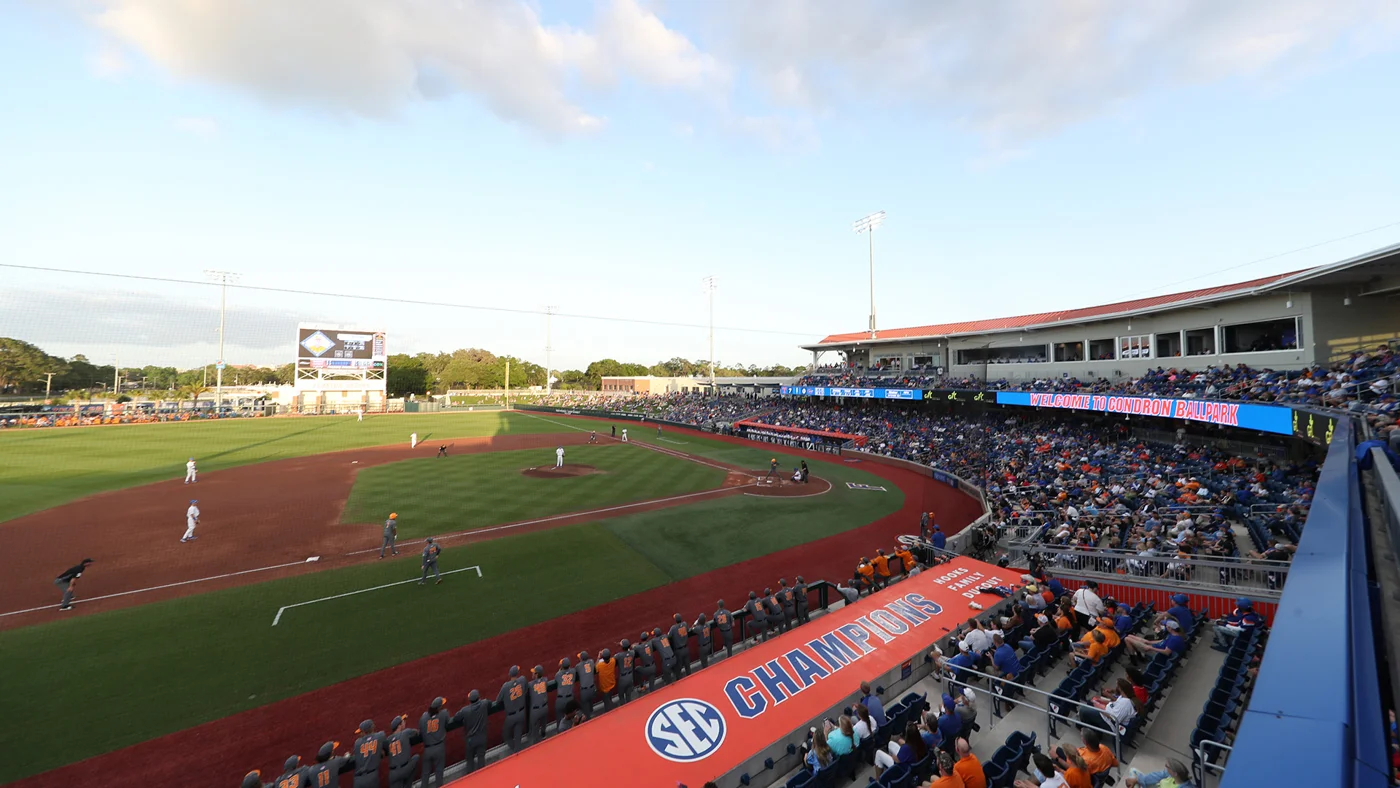
Florida identifies Condron Family Ballpark as its home since 2021, replacing McKethan Stadium. The photograph shows a real investment in the baseball setting. It does not reveal a numerical ranking score, a program's complete financial position or the experience of every player inside the organization.
Read facilities through their practical function. Can a program maintain useful training routines, provide consistent instruction and support the people responsible for the team? Those are questions to investigate, not conclusions that can be read from a handsome grandstand. The same discipline applies to financial support: an unverified spending rumor should not become a precise adjustment to a program rank.
Strong support and strong results can reinforce each other without creating a guarantee. Buildings do not throw strikes, and historical momentum does not prevent turnover. The wider program view is valuable because it asks whether the conditions for repeated competitiveness remain in place. It becomes less useful when reputation is allowed to answer that question without current evidence.
Florida provides a concrete case for reading a program rank
Florida's fifth place is useful because the evidence contains both sustained achievement and a recent disappointment. Its October announcement reports eighteen consecutive NCAA tournament appearances and nine Omaha appearances since 2008. That is a record of repeatedly reaching consequential games. It gives a program evaluator something broader to assess than the result of the most recent elimination game.
The 2026 season nevertheless ended in Gainesville rather than Omaha. Florida's June 1 regional recap records a 10-2 loss to Troy in the deciding game. The Gators finished 41-21 after going 2-2 in their regional. A reader who follows only the October program number would miss an important part of that team's season.
The pitching sequence makes the distinction concrete. Caden McDonald supplied 4 1/3 scoreless relief innings, but his removal after forty-eight pitches preceded three walks and a five-run sixth. Florida's report describes a workload decision, not simply a choice between an effective pitcher and an ineffective one. A tournament asks a staff to cover the next inning with someone who is available and prepared for that job.
That is why depth matters differently from the quality of a single ace. A team may have enough talent to win a series opener and still struggle when an elimination bracket demands another start or a heavily used bullpen must return. The organization has to develop multiple answers. The regional result provides a specific question about a particular roster's pitching coverage; it does not independently measure every component of the program.
Equally, the long run of tournament appearances cannot be used to declare the regional performance satisfactory. The two judgments operate at different scales. Florida could retain a strong multi-season position while needing to improve how a new roster handles those situations. A useful reading allows both statements to stand and asks what evidence would show that the immediate weakness has been addressed.
For a comparison with another school, keep the same discipline. Put repeated tournament access beside repeated tournament access, and compare title opportunities over a shared interval. Then examine the latest roster separately. Matching Florida's eighteen-appearance run against another team's single best weekend would produce an uneven argument, just as ignoring that weekend entirely would hide relevant current performance.
The case also sets a limit on interpretation. The public school announcement verifies Florida's position and achievements; it does not reveal exactly how much each achievement moved its score. We can explain why the evidence belongs in a whole-program discussion without claiming to know the editors' private calculation. Fifth is the published conclusion, while the strengths and weaknesses described here are a way to read it critically.
Keep the Top 100 beside the right weekly and season measures
A program list becomes more useful when it sits beside measures that answer narrower questions. A weekly team poll evaluates a season's teams at a particular stage. A final poll includes what happened in the postseason. An RPI table offers another season-based comparison. Conference standings tell you where a team sits within its league competition. None is interchangeable with a multi-season program assessment.
Florida supplies a worked example with actual numbers. The NCAA-hosted D1Baseball Top 25 lists the Gators sixteenth, with a 41-21 record, through games of June 23, 2026. That is a different judgment from fifth in the October Top 100 Programs edition. The gap is not an eleven-place rise by the same team in the same ranking.
The NCAA RPI page provides a third number: Florida was eleventh in its displayed May 24, 2026 snapshot, with a 39-19 record. That table stops before the completed season reflected in the final Top 25. Calling it the final RPI simply because it was the page available in October would misstate the evidence.
Use the date and the unit of comparison before comparing numbers
Attach four labels whenever you share a rank: the publisher or measure, the subject being ranked, the season or edition, and the effective date. For Florida, those labels distinguish an October program assessment from a June final team ranking and a May RPI snapshot. The school is the same; the question and evidence window change.
This matters when discussing whether a program is overrated. If the objection concerns the latest team's regional exit, use that result to challenge a claim about the latest team. If the objection concerns the ability to replace players over several seasons, examine that history. A disagreement can be reasonable, but its evidence should address the judgment being challenged.
Hosting also needs its own label. A ranking displayed on NCAA.com can still be a named publisher's poll. The D1Baseball Top 25 page explicitly identifies its provider; that does not make the separate Top 100 Programs edition an NCAA-produced hundred-school table. Preserve the attribution when quoting a place, particularly when search phrases combine NCAA, ESPN and D1Baseball as though they were one source.
Do not average these unlike numbers into an apparently more precise composite. Fifth, sixteenth and eleventh do not share a common scale, evaluation window or purpose. Keeping them separate lets each contribute something useful: long-term position, a completed season's team assessment, and a dated season metric. Our rankings page and RPI page are starting points for those season comparisons; retain the date shown by the underlying table.
Turn a program list into a useful fan or school shortlist
For a fan choosing what to follow, use the program list to find a sustained story and the schedule to find its next test. A highly regarded organization replacing important innings can be more interesting than a matchup selected solely by two famous names. Watch how the new staff covers a full series, how the lineup responds to different pitching and whether useful contributors emerge beyond the best-known player.
Start with a school in the Division I team directory, then examine the opponents and dates. The Florida schedule page, for example, turns the program case discussed here into actual games to follow. Use the daily schedule and viewing guide when the date approaches. A place in the Top 100 does not establish the channel, start time or availability of a particular broadcast.
For a prospective player, the list can narrow an initial set of questions, but it cannot settle the choice of a school. Separate the quality of the organization from the opportunity in a particular position and from academic and personal fit. A strong national program may have an established player at your position or a development plan different from the one you need. Those are reasons to ask better questions, not reasons to dismiss its overall quality.
Ask which recent players with a similar role improved, what responsibilities a newcomer is expected to earn and how the staff evaluates progress. Distinguish a coach's specific explanation from an assumption drawn from the school's reputation. A history of professional pitchers is relevant background for a pitcher; it still does not describe his own instruction, competition for innings or path through the roster.
Read season labels carefully throughout that process. On October 20, Florida's schedule page was labeled 2027 while its roster page remained labeled 2026. The existence of a next-season schedule did not make the previous roster a confirmed list of next-season returners. The same care belongs in any comparison built around a program's future.
The strongest use of the 2026 Top 100 is therefore as an informed starting point. It identifies how a publisher evaluates sustained competitive strength, and its public method gives readers a basis for asking why. Keep the edition, the current team and the individual decision distinct. Then follow the games and the evidence that can show whether the program continues to deliver what its position suggests.
Join the conversation
Share a question or a thought about college baseball. Comments are reviewed before they appear. Keep it friendly and on topic.
No comments yet. Start the conversation.
Sign in with Google to leave a comment. Your email address is not displayed.