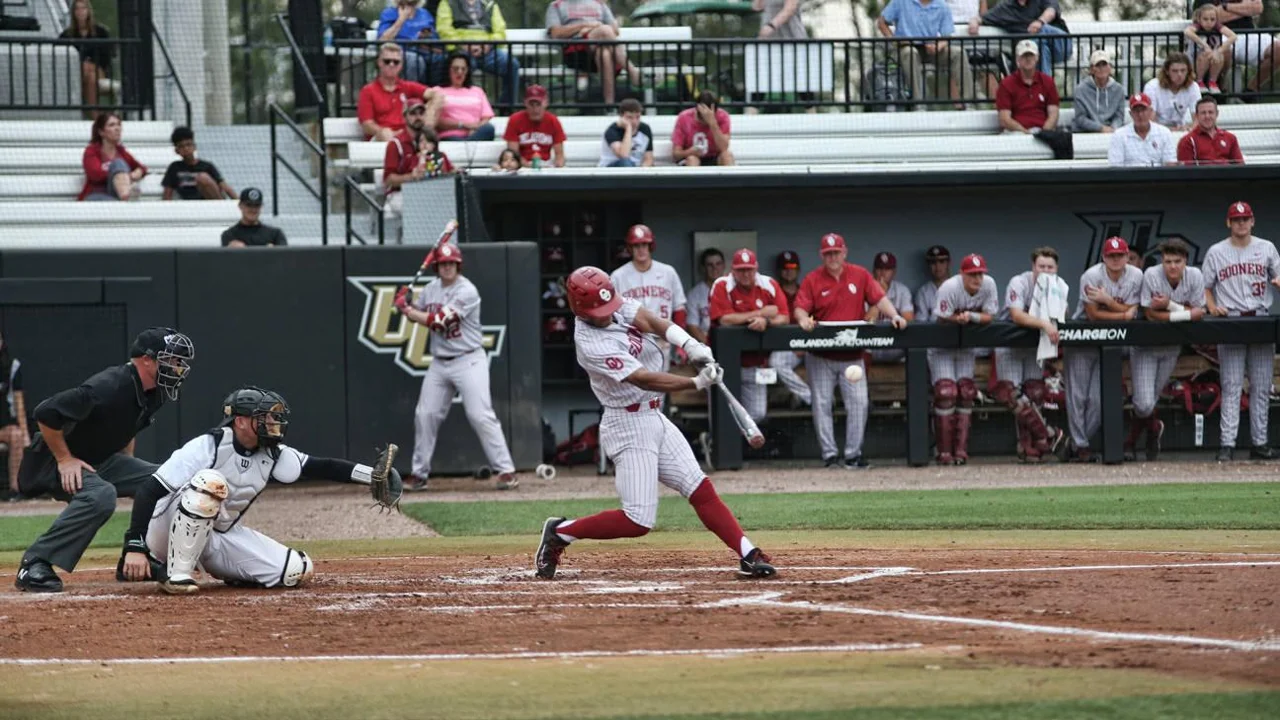
A college baseball background can give you a different way into an NFL player's story, but the details matter. Bo Jackson, Russell Wilson and Kyler Murray belong in the conversation for different reasons. Start with what each actually did for his university baseball team, then separate that record from draft selections, professional baseball and the NFL career that followed.
What counts as a college baseball-to-NFL story?
“He could have played baseball” is an interesting conversation starter, but it is not a college baseball record. A player might have been drafted out of high school, appeared for a university team, played in the minor leagues or reached Major League Baseball. Those are separate milestones. Knowing which one applies prevents a good story from becoming a misleading one.
Even MLB's two-sport overview includes several different sporting paths. For a college baseball fan, the useful starting point is narrower: which school did the player represent on the diamond, in which seasons, and with what role? An official baseball roster or season record answers that question more directly than a football highlight package or a photograph from professional spring training.
Next, read the sample. A batting average from one season does not describe an entire college career. Games played are not necessarily starts, and an appearance as a pitcher is different from a full season in the rotation. A university biography may summarize several years in one sentence; the season-by-season table underneath can change how you understand that summary. The point is not to diminish an athlete's versatility. It is to appreciate the baseball achievement on its own terms.
Finally, keep a draft selection separate from a professional playing record. Being selected shows that an organization wanted the opportunity to sign a player. It does not establish that he appeared in a major-league game, or even that he chose that sport. Likewise, playing two sports at university does not mean the athlete later played both professionally at the highest level.
The three profiles below use those distinctions as a guide. They are historical baseball stories, not a list of today's NFL starters or a prediction that another college player will follow the same route. When you later choose a football game to watch, use a current team listing and roster. A compelling old biography and a current Sunday lineup answer different questions.
Bo Jackson: start with the Auburn baseball record
Jackson's professional reputation can overwhelm the university part of his story. The baseball record deserves its own attention. The Baseball Hall of Fame's historical account records a 42-game junior season at Auburn in which he hit .401 with 17 home runs and 43 RBI. It gives his college career average as .335, with 70 RBI. The .401 figure belongs to that standout season, not to his entire time on the diamond.
That distinction matters when comparing him with a college player you follow today. One excellent season and a multi-year record tell different stories. A season line can show the concentration of a player's production; a career line includes other periods and opportunities. You do not need to turn either into a ranking across eras to see why Jackson's Auburn baseball performance was substantial.
Auburn's retrospective confirms that his university career included football, baseball and track. It also records eight MLB seasons, the 1989 All-Star Game MVP award and four NFL seasons. He therefore represents the category that casual two-sport discussions often imply: an athlete who actually competed professionally in both baseball and football at the top level.
Even his draft story needs a separate line from his playing history. The Hall of Fame account places his major-league debut with Kansas City in September 1986 and his agreement to play for the Raiders in 1987. The Buccaneers had selected him first overall in the 1986 NFL draft, but that selection does not make Tampa Bay the NFL team for which he played. A draft database and a career game log are describing different events.
For the college baseball viewer, the useful lesson is how to read the evidence. Start with the actual Auburn season, then ask what the professional record adds. Do not use a famous football run as proof of a particular baseball skill, or a home-run total as proof of how he approached every at-bat. Those questions require footage and more detailed records. The verified outline is already remarkable: meaningful university baseball production followed by real major-league and NFL careers. It needs no invented scouting story to make it interesting.
Russell Wilson: keep NC State baseball separate from Wisconsin football
Wilson's college story involves two universities, but his baseball record belongs to NC State. The Wolfpack's 2010 roster lists him as a junior and a right-handed pitcher/infielder. That is direct evidence of the baseball connection; it should not be replaced by the school name most familiar from his final college football season.
A MiLB retrospective on his Asheville years gives a useful snapshot of his last NC State baseball season: in 2010, he hit .306 in 47 games, with three home runs, 12 RBI and nine stolen bases in ten attempts. Those figures describe a college season. They are neither his professional totals nor evidence that every one of those appearances was a start.
The professional sample is different. His official MiLB player record lists Colorado's selection in the fourth round of the 2010 draft, 140th overall. It records a minor-league career batting average of .229 across 315 at-bats, with five home runs and 19 stolen bases. The college .306 and professional .229 should not be blended into one number. They come from different competitions and opportunities, and neither alone explains every decision in his career.
Wisconsin supplies the next clear timestamp. Its June 27, 2011 announcement said Wilson would play football for the Badgers and attend graduate school, after spending that summer with Asheville in the Rockies' system. NC State's later university retrospective connects his final football season at Wisconsin to Seattle selecting him in the third round of the NFL draft.
For a fan building a reading or viewing list, that sequence is more informative than attaching one college label to everything. Use NC State's baseball archive to explore the diamond career, Wisconsin's football archive for the final college season, and the professional record for what happened afterward. A photograph in a baseball uniform also needs its own context: college play, minor-league competition and a spring-training appearance are not interchangeable.
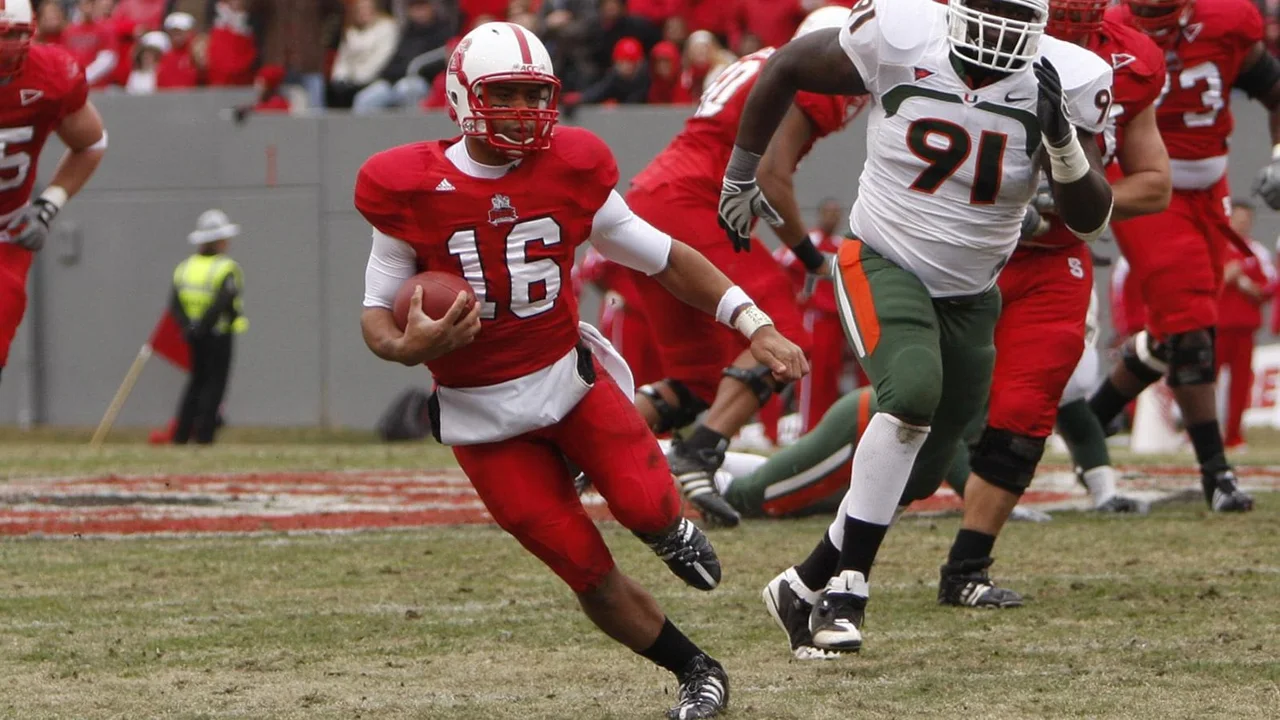
Kyler Murray: a major baseball draft choice was not an MLB career
Murray gives this comparison a third shape: a substantial college baseball season followed by an unusually prominent choice between professional sports. Oklahoma's 2018 draft report records the Athletics selecting him ninth overall. It also provides the baseball behind that selection: a .296 batting average, .398 on-base percentage and .556 slugging percentage, with ten home runs and 13 doubles across 51 games and 50 starts.
Those figures make him more than a famous football name who once attended baseball practice. They describe a player with an extended role in Oklahoma's lineup. The difference between 51 appearances and 50 starts is useful: the university is identifying how often he played and how often he entered the starting lineup, rather than asking readers to infer his role from a highlight or one draft-night photograph.
A college game report offers a better introduction than a speculative argument about what he might have achieved in MLB. In Oklahoma's May 12, 2018 victory over UCF, Murray went 2-for-4 with a home run, a double and four RBI. The photograph at the top of this article comes from that university report. This is documented college baseball performance, with a team, opponent and game attached. It is not a forecast of a professional batting average.
The football decision has its own date and source. The Cardinals' April 25, 2019 draft announcement records Arizona choosing Murray first overall and explains his commitment to football after the earlier baseball selection. These are two separate drafts in consecutive years. The ninth overall baseball pick does not, by itself, establish that he played a major-league game.
That distinction changes the comparison with Jackson. Jackson's professional results let readers examine what happened in both leagues. Murray's college record lets readers examine what happened at Oklahoma; his draft position shows how highly a baseball organization valued the opportunity to develop him. It cannot tell us what a full professional baseball career would have produced. Treat that unanswered question as part of the story, without replacing it with a fictional stat line.
For a college baseball fan, the most rewarding starting point is therefore the Sooners' season itself: the lineup role, the actual game reports and the transition into the draft. Football explains where the next chapter went. It does not erase the baseball chapter or turn an amateur draft selection into professional playing history.
What a baseball fan can look for in an NFL game
The easiest way to bring baseball knowledge into football viewing is to keep asking what the situation demands. A baseball play makes more sense when you know the count, outs and runners. For an NFL possession, start with the down, distance, field position, score and clock. You do not need to decide whether a quarterback's throw looks like an infielder's throw before you can understand the choice in front of him.
The NFL's official glossary explains the basic series: the offense normally has four downs to gain ten yards and earn a new first down. That makes the same yardage result mean different things. A two-yard gain on third-and-one earns the needed distance; two yards on third-and-eight leaves a fourth-down decision. The gain matters in relation to the target, not just as a number in a box score.
Watch a complete possession before moving to a highlight compilation. Note the starting field position, then follow how each play changes the next choice. When an offense punts, ask what territory the opponent will inherit. When a pass falls incomplete, first establish the down and remaining distance. This gives you a practical framework for following the broadcast without pretending every unsuccessful play was automatically a poor decision.
Then widen your attention beyond the player whose baseball background brought you to the game. On a replay, look for the protection around the passer, where the receivers are moving and which defender closes the available space. If the camera angle cannot show a route or coverage assignment, leave that question open. A television view is useful, but it does not reveal every player's responsibility.
Resist turning familiar movements into proof of a causal story. An unusual arm angle may remind you of a baseball throw, yet that resemblance alone does not establish why a particular pass succeeded. You would need the athlete's account, coaching evidence or a careful technical study to make that argument confidently. As a viewer, you can enjoy the resemblance while evaluating the football play on its own terms. The college baseball connection gives you a reason to begin watching; the situation on the field gives you a reason to stay with the game.
Follow the school and the NFL team on separate timelines
A two-sport biography can lead to two different viewing habits. You might want to follow the baseball program that developed the player, or you might want to try an NFL game because the player's story caught your interest. Keep those choices separate. Auburn baseball remains worth following without a current roster connection to Jackson; an Oklahoma baseball game does not depend on Murray being involved.
For the college side, use the college baseball calendar to select the school and season you want. Check which games have confirmed first-pitch times before importing events. A downloaded calendar is a snapshot, while a subscription can receive later changes when your calendar application refreshes it. The page explains that games with times still to be announced are omitted from downloadable events, so an incomplete calendar should not be mistaken for the program's entire announced schedule.
For football, first decide whether you are following a franchise or looking for a specific active player. If it is the latter, check the club's current official roster and availability information before choosing a broadcast. A draft-day article establishes a historical connection; it does not establish who will dress for an upcoming game. This guide's dated career examples should not substitute for that current check.
Once you have chosen a franchise, the NFL team schedule directory is a practical next stop for opponents, kickoff times and listed channels. NFL-Schedule.com is a related tool in the same project as College Baseball Schedule. We recommend it here for the team-by-team lookup that follows this article's player histories; it is a schedule resource, not a live stream or a claim of independent product testing.
Finally, make the viewing decision for the actual event. The college baseball viewing guide starts with the matchup and its listed service. Apply the same habit to football: confirm the event in the provider's own listing and check access where you live. You can preserve the college connection, discover a different sport and keep the historical record accurate without assuming that one subscription, one school label or one old team photograph answers every question.
Join the conversation
Share a question or a thought about college baseball. Comments are reviewed before they appear. Keep it friendly and on topic.
No comments yet. Start the conversation.
Sign in with Google to leave a comment. Your email address is not displayed.